




 Email
 whatsapp

Product News




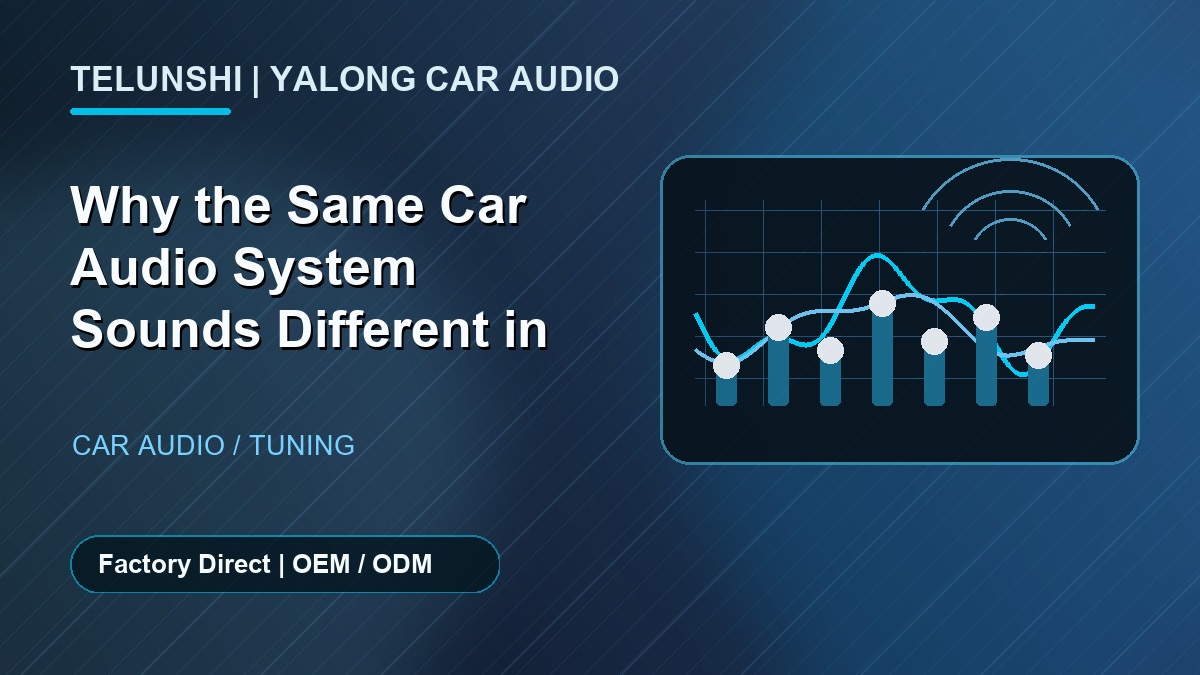
Why the Same Car Audio System Sounds Different in Different Cars
In the world of car audio upgrades, end consumers are often drawn to a single visible specification, such as peak power, brand name, physical size, or a single product photo. However, the ultimate sound quality of a truly excellent car audio system depends on the synergy of the entire setup. A mature car audio solution requires the perfect matching of the vehicle's space, music preferences, amplifier, speakers, subwoofer, power supply, and the tuning process.
Many car owners wonder: why does the exact same audio setup sound clear and full in Car A, but dull and harsh in Car B? This is because car audio performance is not determined by a single component, but by the complex interaction between the entire system and its environment.
Why EV Car Audio Upgrades Need a Stable Power Supply
In the world of car audio upgrades, end consumers are often drawn to a single visible specification, such as peak power, brand name, physical size, or a single product photo. However, the ultimate sound quality of a truly excellent car audio system depends on the synergy of the entire setup. A mature car audio solution requires the perfect matching of the vehicle's space, music preferences, amplifier, speakers, subwoofer, power supply, and the tuning process.
Modern car audio systems, especially EV audio upgrades and high-power subwoofer systems, have extremely high demands for voltage stability and current sufficiency. If the power supply is unstable, the audio system will often suffer from weak bass, muddy sound, dynamic compression, or even trigger the amplifier's protection mechanism under high loads.
What Does a Car Amplifier Do? Can a Factory Head Unit Drive Speakers?
In the world of car audio upgrades, end consumers are often drawn to a single visible specification, such as peak power, brand name, or physical size. However, the ultimate sound quality of a truly excellent car audio system depends on the synergy of the entire setup. A mature car audio solution requires the perfect matching of the vehicle's space, music preferences, amplifier, speakers, subwoofer, power supply, and the tuning process.
Many car owners mistakenly believe that the only purpose of a car amplifier is simply to "make the sound louder." In reality, the core value of an amplifier goes far beyond that. Its primary responsibility is to receive weak audio signals from the source and convert them into powerful electrical currents, thereby driving the speakers accurately.
Under Seat Subwoofer vs Trunk Subwoofer: Which Is the Better Choice for Car Audio?
In the world of car audio upgrades, end consumers are often drawn to a single visible specification, such as peak power, brand name, physical size, or a single product photo. However, the ultimate sound quality of a truly excellent car audio system depends on the synergy of the entire setup. A mature car audio solution requires the perfect matching of the vehicle's space, music preferences, amplifier, speakers, subwoofer, power supply, and the tuning process.
Many car owners mistakenly believe that a subwoofer's quality is determined solely by its physical size or peak power. In reality, the final bass performance depends on RMS power, impedance, enclosure design, amplifier control, vehicle space, and the tuning process. A well-matched subwoofer system should deliver deep, solid bass rather than muddy, boomy noise or listening fatigue.
Car Audio Upgrade Guide: Why You Shouldn't Replace the Entire System at Once
When preparing to upgrade their car audio, many car owners fall into a common trap: they focus solely on single, visible specifications like wattage, size, brand, price, or product photos. However, in actual installation, the final sound quality is determined by the synergy of the entire system. A premium car audio upgrade requires precise matching across various factors, including the vehicle model, personal music preferences, amplifiers, speakers, subwoofers, power wiring, and professional tuning. Only through this comprehensive alignment can the ideal acoustic performance be achieved.
Car audio performance is never dictated by a single component; it is a complex engineering system. The inherent quality of the speakers, the power control of the amplifier, the DSP (Digital Signal Processor) tuning, the rigor of the installation craftsmanship, the routing of the wiring, and even the interior spatial structure of the vehicle all directly impact the final sound output.

China Car Audio Wholesale Supplier Buying Guide: Key Points Buyers Should Check
A complete guide for importers and distributors looking for reliable car audio wholesale suppliers in China. Learn how to check product range, factory capability, OEM service and product quality before bulk ordering.
China Car Audio Wholesale Supplier Buying Guide: Key Points Buyers Should Check
A complete guide for importers and distributors looking for reliable car audio wholesale suppliers in China. Learn how to check product range, factory capability, OEM service and product quality before bulk ordering.

EV Car Audio Power Supply Solution: Why Voltage Stability Matters
Learn why voltage stability matters for EV car audio systems. Discover how a car audio voltage stabilizer ensures reliable power for amplifiers and subwoofers.

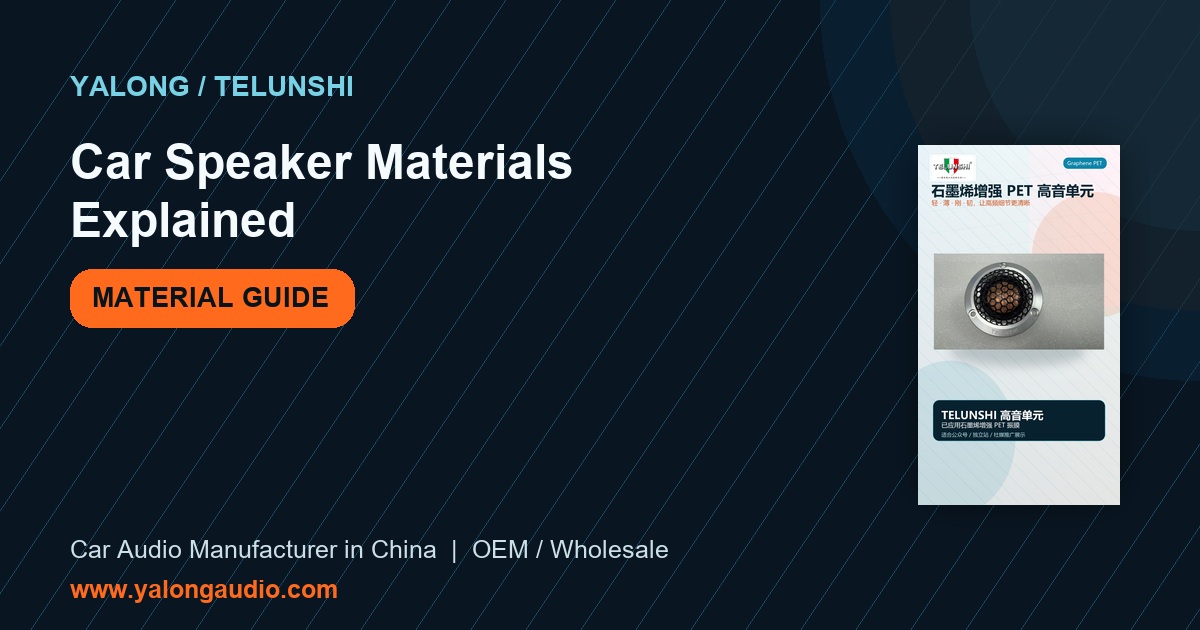
Graphene-Enhanced PET Tweeter Diaphragm Technology for Clear and Detailed Treble
Although a tweeter diaphragm is small in size, it plays a direct role in high-frequency sound performance. A high-quality tweeter diaphragm needs to balance three key requirements: lightweight structure, high rigidity and long-term durability.
Graphene-enhanced PET material is a modern diaphragm solution designed to balance these performance needs. By combining the stability and flexibility of PET with the rigidity advantage of graphene, this material can help car audio tweeters deliver cleaner, clearer and more detailed treble.
Car Audio Material Guide: Tweeter, Midrange and Woofer Diaphragm Materials
Speaker material is one of the key factors that affects sound character and overall audio performance. In a car audio system, tweeters, midrange speakers, woofers and subwoofers often use different diaphragm or cone materials because each frequency range has different requirements for stiffness, flexibility, response speed and durability.
For car audio distributors, installation shops and OEM buyers, understanding speaker materials can help you choose the right product line for your target market and explain product differences more clearly to customers.