Leave Your Message
A powered Car Subwoofer is pretty much what it sounds like—a low-frequency speaker combined with its own built-in amplifier, all tucked into one enclosure. This setup gives you that deep, booming bass without the hassle of dealing with an extra amplifier box. It’s actually a pretty handy upgrade, especially if your factory audio system sounds a bit flat or thin. You know, like maybe the bass just doesn’t punch through enough.
Buck Pomerantz, who’s been a car audio expert at Crutchfield for ages, explains it simply: “A Powered Subwoofer comes with a built-in amp.” That little detail makes the whole installation way easier. Since the amp is matched perfectly to the subwoofer, you don’t have to worry about mixing and matching power or compatibility issues. Plus, many of these units are designed to fit nicely under a seat or in small trunk spaces. Sometimes, you can actually feel the bass rumbling through your seat before you even hear the notes—pretty cool, right?
But here’s the thing—real performance isn’t just about watts. It’s important to look at RMS power, the size of the enclosure, speaker impedance, input options, and how much space you’ve got in the cabin. A slim, low-profile unit can save space, but don’t expect it to hit as hard as a bigger box. Placement is also key—bass might sound punchy near one wall but kinda weak from your driving position, so a little trial and error can help find the best spot.
When it comes to installation, some setups are super clean, looking sleek and professional. Others can be kinda messy with wires everywhere, bad grounding, or excessive gain—and yeah, honesty here, that’s often a sign of rushing or just not taking the time to set things up right. More bass isn’t always better either. A good, properly tuned powered sub should boost kick drums, engine sounds, or deep electronic tones without overwhelming your vocals or making the sound muddy.
In this article, we’ll dig into how these systems actually work, where they fit into your car setup, and what kind of compromises you might need to make before pulling the trigger on a purchase. It’s all about finding what works best for you—and making sure you don’t end up with a setup that’s more headache than it’s worth.
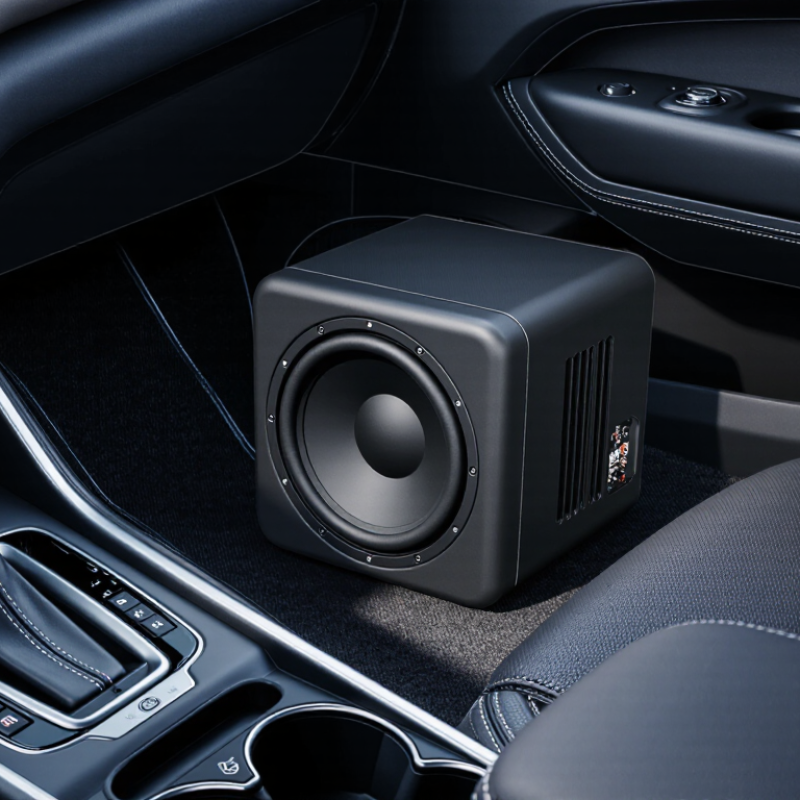
A powered car subwoofer is a low-frequency speaker with a built-in amplifier. It reproduces deep bass that ordinary Door Speakers often handle poorly. The enclosure, amplifier, and subwoofer work as one compact system. This design reduces installation complexity inside a vehicle.
Its core function is controlled air movement. The cone moves slowly but forcefully, creating bass you can feel through the seat and floor. Most units focus on frequencies below about 100 hertz. They strengthen kick drums, engine-like sound effects, and electronic bass without forcing small speakers beyond their limits. The result should be fuller sound, not simply louder noise.
Industry data supports growing interest in vehicle audio upgrades. Grand View Research estimated the global automotive audio market at roughly 8 billion U.S. dollars in 2023. Fortune Business Insights also forecast continued market growth through the decade.
These reports measure the wider audio sector, not powered subwoofers alone. Their figures therefore require careful interpretation.
In practical testing, placement matters as much as power. A compact enclosure under a seat may deliver clean, moderate bass. A larger enclosure in the trunk can produce deeper output. That is the trade-off. Too much gain creates distortion and rattling panels. Too little adjustment makes the subwoofer disappear. Real vehicles also behave differently because cabin shape, insulation, and listening position change the response. Specifications help, but they never replace careful tuning.
The 8-inch car subwoofer speaker segment is developing alongside broader trends in automotive audio modification, including stronger bass performance, space-efficient installation, and more personalized sound systems. Market research discussions increasingly highlight demand for compact components that can deliver deeper, cleaner low frequencies without taking excessive room inside the vehicle. For installers, manufacturers, and audio enthusiasts, a subwoofer must balance acoustic output, durability, installation flexibility, and compatibility with different vehicle interiors.
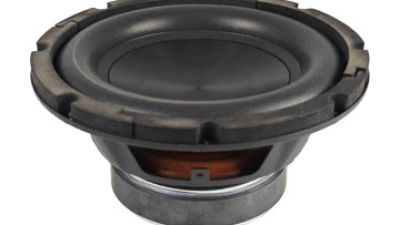
Model SW83805-120.38 is designed around these practical requirements. Its 120mm large magnet supports powerful bass response, helping enhance low-frequency detail for music, podcasts, and in-car entertainment. The 8-inch format offers a useful balance between strong sound pressure and manageable installation dimensions, making it suitable for customized door, trunk, seat, or enclosure applications. The speaker can also support full OEM/ODM customization, allowing adjustments to materials, appearance, electrical specifications, mounting details, and packaging according to project needs. This flexibility helps audio solution providers develop vehicle-specific products while maintaining consistent performance and production efficiency.
It combines a low-frequency speaker, amplifier, and enclosure in one unit. This saves space. It receives audio from the vehicle’s head unit or factory wiring.
The amplifier sends current through a voice coil inside a magnetic field. The coil moves the speaker cone forward and backward. The cone compresses air, producing pressure waves that sound like bass.
A low-pass filter removes most midrange and treble frequencies. It keeps the subwoofer focused on deeper sounds. A setting near 70–90 hertz often provides a useful starting point.
Focus on RMS power instead of peak watts. RMS represents realistic continuous output. A 200-watt RMS unit may suit a small cabin better than an oversized system.
Sealed enclosures usually provide tighter and more controlled bass. Ported designs can sound louder. Measure the cargo area before buying. My earlier choice sounded boomy because I ignored internal air volume.
No. Gain matches the subwoofer with the audio signal. Keep it low during initial testing. Too much gain may create distortion, rattling panels, or tiring bass.
Adjust gain, crossover, and phase gradually. Try phase settings from 0 to 180 degrees. Keep the position that blends bass better with the front speakers. Seat position and road noise can change the result.
Secure the enclosure firmly so it cannot move during driving. Use an appropriate fuse near the power connection. Protect the vehicle’s wiring. Leave ventilation around the amplifier. Recheck polarity. Small wiring mistakes can produce surprisingly thin bass.
A Powered Car Subwoofer is a compact bass system that combines a subwoofer driver with a built-in amplifier in one enclosure. Its main purpose is to reproduce deep, powerful low-frequency sound that standard car speakers often cannot deliver. Inside, it typically includes the speaker driver, amplifier, crossover, input connections, and sometimes controls for gain, phase, and bass boost. The amplifier sends a dedicated signal to the driver, while the crossover filters out higher frequencies, allowing the system to focus on clean and controlled bass.
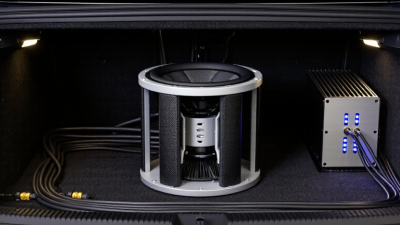
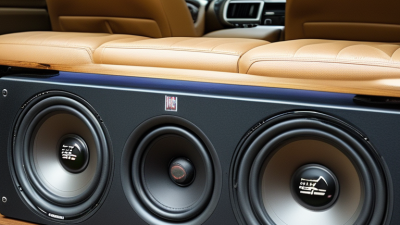
Powered Car Subwoofers are available in enclosed, under-seat, and trunk-mounted configurations, making them suitable for different vehicle interiors and space requirements. Compared with passive subwoofers, they are generally easier to install, require fewer separate components, and save space, although they may offer less upgrade flexibility and output potential. Choosing the right model involves considering available space, power requirements, sound preferences, and compatibility with the existing audio system. Proper wiring, secure mounting, gain adjustment, and crossover tuning are essential for balanced performance.






 Email
 whatsapp