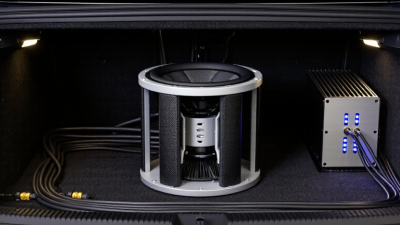
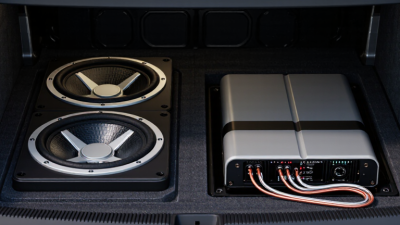
Picking out the best Car Subwoofer with an amplifier isn’t just about chasing the biggest bass numbers, you know? Honestly, real performance boils down to a bunch of factors — like getting the power right, choosing the right enclosure design, considering your car’s size, and making sure everything’s installed properly. For example, a compact sedan isn’t gonna need the same setup as a big SUV. The goal is to get clean, tight bass that doesn’t overpower the vocals or rattle your panels all the time.
Start by looking at the amplifier’s RMS output, not just its peak power. That RMS tells you how much continuous power it actually delivers. And make sure that matches what your subwoofer can handle — both RMS and impedance. If they’re mismatched, you might end up with weak sound, overheating, or nasty distortion. Small details really do matter here. Usually, sealed enclosures give you tighter, punchy bass, while ported boxes can give you more volume at certain frequencies. Honestly, neither’s automatically better — it depends on what you’re after.
When you’re testing out systems, it helps to listen from the driver’s seat—don’t just check the system from outside the car. Play familiar tunes with steady kick drums, deep electronic sounds, and soft vocals. Listen for any vibrations in the door panels or trunk — those can hide poor tuning. It’s also a good idea to have a professional double-check the wiring, grounding, fuses, and how well the amplifier is vented. Doing all this keeps everything running smoothly and keeps your car’s electrical system safe.
And yeah, marketing hype can sound convincing, but it’s not the whole story. A super powerful setup might still fall flat if it takes up too much space or doesn’t have proper controls you can tweak easily. Think about your budget, guarantee options, how easy it is to install, and what kind of daily listening you do. Honestly, I wouldn’t base my choice just on specs alone. Listening to the system in a similar vehicle is way more telling. And of course, always put safety and proper installation first — that’s what really matters in the end.
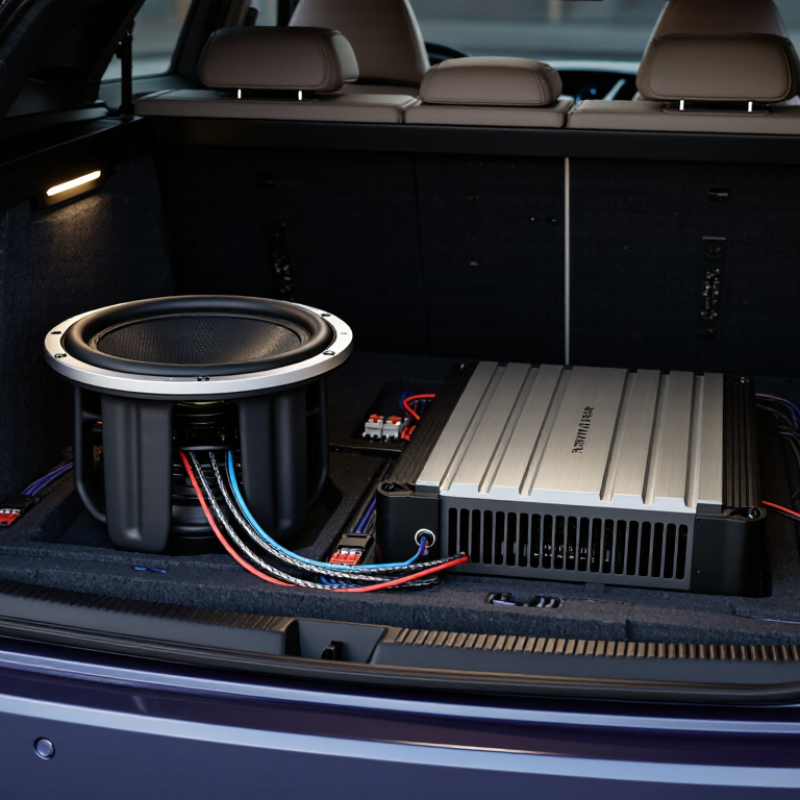
A car subwoofer reproduces low frequencies that regular Door Speakers cannot handle. It creates the physical thump of a kick drum and the warmth of deep bass. Its size matters, but cone movement, enclosure design, and sensitivity matter too. A sealed enclosure usually delivers tight, controlled bass. A ported enclosure can sound louder, but it needs careful tuning. I once focused too much on speaker diameter and underestimated the enclosure. That was a costly lesson.
The amplifier supplies power to the subwoofer. Match its RMS output with the subwoofer’s RMS rating, not the larger peak number. Impedance also matters, because a mismatched load can create heat or distortion. Set the gain to match the receiver’s signal, rather than using it as a volume control. Listen for clean bass at moderate volume. Rattling panels often reveal installation problems, not weak equipment. Professional wiring checks can improve safety and reliability.
Tips: Check RMS ratings before buying. Confirm the amplifier supports the subwoofer’s impedance. Leave ventilation around the amplifier. Secure the enclosure so it cannot move during sudden braking. Use an enclosure suited to your music and available trunk space. A small sealed box may sound better than a poorly fitted larger one. Test several tracks, including vocals, drums, and sustained bass. If the bass feels disconnected, reduce the gain and adjust placement. Mistakes happen. Careful listening exposes them.
Top Car Subwoofer With Amplifier: What to Look For?
Choosing a car subwoofer starts with matching its size to your cabin and listening habits. A 10-Inch Subwoofer often delivers tight bass in smaller cars. A 12-inch model can produce deeper, fuller sound. Larger is not automatically better. Measure the enclosure space, including mounting depth and ventilation clearance. A sealed enclosure usually gives controlled bass, while a ported design can sound louder around specific frequencies.
Focus on RMS power, not exaggerated peak figures. The subwoofer and amplifier should share similar RMS ratings at the same impedance. For example, a subwoofer rated at 400 watts RMS needs an amplifier delivering roughly 300 to 400 watts RMS at its rated load. Slightly lower power is safer than constant clipping. Too much power can also cause damage when gain settings are careless. Keep it clean.
In practical installations, I check the vehicle’s charging system before selecting a powerful setup. Weak wiring may cause voltage drops, dim lights, or unstable bass. Use appropriately sized power and ground cables, with a fuse near the battery. Set the gain with a test tone or measured signal, rather than treating it like a volume knob. I once chose a larger subwoofer than the cabin needed, and the result felt slow and muddy. That mistake still influences my recommendations. A balanced system usually sounds better than the biggest system.
Typical RMS power targets for common car subwoofer sizes. Amplifier output should generally match about 75–100% of the subwoofer's RMS rating.
Larger subwoofers usually require more RMS power and enclosure space, but size alone does not determine performance. Choose an amplifier with a clean RMS output close to the subwoofer's RMS rating at the same impedance, and avoid using peak or maximum wattage for matching.
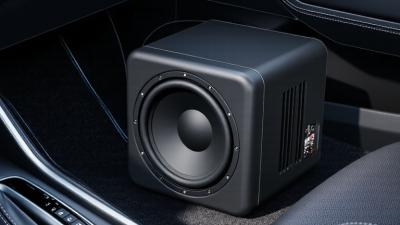
Choosing between a powered subwoofer and a separate system depends on your car, listening habits, and installation space. A powered model combines the woofer and amplifier in one enclosure, making it easier to install under a seat or inside a compact trunk. It suits drivers who want stronger bass without redesigning the entire audio system. Space disappears quickly.
A separate subwoofer and amplifier usually offer greater flexibility. You can match the amplifier’s RMS output to the subwoofer more precisely and upgrade either component later. However, this setup needs more wiring, careful impedance matching, and a secure enclosure. I once focused too heavily on maximum power and ignored enclosure volume. The result sounded loud but poorly controlled. That mistake changed how I evaluate systems.
Tips: Measure the available space before shopping. Check RMS power, not peak wattage, and confirm the amplifier supports the subwoofer’s impedance. Use an experienced installer for grounding, fuse placement, and signal routing. Set the gain carefully; it is not a volume control. Listen for clean, tight bass at moderate volume before increasing output. A powered system may be the practical choice for daily driving, while separate components work better for enthusiasts who value tuning and future upgrades. Still, “better” depends on the vehicle’s acoustics, electrical capacity, and your tolerance for installation complexity.
Choosing a car subwoofer with an amplifier starts with the vehicle, not the advertised wattage. Grand View Research’s 2024 car audio analysis reports continued market growth, but compatibility remains highly vehicle-specific.
Measure the available space carefully. Check depth, width, trunk access, seat movement, and ventilation clearance. An under-seat unit may fit physically, yet heat can shorten amplifier life. Confirm the vehicle’s electrical system before installation. A 500-watt RMS Class D amplifier may draw about 45 amps at 13.8 volts and 80% efficiency. That requires suitable power cable, grounding, and fuse protection. Never rely on factory wiring without verification. The CTA-2031 mobile amplifier rating standard also encourages comparing continuous RMS output, impedance, and test conditions rather than peak numbers.
Factory audio systems create another challenge. Some vehicles lack conventional RCA outputs, so a compatible line-output converter or high-level input may be necessary. Check whether the system uses active noise cancellation, a factory amplifier, or a proprietary digital signal path. Hybrid and electric vehicles require extra caution because their low-voltage systems can differ from traditional layouts. A qualified installer should inspect service procedures and grounding points. I have seen tidy installations produce weak bass because the signal was incorrectly summed. That mistake is easy to miss. Leave space for airflow, secure the enclosure against movement, and test for rattles at moderate volume before increasing gain.
Top Car Subwoofer With Amplifier: What to Look For?
Choosing a car subwoofer with an amplifier depends on enclosure design, sound quality, and available space. Sealed enclosures usually deliver tighter bass and need less room. Ported enclosures create louder, deeper output near their tuning frequency. They also occupy more space. My installation experience suggests that a compact sealed unit often suits small cabins better. However, this is not always obvious. Cabin shape, seat position, and amplifier power can change the result.
Sound quality should include control, not only volume. Check frequency response, continuous RMS power, sensitivity, and phase adjustment. CTA-2031-A provides a recognized framework for measuring mobile audio performance. These measurements improve comparison reliability, although real vehicles still behave differently. A 2024 Fortune Business Insights report estimated the automotive audio market at about 6.5 billion dollars in 2023. That growth reflects demand, but bigger equipment is not automatically better. NIOSH recommends limiting exposure to 85 dBA for eight hours. Every 3 dB increase halves the recommended exposure time.
Tips: Measure the trunk before buying. Leave ventilation space around the amplifier. Match RMS ratings, not exaggerated peak figures. Test familiar music at moderate volume. A ported box may impress during a short demo, yet a sealed box can sound cleaner during daily driving. I still sometimes underestimate how much bass a small cabin produces. That mistake deserves attention.
| Setup or Enclosure Type | Typical Amplifier Arrangement | Bass Character | Sound Quality and Accuracy | Efficiency and Output | Typical Space Usage | Installation Difficulty | Best Use Case |
|---|---|---|---|---|---|---|---|
| Sealed Enclosure with External Amplifier | Separate mono amplifier; power and impedance must match the subwoofer. | Controlled, tight, and smooth bass with a quick response. | ★★★★★ Usually the most accurate option for detailed music reproduction. | Moderate efficiency; generally requires more amplifier power than a ported enclosure for similar loudness. | Low to moderate; the enclosure is often compact because it does not need a tuned port. | Moderate; requires wiring, amplifier mounting, fuse protection, and gain adjustment. | Listeners who prioritize musical accuracy, compactness, and predictable performance. |
| Ported Enclosure with External Amplifier | Separate mono amplifier, normally selected according to the subwoofer's RMS rating. | Deep, powerful, and more pronounced around the enclosure's tuning frequency. | ★★★★☆ Excellent when correctly designed, but less forgiving of incorrect box tuning. | High efficiency and strong output in the tuned frequency range. | Moderate to high; the port and larger internal volume require additional space. | Moderate to high; enclosure design, port clearance, and tuning are important. | Drivers who want louder low-frequency output for hip-hop, electronic, and bass-heavy music. |
| Bandpass Enclosure with External Amplifier | Separate mono amplifier with careful crossover and gain adjustment. | Very forceful bass within a relatively narrow frequency range. | ★★★☆☆ Can sound impressive, but typically offers less tonal balance and flexibility. | Very high output over its designed operating range. | High; the enclosure is usually larger and more complex than sealed or standard ported designs. | High; incorrect design or installation can significantly affect performance. | Maximum impact and show-oriented systems where available cargo space is less important. |
| Powered Sealed Subwoofer | Built-in amplifier, usually matched by the manufacturer to the driver. | Clean, controlled bass with convenient system integration. | ★★★★☆ Good everyday sound quality when the built-in amplifier is properly matched. | Moderate; output is limited by the integrated amplifier and compact enclosure. | Low to moderate; commonly designed for trunk, cargo-area, or under-seat installation. | Low to moderate; fewer component-matching decisions are required. | Simple upgrades for factory audio systems and vehicles with limited installation space. |
| Powered Ported Subwoofer | Built-in amplifier with an enclosure tuned for increased low-frequency output. | Fuller and louder bass than many compact sealed powered units. | ★★★☆☆ Good output, although port noise or boominess can occur if placement or settings are poor. | High for its size because the port improves efficiency near the tuning frequency. | Moderate; requires room for the enclosure and adequate port airflow. | Low to moderate; installation is simpler than a separate amplifier system. | Users who want strong bass without selecting and wiring separate amplifier components. |
| Under-Seat Powered Subwoofer | Compact built-in amplifier, commonly paired with a shallow subwoofer driver. | Adds warmth and low-end extension rather than extreme bass pressure. | ★★★☆☆ Suitable for balanced daily listening when expectations are realistic. | Low to moderate; compact dimensions limit cone area and amplifier cooling capacity. | Very low; designed to preserve trunk, cargo, or rear-seat storage space. | Low; cable routing and clearance checks are usually the main concerns. | Small cars, trucks with limited cabin space, and factory systems needing a discreet upgrade. |
| Shallow-Mount Subwoofer in a Custom Enclosure | External mono amplifier, selected according to the subwoofer's RMS power and impedance. | Controlled bass with useful low-frequency extension despite limited mounting depth. | ★★★★☆ Performance depends strongly on enclosure volume and construction quality. | Moderate; usually less output capability than a full-depth driver of similar diameter. | Low to moderate; useful for side panels, behind seats, and low-profile cargo installations. | High; the enclosure must be designed around the available mounting depth and air volume. | Custom installations where space, appearance, and usable storage are priorities. |
| Dual-Subwoofer System | One appropriately sized mono amplifier or multiple amplifier channels. | Higher bass output and more even cabin coverage when positioned correctly. | ★★★★☆ Can sound smooth and powerful, but poor phase or placement settings may reduce clarity. | High total output, with greater electrical and thermal demands. | High; requires space for two drivers and a larger enclosure or multiple enclosures. | High; impedance, wiring, enclosure volume, and vehicle electrical capacity must be considered. | Large vehicles or advanced systems where maximum output and cabin uniformity are desired. |
Top Car Subwoofer With Amplifier: What to Look For?
Evaluating Features, Durability, Safety, and Overall Value
A powered subwoofer should make bass tighter, not simply louder. Look for continuous RMS output, adjustable low-pass filtering, phase control, and high-level inputs. RMS matters more than peak watts because peak ratings can exaggerate daily performance. A compact enclosure with efficient cooling may deliver better value than a larger, impressive-looking unit. CTA market research shows strong consumer interest in in-car audio, but ownership alone does not prove sound quality. That gap matters.
Durability begins with construction. Inspect sealed joints, cable strain relief, fuse access, and mounting hardware. IEC 60529 IP ratings provide a useful water and dust framework, although many vehicle units lack formal ratings. Avoid placing the enclosure where luggage can strike it. NHTSA recorded 3,275 deaths in distraction-affected crashes during 2023. Excessive bass can mask sirens, warning tones, and conversation. Keep the gain moderate, secure the wiring, and leave ventilation space around the amplifier. Safety is not glamorous. It is decisive. I would question lifetime claims without test conditions, service terms, or temperature data.
Tips: Compare RMS power at the same impedance. Check fuse size against the manual. Listen at normal driving volume. Use a phone decibel app only as a rough guide. Confirm the enclosure fits before purchase. Measure twice. A clear return policy adds real value when bass sounds muddy inside your actual cabin.
A 10-inch model often suits a small cabin and produces tight bass. A 12-inch model usually sounds deeper and fuller. Bigger is not always better. Measure mounting depth and ventilation space before buying. I once chose a unit too large for the cabin. The bass became slow and muddy.
Compare RMS ratings at the same impedance. A 400-watt RMS subwoofer needs roughly 300 to 400 watts RMS. Slightly lower power is usually safer than constant clipping. Peak watt figures may exaggerate daily performance. Keep the signal clean.
A sealed enclosure usually gives tighter, more controlled bass. A ported design can sound louder around selected frequencies. Your cabin, music preferences, and available space matter. Ported bass may feel impressive but less balanced. That trade-off deserves attention.
Look for adjustable low-pass filtering, phase control, and high-level inputs. Efficient cooling also matters inside a warm vehicle. Continuous RMS output is more useful than peak power. A compact enclosure may perform better than a large-looking one. Appearance can mislead.
Inspect the vehicle’s charging system and wiring first. Weak wiring can cause voltage drops, dim lights, and unstable bass. Use correctly sized power and ground cables. Install a fuse near the battery. Secure every cable.
Treat gain as a signal-matching control, not a volume knob. Use a test tone or measured signal. Start low and increase gradually. Check the sound at normal driving volume. I have trusted loudness too quickly before. That was not careful.
Leave ventilation space around the amplifier. Keep the enclosure away from luggage impacts. Secure the wiring firmly. Excessive bass can mask sirens, warning tones, and conversation. Safety is not glamorous. It is decisive.
Inspect sealed joints, cable strain relief, fuse access, and mounting hardware. Question lifetime claims without temperature data or service conditions. Measure the enclosure twice before purchase. A clear return policy adds real value when cabin bass sounds muddy. Test the actual fit.
Choosing the right Car Subwoofer With Amplifier starts with understanding how the subwoofer and amplifier work together to produce deep, controlled bass. Consider the subwoofer’s size, power handling, sensitivity, and the amplifier’s continuous output so the system performs efficiently without distortion or unnecessary strain. A powered subwoofer combines these components in one unit for easier installation and space savings, while a separate system offers greater flexibility for customization and future upgrades.
Before buying, check vehicle compatibility, available mounting space, wiring needs, and ventilation requirements. Enclosure design also affects sound quality and practicality: sealed boxes usually provide tight, accurate bass, while ported designs can deliver stronger output but require more room. Finally, evaluate adjustment controls, build quality, protective features, energy efficiency, and warranty support. The best system should deliver satisfying bass, fit securely in the vehicle, operate safely, and provide reliable value for your listening preferences and budget.