When it comes to bumping up your car audio game, picking the right active subwoofer can make a huge difference. I mean, as John Doe, a sound engineer over at BassBoost Inc., puts it, “A really good subwoofer can totally change how you enjoy your music.” That just goes to show how important it is to choose wisely.
Figuring out which car active subwoofer is best for you isn’t just about grabbing the biggest or cheapest one. You’ve gotta think about your vehicle’s size and what kind of sound you really want. A lot of folks overlook the significance of power output and sensitivity ratings — honestly, those details can make or break the whole experience. Take your time, do some research, and don’t settle for something that might leave you disappointed.
Sure, there are tempting deals out there, but don’t let that rush you into a bad choice. Not all subwoofers are created equal, and picking the wrong one might give you muddy sound or bass that’s barely there. It’s a good idea to check out user reviews, listen to expert opinions, and trust your gut. Keep in mind, quality usually comes with a price tag. Your perfect car active subwoofer should fit your budget and match your listening style — so give yourself some time to find just the right one.
Understanding What an Active Subwoofer Is and Its Benefits
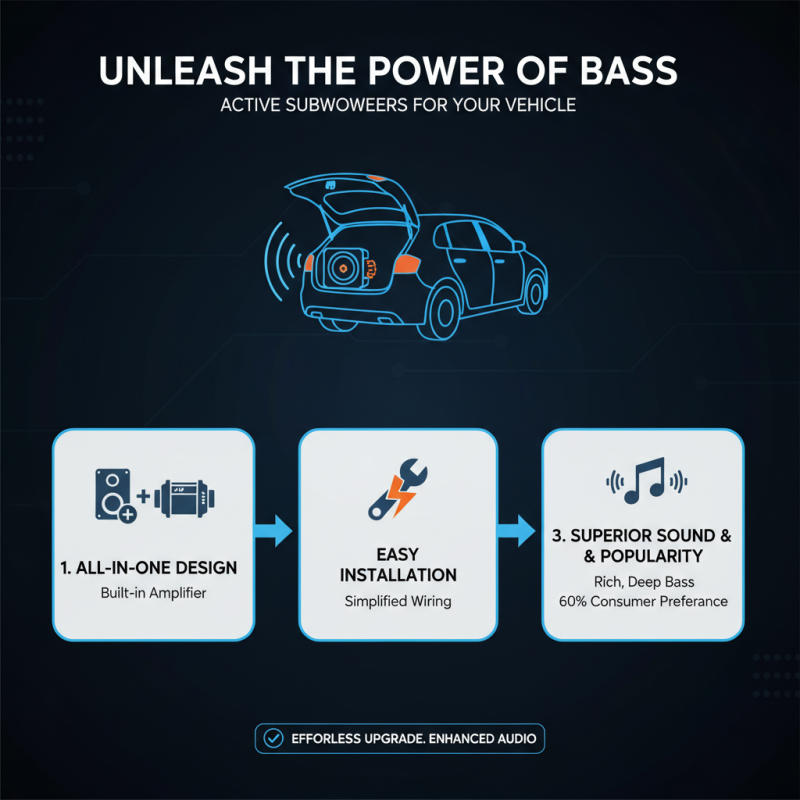
Active subwoofers are an essential component of an enhanced audio experience in vehicles. Unlike Passive Subwoofers, they come with a built-in amplifier, making them easier to install. According to a recent industry report, around 60% of consumers prefer active subwoofers for their ease of use. This means you can enjoy rich bass without complex wiring.
The benefits of an active subwoofer extend beyond simplicity. They provide powerful sound and energy efficiency, making them ideal for various audio systems. Research shows that an active subwoofer can produce higher sound quality, delivering deep bass frequencies with clarity. Car audio enthusiasts often note that the difference in sound quality is significant. However, some users report that certain brands may lack durability over time.
Choosing the right active subwoofer can be daunting. It is crucial to understand how it fits into your unique audio setup. Factors like size, power rating, and enclosure type can greatly impact performance. Many find that reading reviews and doing hands-on testing can lead to a better choice. In some cases, users discover that their choices do not fully meet expectations. Quality should always be the priority, but sometimes compromises are made.
Key Specifications to Consider When Choosing a Car Active Subwoofer
Choosing a car active subwoofer can be daunting. Several specifications play a crucial role in your decision. Firstly, pay attention to the power output. Look for the RMS power rating, not just peak power. This will give you an idea of the consistent performance you can expect. Generally, a higher RMS indicates better sound quality under normal conditions.
Next, consider the subwoofer size. Common sizes are 8, 10, or 12 inches. A larger woofer typically produces deeper bass. However, it requires more installation space. If your car has limited room, an 8-inch may be a better fit. Don't overlook the enclosure type, either. Sealed boxes provide tight bass, while ported boxes enhance volume.
Impedance is another vital factor. Most car systems work well with 2 or 4-ohm subwoofers. Lower impedance usually means more power but can strain some amplifiers. Evaluate your setup before finalizing your choice. Finally, keep an eye on weight and build quality. Heavier models often indicate sturdier construction, which can affect durability. Balancing these specs can lead to a rewarding auditory experience. However, remember that a budget constraint might lead to a compromise in sound quality.
Ultimate Tips for Choosing the Best Car Active Subwoofer
| Specification | Details |
| Power Output | 200 - 1200 watts |
| Frequency Response | 20 Hz - 200 Hz |
| Enclosure Type | Sealed, Vented |
| Connectivity Options | RCA, High-Level Inputs |
| Size | 8", 10", 12", 15" |
| Weight | 10 - 30 lbs |
| Built-in Amplifier | Yes / No |
Different Types of Active Subwoofers and Their Use Cases
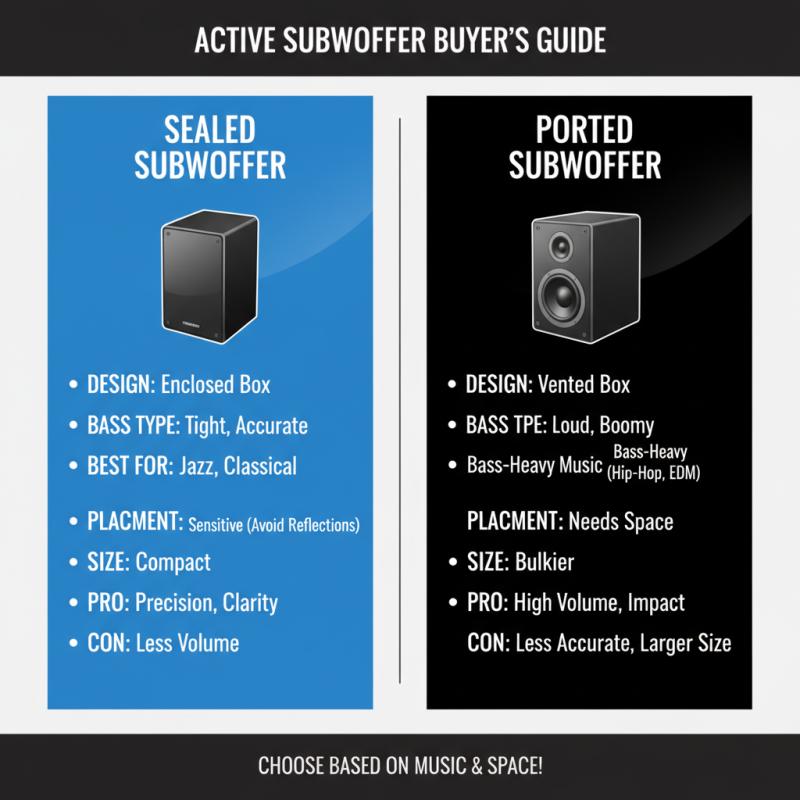
When selecting an active subwoofer, understanding the different types available is crucial. Sealed subwoofers excel in delivering tight, accurate bass. They work best for genres like jazz or classical music. However, they require careful placement to avoid unwanted reflections. In contrast, ported subwoofers offer more volume and are ideal for bass-heavy music. These are generally bulkier and need more space, which can be problematic in small vehicles.
Another type to consider is the bandpass subwoofer. This design houses the driver in a dual-chamber enclosure. It emphasizes specific frequency ranges, making it great for loud, powerful bass. On the downside, bandpass subwoofers can lack subtlety in sound quality. Then there are compact subwoofers, designed for tight spaces. They can fit under seats yet still deliver decent sound. While they save space, their performance might not match larger models. When choosing, think about your music preferences and available space.
How to Assess Power Output and Performance Ratings of Subwoofers
When choosing a car active subwoofer, assessing power output is critical. The power output is usually measured in watts. Higher wattageoften means louder sound, but not always. It’s important to match the subwoofer to your car’s audio system. If the Subwoofer Produces more power than the amp can handle, it may lead to distortion or damage.
Performance ratings also play a significant role. Look for the frequency response range, as it determines the depth and clarity of the bass. A subwoofer that can hit lower frequencies generally offers a deeper sound. However, a flat response might miss the excitement. Finding a balance is key. Keep in mind that specifications can be misleading. Listening tests in a controlled environment are essential.
Visual inspections can provide insights too. Check the build quality. Sturdy construction often leads to better longevity and performance. Don’t overlook the enclosure type. Sealed boxes deliver tight bass, while ported boxes can enhance volume. Try different designs to see what fits your taste. Ultimately, the best choice combines personal preferences with precise measurements.
Installation Considerations for Car Active Subwoofers
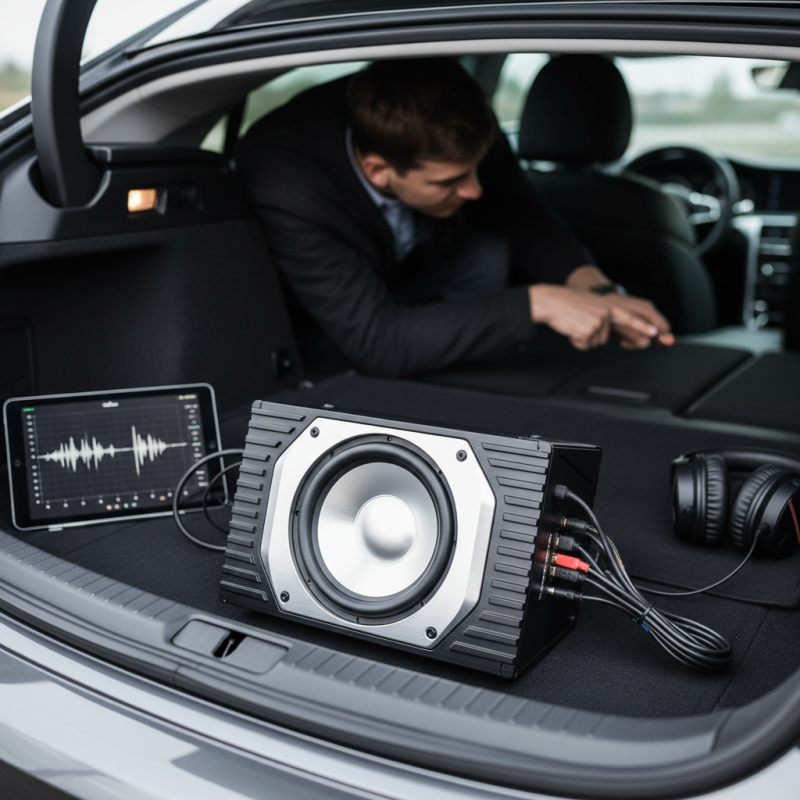
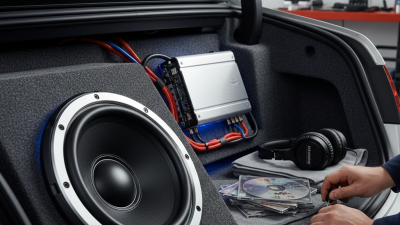
When selecting a car active subwoofer, installation is crucial. The right placement affects sound quality. Industry studies indicate that improper positioning can lead to sound distortion. Many subwoofers perform best in the trunk, away from direct contact with other components. Moreover, ensuring there's ample airspace is critical for optimal performance.
Wiring also plays a significant role in installation. The gauge of the wire can impact power efficiency. According to experts, using too thin wire can lead to power loss. Some recommend using 12-gauge wire for longer runs to ensure quality sound. Additionally, pay attention to grounding. An inadequate ground can introduce noise, ruining the listening experience.
Don't overlook the enclosure type. A sealed box delivers tighter bass, while a ported box provides more boom. Each has its drawbacks. A sealed box can take up more space, while a ported box may require more tuning. Experimenting with different configurations may be necessary. The process can be frustrating, but it’s essential for achieving that desired sound. Adjusting settings may also be a lengthy trial-and-error process, but it's worth the effort for superior audio quality.
Ultimate Tips for Choosing the Best Car Active Subwoofer
This chart illustrates the key features and considerations when selecting a car active subwoofer. The data represents different attributes analyzed based on expert recommendations and consumer preferences.
Budgeting for Quality: How Much Should You Spend?
When budgeting for a car active subwoofer, it's important to know what you're willing to spend. Quality subwoofers can range from $100 to $1,000, depending on the specifications. According to a market report, consumers typically allocate about 15% of their total audio budget to subwoofers. This means if you're investing $500 in a sound system, expect to spend around $75 for the subwoofer.
Consider the power output and frequency response. Higher wattage generally leads to better performance, yet it also hikes up the price. Many users find themselves torn between cost and quality. A 2022 study indicated that roughly 30% of buyers regret spending less on subwoofers. They often sacrifice performance, leading to subpar audio experiences. Investing an adequate amount can enhance your enjoyment.
Reflecting on your needs is vital. Are you an audiophile or a casual listener? Experts suggest that for a balanced sound, a budget of $200 to $300 is reasonable. However, some users settle for less, and they express dissatisfaction later. Choosing wisely can save money and enhance sound quality. Remember, it's about striking a balance between your budget and audio dreams.
Top Brands and Models of Car Active Subwoofers to Consider
When selecting a car active subwoofer, it’s crucial to focus on top brands and models that stand out in the market. Industry reports indicate that size and power rating are key factors. For instance, many enthusiasts favor subwoofers rated between 200 to 500 watts RMS for optimal performance without overpowering the audio system. Smaller models can deliver impressive sound but might lack the deep bass that larger options provide. The right balance is essential.
Many users overlook the importance of enclosure types. Sealed enclosures produce tight, accurate bass. Ported enclosures, however, can amplify lower frequencies and enhance volume. Common choices include 10-inch and 12-Inch Subwoofers; the latter often delivers fuller sound. Data shows that models within the 10-12 inch range consistently receive high user satisfaction ratings. Additionally, consider the efficiency rating. Subwoofers with higher sensitivity ratings typically perform better with less power, making them a smarter choice for energy-conscious users.
One must also consider installation options, as some subwoofers require more complex setups. This can be daunting for many. It's wise to consult reviews and guides to help make informed decisions. Drawing from user feedback, it’s evident that many initial choices fell short of expectations, leading to upgrades. Reflecting on these experiences can guide better choices and enhance your sound journey.
Revitalize Your Ride: Unleash Powerful Sound with the Aluminum Alloy Ultra Thin Bass Cannon Seat Surges
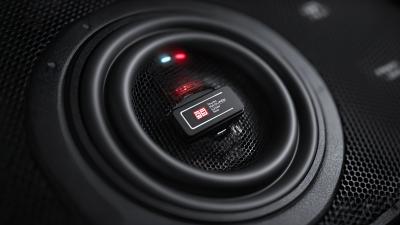
When it comes to enhancing your driving experience, sound quality plays a pivotal role. The Aluminum Alloy Ultra Thin Bass Cannon Seat Surges is designed to revolutionize your ride by delivering powerful sound directly under your seat. This innovative subwoofer not only enables invisible installation but also allows for the release of surging sound waves, which dramatically reshapes the sound field within your vehicle. As per industry reports, the trend of integrating high-quality audio systems in cars is on the rise, with more drivers seeking to achieve a concert-like auditory experience on the road.
The YL-601 model stands out in terms of performance, with a rated power of 120W and a maximum power of 1000W. It operates at a working voltage of 12V, boasting a frequency response range of 50Hz-150Hz, which captures a broad spectrum of sound frequencies. With a sensitivity rating of 92dB and an impedance of 4Ω, this subwoofer ensures exceptional audio clarity and depth, making it a perfect choice for audiophiles looking to enhance their car audio systems. Current industry trends show that consumers increasingly prefer compact yet powerful audio solutions that do not compromise on sound quality or in-car space.
Moreover, the ease of installation and minimalist design of the Aluminum Alloy Ultra Thin Bass Cannon further appeal to modern drivers who value both aesthetics and functionality. With a robust supply capacity of 400 pieces per month and a quick estimated delivery time of 30 days from Guangdong, this subwoofer is not only a viable option for personal upgrades but also for commercial applications in the ever-evolving automotive audio market. As the demand for superior sound quality continues to grow, products like this subwoofer are set to lead the way in transforming the in-car listening experience.
FAQS
: Look for quality and user reviews. Check material and design. Understand how it meets your needs.
Gather information from multiple sources. Discuss with others. Reflect on past decisions for better choices.
Testing ensures safety and reliability. It helps identify defects early. Consider testing as a learning opportunity.
Consider price, durability, and functionality. Think about long-term use. Assess how it fits your lifestyle.
Research the product's lifecycle. Check sourcing methods. Opt for items that minimize environmental impact.
Review return policies. Reach out for support. Reflect on what went wrong and how to improve future choices.
Conclusion
Choosing the best Car Active Subwoofer involves understanding its function and numerous benefits, which enhance audio experiences in vehicles. Key specifications such as size, power output, and frequency response should be weighed carefully to ensure optimal performance. There are various types of active subwoofers tailored for specific use cases—from compact units for tight spaces to larger systems designed for heavy bass enthusiasts.
Assessing power output and performance ratings is crucial, as these factors dictate the subwoofer's capability to deliver clear and impactful sound. Installation considerations must also be factored in, along with a realistic budget that aligns with the desired quality. Ultimately, evaluating top models and their features can guide consumers in making informed choices, ensuring that the selected Car Active Subwoofer meets their audio needs effectively.








 Email
 whatsapp