When it comes to car audio systems, the subwoofer is pretty much the star of the show — it really makes a difference in how your music sounds and how immersive the whole experience feels. I mean, if you're into good sound (who isn’t, right?), you’ve probably heard audio engineers talk about how a decent subwoofer can totally change how you enjoy your drives. James Sullivan, a well-known expert in car audio tech, puts it simply: "Pick the right subwoofer, and your car will feel like a concert hall — you’ll actually feel every beat of your favorite tunes." That just goes to show how important it is to choose the right subwoofer if you're after that punchy, full sound.
Deciding on the best subwoofer for your car isn’t just about picking whatever looks nice. There are a few things to keep in mind — stuff like how much power it can handle, what kind of enclosure it needs, and how big it is. All of these details seriously matter when it comes to getting good sound quality and performance from your system. For all the car audio lovers out there (and even casual listeners who wanna step up their game), understanding these specs and making sure everything fits together smoothly is a huge help.
In this guide, I’ll walk you through what you should think about when picking a subwoofer — stuff you need to know so you can make a smart choice. Whether you’re just into hearing good music on your daily commute or you’re an audiophile craving that perfect sound, the right subwoofer can totally change how you experience your music on the road.

What is a Subwoofer and Its Role in Car Audio Systems
A subwoofer is a specialized speaker designed to reproduce low-frequency sounds, typically between 20 Hz and 200 Hz, which includes deep bass notes that other speakers may struggle to deliver. In car audio systems, a subwoofer plays a crucial role in enhancing the overall sound experience. By providing better bass response, it gives music depth and richness, allowing the listener to experience the full range of sound as intended by the artists.
When integrating a subwoofer into a Car Audio Setup, it's essential to consider itssize, power handling, and enclosure type. The right subwoofer can create an immersive listening environment, making sounds feel fuller and more dynamic. Additionally, the placement and tuning of the subwoofer are vital for achieving optimal performance.
A well-positioned subwoofer can complement the rest of the audio system, enriching the listening experience during drives. Whether for music, movies, or other audio content, a subwoofer elevates the sound quality in a vehicle, delivering bass that resonates and engages listeners.
Types of Subwoofers: Active vs. Passive Explained
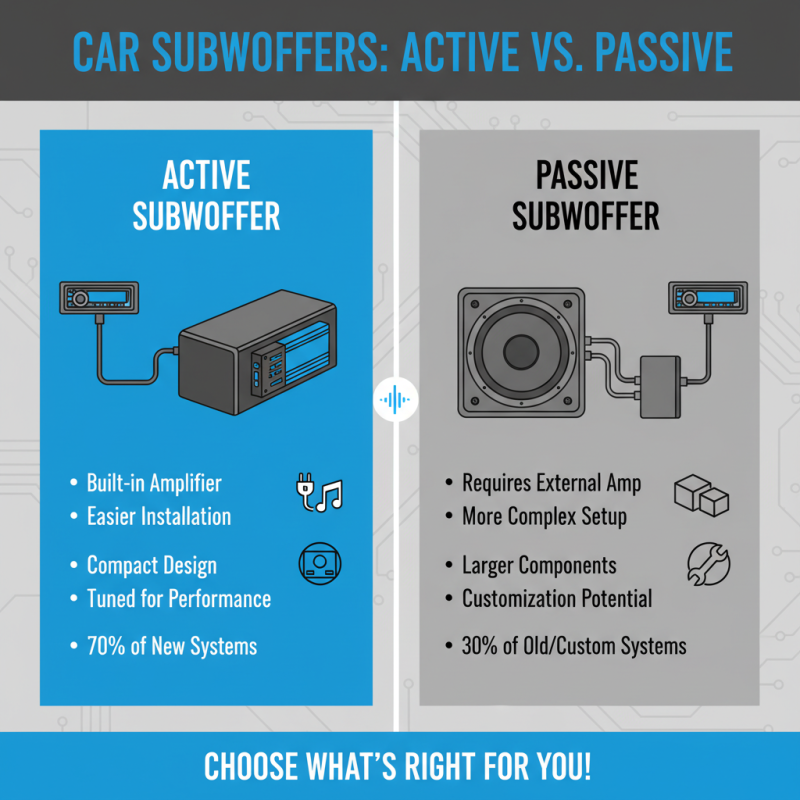
When considering a subwoofer for your car, understanding the differences between active and Passive Subwoofers is crucial. Active subwoofers are equipped with a built-in amplifier, making them easier to install and integrate into your existing audio system. Reports indicate that around 70% of new car audio systems use active subwoofers due to their compact design and streamlined setup. They typically deliver more consistent bass performance since the amplifier is specifically tuned to match the subwoofer, offering a balanced and powerful sound experience.
In contrast, passive subwoofers require an external amplifier, which gives users greater flexibility in customizing their audio system. This type can provide deeper bass response if paired with the right amplifier, but it can also result in a more complex installation process. Industry data shows that about 30% of audio enthusiasts prefer passive subwoofers for their ability to be tailored with high-performance amps, allowing for a unique sound profile that meets personal listening preferences.
**Tips:** When choosing between active and passive subwoofers, consider your listening habits and technical skills. If you're looking for an easy plug-and-play solution, an active subwoofer may be your best bet. However, if you enjoy experimenting with sound and have some technical know-how, a passive subwoofer could lead to a more satisfying audio experience. Additionally, always check the power handling and sensitivity ratings to ensure compatibility with your amplifier for optimal performance.
Key Features to Consider When Choosing a Car Subwoofer
When choosing the best subwoofer for your car, there are several key features to consider to ensure you achieve optimal sound quality and performance. One critical aspect is the subwoofer's power handling capability, typically measured in watts RMS (Root Mean Square). According to industry research, a subwoofer with around 300-1200 watts RMS is ideal for most vehicles, as it provides sufficient power to produce deep, rich bass without distortion. It's important to balance power handling with the amplifier's output to ensure compatibility, as mismatching these components can lead to poor sound quality or even damage.
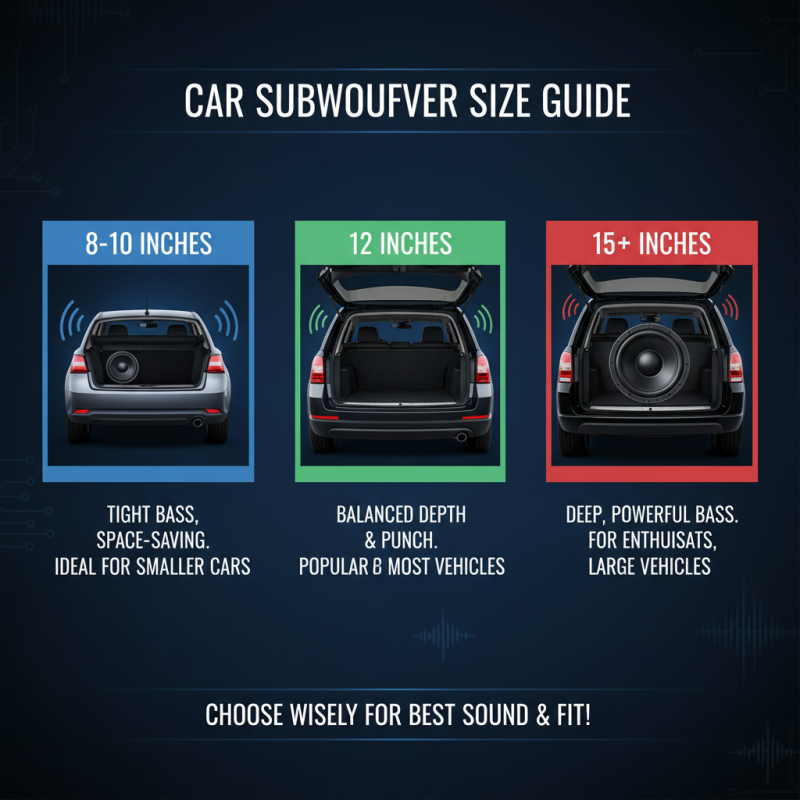
Another essential feature to evaluate is the size of the subwoofer, which generally ranges from 8 to 15 inches. Studies suggest that larger subwoofers tend to generate deeper bass but may take up more space in your vehicle. A 12-inch subwoofer, for instance, strikes a good balance between sound quality and size, making it a popular choice among car audio enthusiasts. Additionally, the enclosure type—sealed or ported—plays a significant role in sound reproduction; sealed enclosures typically offer tighter and more accurate bass, while ported designs can enhance the overall bass output. Understanding these key features will empower you to select the subwoofer that best meets your audio preferences and vehicle specifications.
Subwoofer Power Output Comparison
This chart illustrates the power output of various subwoofer types measured in Watts. Choosing a subwoofer with appropriate power output is crucial for achieving optimal sound quality in your vehicle.
How to Determine the Right Size Subwoofer for Your Vehicle
When choosing a subwoofer for your car, one crucial aspect to consider is the size of the subwoofer, which can significantly influence sound quality and performance. Subwoofers are typically measured in inches, with common sizes ranging from 8 to 15 inches. According to a report by the Consumer Electronics Association, larger subwoofers tend to produce deeper bass, making them ideal for enthusiasts who crave low-frequency sounds. However, it's essential to find a balance since a subwoofer that is too large for your vehicle may lead to installation difficulties and may not fit well within your car's design.
When determining the right size subwoofer for your vehicle, consider the space available in your trunk or cabin. A smaller subwoofer, like an 8 or 10-inch model, is often suitable for compact cars, while larger models (12 inches and above) can be more suitable for SUVs or larger vehicles where sound can resonate effectively. Additionally, the type of music you prefer can dictate your choice; genres like hip-hop and electronic may benefit from larger subwoofers that deliver booming bass frequencies.
**Tips:** Always measure your installation space before purchasing to avoid compatibility issues. Don't forget to consider the subwoofer's power rating and sensitivity, as these factors impact overall output and how well your vehicle's audio system will perform with the new addition. This careful consideration will ensure you choose a subwoofer that enhances your listening experience without compromising on space and compatibility.
Installation Options: DIY vs. Professional Installation
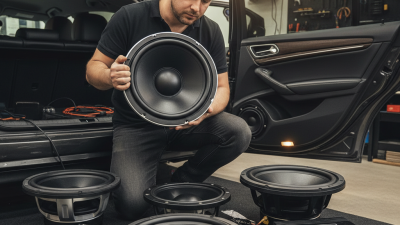
When considering installing a subwoofer in your car, one of the primary decisions you'll face is whether to go the DIY route or seek professional installation. Both options have their pros and cons. DIY installation can be cost-effective, allowing you to save on labor costs and customize the setup according to your specific preferences. However, it requires a good understanding of car audio systems, wiring, and sometimes fabrication of mounting solutions.
On the other hand, professional installation guarantees that the subwoofer is set up correctly, optimizing sound quality and performance. Professionals typically have access to specialized tools and experience, which can be invaluable, especially when dealing with complex installations. However, this convenience comes at a cost, so it's important to weigh your budget against the need for expertise.
Tips: If you choose to install a subwoofer yourself, make sure to study your vehicle's manual for electrical specifications and speaker placements. Invest in quality wiring and connectors to avoid potential issues down the road. For those opting for professional installation, ensure that you check reviews and ask for a detailed quote beforehand, so you know what to expect regarding costs and services offered.
Top Brands and Models of Car Subwoofers on the Market
When it comes to enhancing your car audio experience, selecting the right subwoofer is crucial. Many renowned brands offer a wide range of car subwoofers, each designed to provide different sound profiles and levels of bass performance. These brands are known for their engineering excellence and the ability to deliver deep, powerful bass that complements the overall audio system in your vehicle. Look for models that feature technologies like dual voice coils for better flexibility in setup and efficiency, as well as durable construction to withstand the rigors of road use.
In the current market, you'll find a variety of models, such as compact subwoofers suited for space-constrained vehicles, as well as larger, high-performance options for those who seek a more robust sound experience. Key considerations when choosing a subwoofer include its power handling, sensitivity, and the type of enclosure—whether sealed or ported. A solid subwoofer can significantly enhance the listening experience by adding depth to music genres like hip-hop, electronic, or rock. By focusing on reputable brands that offer a balance of innovation, durability, and sound quality, you can select a subwoofer that meets your specific audio needs and preferences.
Common Mistakes to Avoid When Purchasing a Subwoofer for Your Car
When purchasing a subwoofer for your car, several common mistakes can hinder your experience and satisfaction. One of the most prevalent errors is neglecting to match the subwoofer's power rating with your amplifier. If the subwoofer's power handling capability doesn't align with the amplifier's output, it can lead to distortions or even damage the equipment. Therefore, it's crucial to consider the RMS (Root Mean Square) ratings of both the subwoofer and amplifier, ensuring they are compatible for optimal performance.
Another frequent mistake is ignoring the size and space constraints of your vehicle. Many buyers assume that a larger subwoofer will always deliver better sound, but this isn't necessarily true. It's essential to measure the available space in your vehicle and choose a subwoofer that fits without compromising the quality of sound or aesthetics. Additionally, some individuals overlook the importance of the enclosure type. The right enclosure can significantly affect the sound quality; sealed enclosures provide tight bass, while ported enclosures enhance volume and depth. Understanding these factors can help ensure you select the best subwoofer for your car, resulting in an enjoyable listening experience.
What is a Subwoofer for Car and How to Choose the Best One? - Common Mistakes to Avoid When Purchasing a Subwoofer for Your Car
| Dimension | Value |
| Type of Subwoofer | Enclosed, Free-air, Bandpass |
| Size Options | 8", 10", 12", 15" |
| Power Rating | 200W to 2000W RMS |
| Impedance | 2 Ohm, 4 Ohm, 8 Ohm |
| Frequency Range | 20Hz to 200Hz |
| Enclosure Type Recommendations | Sealed for accuracy, Ported for depth |
| Common Mistakes | Overbuying power, Ignoring installation space, Not matching with the amp |
Unleashing the Power of Sound: An In-Depth Look at the 10/12 Inch Car Active Subwoofer for Ultimate Bass Experience
In the realm of automotive audio systems, the pursuit of exceptional sound quality often hinges on the presence of an active subwoofer. A 10/12 inch car active subwoofer can elevate your musical experience, delivering deep, resonant bass that transforms any drive into a concert-like experience. This type of subwoofer is designed to enhance the original sound quality of your vehicle, bringing out the richness in your favorite tracks while maintaining clarity in vocals and instruments.
Constructed with a focus on durability and performance, these subwoofers often utilize high-quality wood materials, which contribute to their robust acoustic properties. They are not just powerful bass creators; they also ensure that sound from other sources, such as CD players and navigational systems, remains crystal clear. Users can enjoy a stereo surround effect that envelops them in their favorite audio, making even the shortest commutes feel enjoyable and immersive. Whether you’re listening to upbeat music on a road trip or following navigational instructions, the right subwoofer can make all the difference, ensuring every sound is precisely articulated and delivered with impact.
FAQS
: Active subwoofers have a built-in amplifier, making them easier to install and integrate into audio systems, while passive subwoofers require an external amplifier, offering more customization but potentially leading to a more complex installation.
About 70% of new car audio systems use active subwoofers due to their compact design and ease of installation.
Larger subwoofers typically produce deeper bass, making them better for low-frequency sounds, while smaller subwoofers are suitable for compact cars but may not deliver the same bass depth.
Consider the available space in your trunk or cabin and your music preferences, as different genres may benefit from different subwoofer sizes.
DIY installation can save money on labor costs and allows for a customized setup, but it requires knowledge of car audio systems and wiring.
Professional installation ensures the subwoofer is set up correctly for optimized sound quality and performance, utilizing specialized tools and expertise, although it can be more expensive.
Always check the power handling and sensitivity ratings of the subwoofer to ensure compatibility with your amplifier for optimal performance.
Measure your installation space to avoid compatibility issues and consider the power rating and sensitivity for better integration with your vehicle's audio system.
Make sure to study your vehicle's manual for electrical specifications and speaker placements, and invest in quality wiring and connectors to prevent issues.
Ensure you check reviews and ask for a detailed quote to understand the costs and services offered for the installation.
Conclusion
A subwoofer for car audio systems plays a crucial role in enhancing sound quality by delivering deep bass frequencies that standard speakers often cannot reproduce. When selecting the best subwoofer for car use, it's essential to understand the difference between active and passive types, which determine how power is supplied to the speaker. Key features such as sensitivity, frequency response, and enclosure type should also be carefully considered to ensure the subwoofer meets your audio preferences.
Determining the right size for your subwoofer is vital, as it should fit your vehicle's space and your audio listening style. Additionally, installation can be approached as a DIY project or done professionally, depending on your expertise and comfort level. When shopping, avoid common mistakes like overlooking power ratings or forgetting to account for your vehicle's acoustics. By considering these factors, you can choose the ideal subwoofer for car audio that will significantly elevate your listening experience.







 Email
 whatsapp