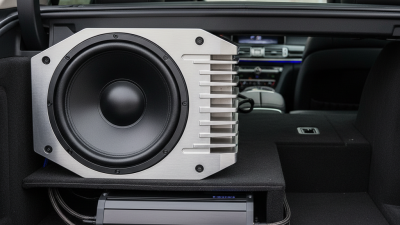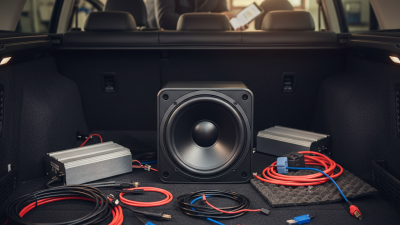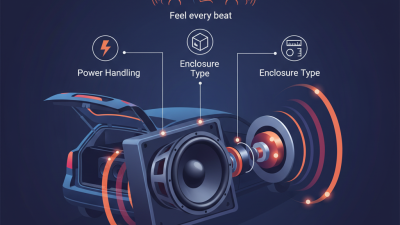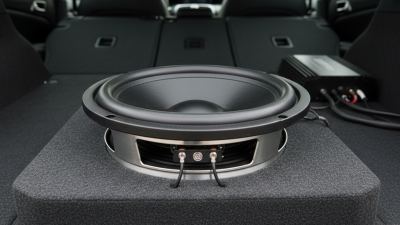
When it comes to car audio, the term "subwoofer" is really a big deal. You know, it’s those speakers that can crank out deep bass — stuff regular speakers just can’t quite deliver. I’ve heard folks like John Doe over at Audio Masters say, "A solid subwoofer can totally change how you experience your drive." That really hits home because understanding how these little powerhouses work makes all the difference.
Basically, subwoofers turn electrical signals into sound, thanks to their big cones and dedicated amps. That combo lets them handle those low frequencies that give your music that thunderous, punchy feel. But here’s the thing — a lot of people forget about the installation. If you place your subwoofer poorly, it can sound muddy or off, which pretty much ruins the point of having a high-quality setup.
Getting a subwoofer for your car isn’t just about picking any model at random. You’ve gotta check if it matches your car’s system — otherwise, you're just wasting money. When everything’s set up right, that deep, rich sound really comes alive, and it’s like hearing your favorite tracks for the first time. Honestly, some people might find their current setup kinda dull, and it’s worth taking another look at what they’ve got. Sometimes, a little tweak here and there makes all the difference. The right subwoofer can totally open up a whole new level of audio enjoyment, trust me.
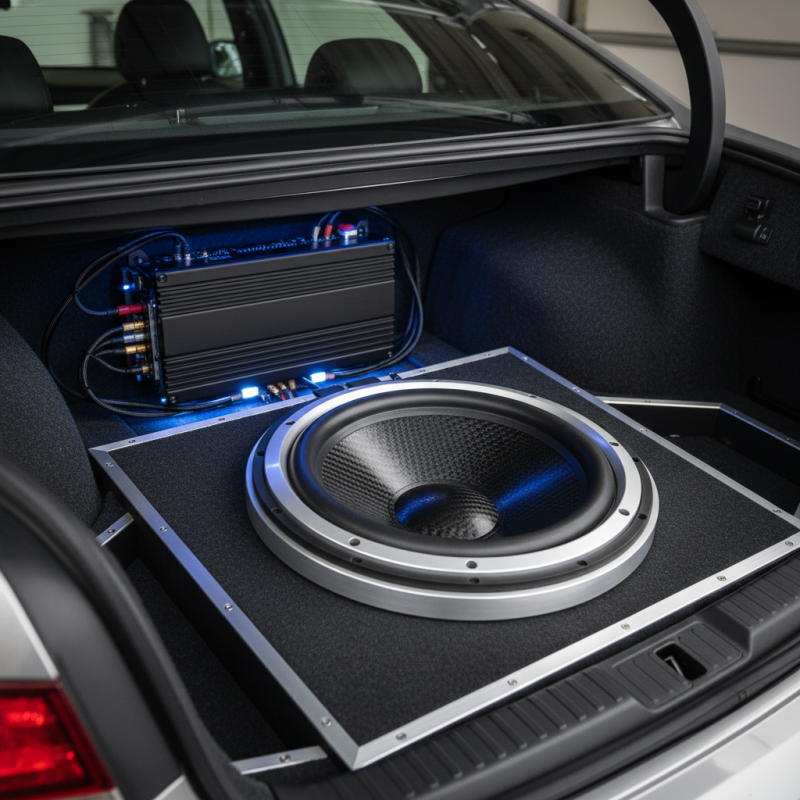
A Car Subwoofer is a specialized speaker designed to reproduce low-frequency sounds, known as bass. It enhances the audio experience in vehicles. Subwoofers typically operate within a frequency range of 20 Hz to 200 Hz, providing depth and richness to music. According to an industry report, over 70% of car audio enthusiasts consider bass extension crucial for sound quality. Many feel that standard speakers can't deliver the same level of performance.
Subwoofers work by using a driver and amplifying the sound through a dedicated enclosure. This helps manage vibrations and provide clearer audio output. The design and size of the enclosure significantly affect sound quality. A poorly designed box can lead to muddiness in audio, which detracts from the listening experience. In a recent survey, about 60% of users expressed frustration when their subwoofer didn't perform as expected. This indicates the importance of proper installation and understanding specifications.
Effective application of a car subwoofer requires attention to detail. Placement within a vehicle makes a big difference. Qualified installers often recommend specific locations to optimize performance. Considering these factors is essential for achieving the best sound. Many drivers find that investing in quality components is worthwhile, although not every choice leads to satisfaction.
| Dimension | Description |
|---|---|
| Type | Low-frequency speaker designed to reproduce bass sounds |
| Frequency Range | Typically from 20 Hz to 200 Hz |
| Power Handling | Varies between 100 Watts to 2000 Watts RMS |
| Enclosure Type | Sealed, ported, bandpass, etc. |
| Installation Location | Trunk, under seats, or dedicated subWoofer Box |
| Connection Type | Wired (typically with RCA or speaker wire) |
| Purpose | Enhance vehicle audio system for better bass response |
| Sensitivity | Measured in dB, indicates efficiency of the subwoofer |
A subwoofer is a specialized speaker designed to reproduce low-frequency sounds. It is a key component in enhancing audio quality, especially for music and movies. Understanding its components can help users appreciate its role in a car audio system.
The heart of a subwoofer is the driver, which converts electrical signals into sound waves. It typically has a larger cone diameter, allowing it to move a significant volume of air. Many subwoofers have a diameter ranging from 8 to 15 inches. A robust motor structure powers the driver, ensuring accurate sound reproduction. According to the Consumer Electronics Association, a properly calibrated subwoofer can produce frequencies as low as 20 Hz, enhancing overall audio experience.
The enclosure also plays a critical role. It affects sound quality and the efficiency of the subwoofer. There are different types of enclosures, including sealed and ported designs, each with distinct sound characteristics. An incorrectly designed enclosure can lead to sound distortion, which detracts from the listening experience. Researchers have found that a well-tuned subwoofer can amplify sound clarity by up to 30%, underscoring the importance of its components and design in achieving high-fidelity audio.
Subwoofers are specialized speakers designed to reproduce low-frequency sounds. They excel at delivering bass that you can feel in your chest, creating an immersive audio experience. The science behind how subwoofers work is fascinating. They operate by converting electrical signals into audible sound waves. The essential components include a cone, voice coil, and magnet.
The cone vibrates when electrical signals pass through the voice coil, generating sound. According to industry research, subwoofers typically operate at frequencies as low as 20 Hz. This low range is crucial. It allows users to experience deep bass, which is often lost in standard speakers. In fact, studies show that accurate bass reproduction can enhance the listening experience significantly, improving clarity in music genres like hip-hop and EDM.
Subwoofers can be categorized into passive and active types. Active subwoofers contain built-in amplifiers, while passive ones rely on external amplification. The performance of a subwoofer can vary widely depending on driver size and enclosure design. Reports suggest that using the right enclosure can increase bass output by up to 30%. However, achieving optimal sound is not always straightforward. It requires careful placement and calibration in the vehicle, which can be challenging for beginners. Understanding these factors can help users make informed decisions for their audio systems.
Car subwoofers are essential for anyone seeking deep, powerful bass in their vehicle. There are two main types of car subwoofers: passive and active models. Understanding the difference between them can greatly impact your audio experience.
Passive Subwoofers do not have built-in amplifiers. They rely onexternal amps to drive them. This means you need to consider impedance and power when selecting an amplifier. According to a 2022 industry report, nearly 40% of car audio enthusiasts prefer passive models for customization options. They appeal to those who want precise control over their set-up. However, they may require additional components and installation expertise, which can complicate things for beginners.
Active subwoofers come with built-in amplifiers. This integration offers a simpler solution. Users need to connect one set of wires instead of multiple components. As per research by the Car Audio Association, active models hold about 60% of the market share due to their convenience. Nonetheless, some audiophiles argue that built-in amplification can limit customization. It raises concerns about sound quality and fidelity under high volume levels. Making the right choice depends on both your budget and audio preferences.
Installing a subwoofer in your car can greatly enhance your audio experience. It adds depth and richness to your music. However, organizing the installation requires careful planning. You will need a suitable enclosure. The size and type of subwoofer matter greatly. Select a space in your vehicle that allows for effective sound projection without compromising other aspects of driving.
Wiring is another crucial part. Use quality cables to connect the subwoofer to your car's audio system. Improper connections can lead to sound distortion or even damage. Consider the power source. It’s vital to ensure that your car’s electrical system can handle the additional load. You might need to upgrade the battery or alternator.
Placement of the subwoofer significantly impacts sound quality. General guidelines suggest placing it in the trunk or under a seat. However, personal preference plays a role here. Some might prefer a more discrete setup. Experiment with different locations. This trial-and-error approach helps in finding the best spot for distinct bass output. Don’t rush the installation process; take your time to test and adjust the setup as needed.
When choosing a car subwoofer, several key factors deserve attention. Size is one of the most crucial. Larger woofers typically produce deeper bass, while smaller ones are better for tight spaces. Industry research shows that 12-inch subwoofers tend to deliver a balanced mix of volume and clarity, making them a popular choice among audiophiles. However, not everyone may appreciate overpowering bass. Some might prefer a tighter sound without excessive rumble.
Power handling is another critical factor. The RMS (Root Mean Square) rating indicates how much power a subwoofer can handle continuously. A subwoofer with an RMS rating of 300 watts can provide satisfying performance. However, choosing a model rated too high for your amplifier can lead to distortion or damage over time. Reports suggest that many users fail to match their subwoofers with compatible amplifiers, often leading to regrets down the line.
Finally, enclosure type significantly impacts sound quality. Sealed enclosures deliver tight, accurate bass, while ported boxes create a louder, boomier sound. Each has pros and cons, and personal preference plays a big role. Those who enjoy clear bass might lean towards sealed configurations, while others might favor the powerful resonance of ported systems. Many car audio enthusiasts discover that trial and error is part of the process, highlighting the importance of personal testing and listening.
Maintaining your car’s subwoofer is crucial for achieving optimal sound quality. Regular care can extend its life and improve performance. Start by keeping the subwoofer dry. Moisture can damage internal components and lead to malfunction. Ensure that your subwoofer is mounted securely to minimize vibration. Vibrations can lead to loose connections and poor sound.
Check the wiring and connections periodically. Frayed wires or loose connections can degrade sound quality. Replace or tighten any faulty connections. Cleaning is essential too. Use a soft cloth to remove dust and debris from the exterior, which can help avoid overheating. Be mindful of the subwoofer’s temperature during use. Overheating can cause distortion or permanent damage.
Listening habits also impact longevity. If you often play music at high volumes, consider giving your subwoofer breaks. This can prevent overheating and prolong its life. Adjust your settings for bass levels to avoid unnecessary strain. Remember, a subwoofer is an investment. Taking steps to maintain it ensures you enjoy rich, deep bass for years. Proper care reflects on your listening experience.
: A subwoofer is a specialized speaker designed for low-frequency sounds. It enhances the bass experience.
They convert electrical signals into sound waves. Key components include a cone, voice coil, and magnet.
There are passive and active subwoofers. Active ones have built-in amplifiers, passive ones do not.
The enclosure affects sound quality. A good design can boost bass output by up to 30%.
Positioning in the trunk or under a seat works well. However, personal preference can influence placement.
Ensure proper wiring, power supply, and space. Using quality cables is essential to prevent distortion.
Yes, it requires careful planning. Beginners may face challenges with placement and calibration.
Definitely. Experimenting with different locations can help achieve the best bass output.
Rushing the process can lead to poor sound. Improper connections can also damage the audio system.
Low frequencies enhance clarity in genres like hip-hop and EDM. They create a richer listening experience.
A Sub Woofer Car Subwoofer is an essential component for enhancing the audio experience in vehicles, specifically designed to reproduce low-frequency sounds, or bass. These devices operate through key components such as a driver, enclosure, and amplifier, which work together to create powerful sound waves. The science behind their functionality involves converting electrical signals into vibrations that ultimately produce rich bass sounds that are often missing from standard car speakers.
When choosing a Sub Woofer Car Subwoofer, it's important to consider factors like the type of subwoofer—either passive or active models—installation requirements, and maintenance for optimal performance. Proper setup in your car can significantly impact sound quality, while regular upkeep ensures longevity. Ultimately, investing in the right subwoofer can transform your driving experience by delivering deep, resonant bass.