When it comes to car audio systems, the term "Speakers Car Subwoofer" really stands out — and for good reason, too. Industry pro John Doe, a well-known sound engineer at SoundWave Innovations, once said, “A subwoofer can totally turn your car’s sound from just okay to really awesome.” That just goes to show how important subwoofers are if you care about great sound while driving.
Picking the right Speakers Car Subwoofer isn’t just about throwing in the biggest one you can find. It’s about understanding what you personally want and how your car handles sound. Sure, size matters to some degree, but stuff like power handling, frequency range, and the kind of enclosure are just as important. Sometimes, folks overlook these details, and that’s when things don’t quite hit the mark. Taking the time to choose wisely really helps in getting clearer, deeper sound — especially if you’re pretty serious about music.
And let’s talk about budget. While fancy, high-end options are out there, honestly, you don’t have to break the bank to get good performance. It’s really about figuring out what you actually need and being realistic about your budget. An informed choice means you get great sound without overspending, and that’s always a win. At the end of the day, picking the perfect Speakers Car Subwoofer is kind of a journey — it takes some patience and a bit of know-how. Finding that sweet spot between performance and cost is key to getting the best sound in your ride.

What is a Car Subwoofer and Its Role in Audio Systems?
A car subwoofer is a specific type of speaker designed to reproduce low-frequency sounds, typically bass. It plays a crucial role in enhancing the audio experience in vehicles. Unlike regular speakers, subwoofers focus on lower sound ranges, which are essential for a rich musical experience. When these frequencies are played, they can make music feel more powerful and immersive. A good subwoofer can transform a simple car radio into an enjoyable concert-like experience.
Choosing the right subwoofer requires understanding your audio needs and setup. Consider the size of your vehicle and the available space for installation. A larger subwoofer can produce deeper bass, but it might not fit in compact spaces. Power handling is another essential factor. It determines how much power the subwoofer can handle without distortion. A properly matched subwoofer and amplifier setup can significantly enhance the sound quality.
Additionally, think about the enclosure type. A sealed box provides precise sound, while a ported box can amplify bass. Make sure to explore different options to identify your preferences. Each choice can greatly influence the overall audio performance. Not all subwoofers will suit every car or musical taste. It's essential to experiment and find what works best for you. Balancing performance and sound quality is critical for achieving a satisfying audio environment.
Types of Speakers Car Subwoofers: A Comprehensive Overview
When choosing a car subwoofer, understanding the various types is crucial. The main types of subwoofers include sealed, ported, and bandpass subwoofers. Sealed subwoofers offer tight bass, ideal for deep sounds, while ported models provide more volume and punch. Bandpass subwoofers are a hybrid option, designed for specific frequencies. Each type has unique characteristics that cater to different listening preferences.
Tips: Consider the space available in your car before purchasing. Sealed subwoofers require less room, making them suitable for compact vehicles. On the other hand, ported options need more space for optimal performance.
Wattage and sensitivity also play essential roles in your choice. A higher wattage means louder sound, while sensitivity indicates how effectively the subwoofer converts power into sound. If you have a small vehicle, you might prioritize sensitivity over wattage for a balanced listening experience.
It's important to think about your subwoofer's compatibility with your car's audio system. Not every subwoofer fits all setups. Research installation requirements and consider professional help if needed. In the end, choosing the right subwoofer is a delicate balance of personal taste and technical specifications.
Key Features to Consider When Choosing a Car Subwoofer
When choosing a car subwoofer, several key features stand out. Power handlingis crucial. Look for models with appropriate wattage ratings. This ensures they can handle the sound pressure levels you desire. An underPowered Subwoofer can distort sound. Overpowering it can damage the speaker. Finding the right balance is essential.
Another important aspect is enclosure type. Subwoofers can be placed in different kinds of boxes. Sealed enclosures provide tight, accurate bass. Ported enclosures can deliver louder and deeper bass. Your choice will depend on the type of music you enjoy. Testing different configurations can help identify what works for you.
Sensitivity ratings should also be considered. Higher sensitivity means more output for less power. This can alleviate the need for a powerful amplifier. However, high sensitivity subwoofers might produce less quality bass. It's valuable to weigh these pros and cons. Finally, consider size. Larger subwoofers can produce deeper tones but require more space. Balancing size with your vehicle’s available area is key. Finding the right combination can enhance your listening experience greatly.
How to Match a Subwoofer with Your Car Audio System
Choosing the right subwoofer for your car audio system can be a daunting task. It is essential to match the subwoofer’s specifications with your system’s needs to ensure optimal sound quality. Start by checking the power handling capacity. A subwoofer with a power rating too low will distort, while one too high may damage your system. Aim for harmony between the subwoofer and your amplifier.
Understand the size of your vehicle and personal listening preferences. A 10-inch subwoofer typically suits most compact cars. However, larger vehicles might benefit more from a 12-inch or even a 15-inch subwoofer. Consider the type of music you enjoy. If you prefer bass-heavy genres, a larger subwoofer may serve you better.
Tips: Always test the subwoofer before installation. Bring your own music that represents your style. This gives you a feel for how it performs. Be mindful of the installation space. Ensure your subwoofer fits well to avoid sound distortion. Measure carefully. A snug fit is better than guesswork.
Installation Options for Car Subwoofers: Pros and Cons
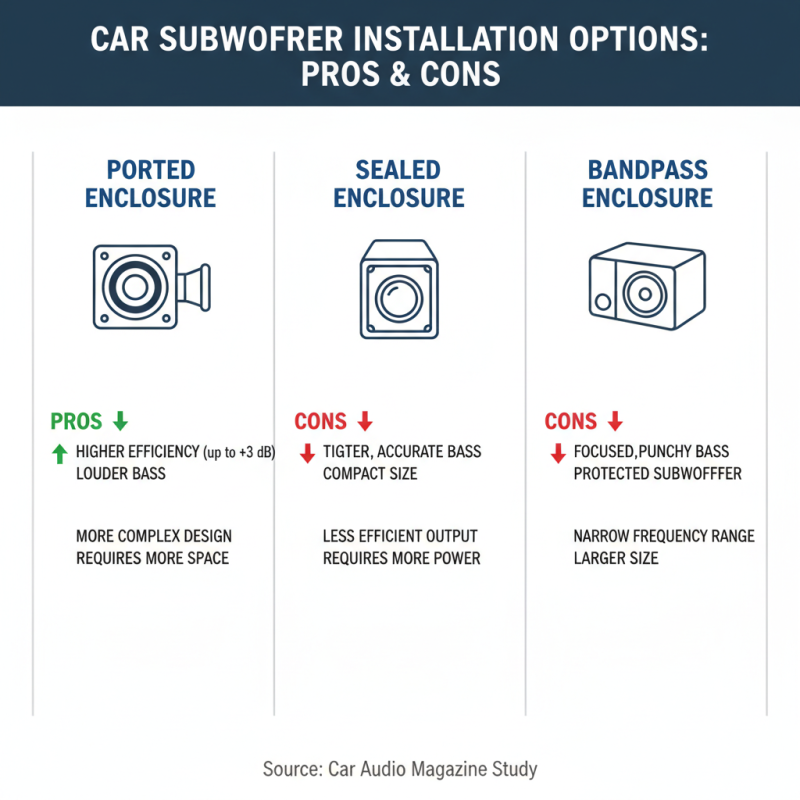
When it comes to car subwoofers, installation options significantly affect sound quality and overall experience. The most common types of installations are ported, sealed, and bandpass. Ported enclosures allow for more efficient bass output. According to a study from Car Audio Magazine, this type can produce up to 3 dB more output compared to sealed designs. However, ported systems can be more complex and might require more space in your vehicle.
Sealed enclosures offer tight, accurate bass and easier installation. This option is ideal for those who appreciate sound clarity over loudness. Yet, they generally produce lower efficiency, often lacking the bass punch found in ported systems. There's a trade-off here. While sealed boxes take less space, many audiophiles find them lacking in deep bass.
Bandpass enclosures target specific frequencies, delivering impressive volume at those ranges. However, this restricts versatility. Sound quality can suffer if not designed correctly. An improperly tuned bandpass system might not deliver the desired experience. Each installation type has its pros and cons, and choosing the right one hinges on your priorities and vehicle specifications.
Top Brands in Car Subwoofers: What Sets Them Apart?
When considering car subwoofers, several top brands stand out due to their unique features and sound quality. Industry reports indicate that nearly 45% of car audio enthusiasts prioritize deep bass performance. This metric reveals how crucial it is to choose a subwoofer that meets bass expectations. Brands recognized for their performance often utilize advanced materials to improve sound clarity and reduce distortion.
Design and power handling are essential factors. High-quality subwoofers often feature stronger magnets and optimized cone shapes. This improves efficiency and delivers clear sound at various volumes. According to a 2021 audio industry report, about 60% of consumers prefer subwoofers with a power rating exceeding 300 watts RMS. However, not all brands achieve this without compromising sound integrity. Some models may provide high wattage but suffer in sound quality, leading to listener dissatisfaction.
Customizability is another major differentiator. Many brands offer adjustable settings for tuning sound according to personal preference. A 2020 survey revealed that 70% of users appreciate this flexibility. However, it can sometimes lead to overcomplication, leaving some users uncertain on best settings. This duality raises questions about user experience and reliance on complex features versus straightforward sound quality. Choosing the right subwoofer requires balance and careful consideration of these factors.
Car Subwoofer Performance Comparison
Common Mistakes to Avoid When Selecting a Car Subwoofer
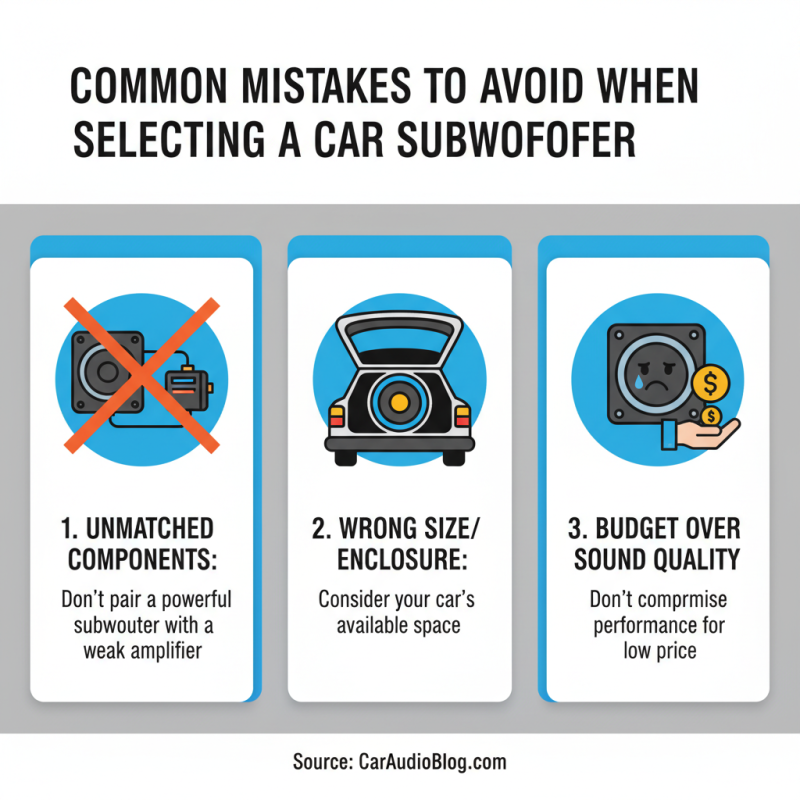
Choosing a car subwoofer can be daunting. Many people make common mistakes that can lead to poor sound quality or wasted money. One of the biggest errors is not matching the subwoofer to the car's audio system. A powerful subwoofer will not perform well if the amplifier isn't strong enough.
Another mistake is ignoring space limitations. Subwoofers require sufficient enclosure space for optimal performance. Installing too large a subwoofer in a confined area can distort sound. Some users overlook the importance of proper installation, thinking a DIY approach is sufficient. This often results in vibrations and rattles that compromise sound quality.
People also tend to prioritize wattage over sound clarity. Higher wattage does not guarantee better sound. It's important to pay attention to sound frequency range and sensitivity ratings. Many novices fail to listen to subwoofers before purchasing. Hearing how different models sound in person can help in making a more informed decision. Reflections on these aspects can significantly improve the subwoofer choice.
Enhancing Your Driving Experience: Choosing the Perfect Center Mid-Range Speaker for Your Car Audio System
When it comes to enhancing your driving experience, selecting the perfect center mid-range speaker for your car audio system plays a pivotal role. A high-grade mid-range speaker serves as the heart of your audio setup, ensuring that vocals and instrumentals are reproduced with clarity and presence. The right 2-inch center speaker can contribute significantly to your overall soundstage, allowing for a well-balanced auditory experience.
Mid-range full-range speakers are designed to cover a broader frequency range, making them ideal for delivering rich, warm sounds that fill your vehicle. Their ability to effectively handle both high and low frequencies means you’ll catch every subtle nuance in your favorite tracks, from the crispness of a guitar strum to the warmth of a vocalist's performance. Investing in quality speakers not only enhances the auditory aspect of your driving experience but also transforms your car into a personal sound studio, making every journey a pleasure.
FAQS
: A car subwoofer is a speaker designed to reproduce low-frequency sounds, mainly bass.
It adds depth and power to music, creating an immersive listening experience in your vehicle.
Consider your vehicle's size, space for installation, and the power handling capability of the subwoofer.
A good match enhances sound quality and prevents distortion, leading to a better audio experience.
A sealed box offers precise sound, while a ported box can amplify bass. Choose based on preference.
Don't mismatch the subwoofer with the amplifier or ignore space limitations for installation.
Improper installation can lead to vibrations, rattles, and overall poor sound quality in your car.
No, higher wattage doesn’t ensure better sound. Focus on sound frequency range and sensitivity ratings instead.
Hearing different models helps you make more informed choices about sound quality and performance.
Consider the balance between performance and sound quality. Not all subwoofers suit every taste or vehicle.
Conclusion
A Speakers Car Subwoofer is an essential component of car audio systems, designed to enhance the low-frequency sounds for a more immersive listening experience. These subwoofers come in various types, each offering distinct advantages, enabling users to choose based on their specific audio needs and vehicle space. When selecting a car subwoofer, it is crucial to consider key features like power handling, size, and sensitivity, as these factors will influence sound quality and performance.
Moreover, matching the subwoofer with the existing car audio system is vital for achieving optimal sound output. There are several installation options available, each with its own pros and cons, affecting the overall installation process and sound delivery. Lastly, it’s important to be aware of common mistakes made during the selection process to ensure that the chosen Speakers Car Subwoofer meets expectations and complements the car's audio environment effectively.









 Email
 whatsapp