Leave Your Message
0%

Picking the right car Audio Subwoofer in 2026 isn’t just about chasing the biggest bass number. A beefy sub can still sound flat if it’s hooked to a tiny amp, sketchy wiring, or a box that just doesn’t suit it. The best car audio subwoofer setup has to fit your vehicle, how you listen, the space you’ve got, and your electrical system. A small hatchback might do great with a sealed 8-inch sub. A big SUV? It can often handle a ported 12-inch design with deeper low-end. Those little differences really add up.

And honestly, real-world listening shows stuff specs tend to miss. Pay attention to tight kick-drum punch, clear vocals, and bass that stays controlled at normal volumes. Look at the sub’s RMS power, not just peak. Before you buy, double-check amp compatibility, impedance, sensitivity, and enclosure requirements. Good installers also look at grounding points, fuse placement, and vibration control. A rattly panel can fool you into thinking the sub is distorting. It’s a super common mistake.

There’s no one perfect subwoofer for everyone. Even seasoned enthusiasts sometimes overestimate power and underestimate cabin acoustics. I’ve seen systems that looked impressive lose clarity because the box was in the wrong spot. So measure your cargo area carefully. Leave some room for ventilation and future maintenance. Trustworthy brands usually give clear specs, warranty support, and install guidance. Independent reviews help, but listening for yourself still matters most. Trust your ears first, then check the numbers. This guide looks at practical 2026 choices, including sound quality, durability, install demands, and long-term value. Great bass should feel deep—not sloppy.
How to Choose the Best Car Audio Subwoofer in 2026?

Understanding What a Car Audio Subwoofer Does

A car audio subwoofer is a dedicated low-frequency speaker. It reproduces bass that ordinary Door Speakers often cannot move cleanly.Kick drums feel deeper. Movie explosions gain physical weight. Yet a subwoofer should not simply make the cabin shake. Its real job is controlled pressure, usually below about 100 hertz, while the main speakers handle vocals and instruments.

Grand View Research’s 2024 automotive audio market report projects approximately 7.3% annual growth through 2030. This suggests stronger demand for improved in-car sound, but market growth does not guarantee better installation. A technician should check enclosure volume, amplifier power, speaker sensitivity, and available trunk space. A sealed enclosure usually gives tighter bass. A ported enclosure can produce more output, but it may sound loose when poorly tuned. Small details matter.

Listening position matters too. Bass can become louder near corners and weaker in the center of the cabin. Use familiar recordings, not only electronic music. Start with modest gain, then adjust the crossover near 70–90 hertz. The World Health Organization’s 2022 safe-listening standard recommends no more than 80 decibels for 40 hours weekly. That limit is easy to exceed inside a sealed vehicle. I have found that louder bass can feel impressive for ten minutes, then become tiring. Sometimes, less output sounds more accurate.

Identifying the Right Subwoofer Type for Your Vehicle

How to Choose the Best Car Audio Subwoofer in 2026?

Identifying the Right Subwoofer Type for Your Vehicle

Choosing a subwoofer starts with your vehicle’s available space, not its advertised power. Measure the trunk, cargo floor, or rear-seat area before comparing models. A shallow-mount subwoofer suits compact cabins and limited storage. It can deliver controlled bass without stealing much room. However, its smaller enclosure may produce less low-end depth. That trade-off is easy to overlook.

A sealed enclosure works well for accurate, tight bass and simpler installation. It often fits listeners who enjoy acoustic music, vocals, or balanced daily driving. A ported enclosure creates stronger output around tuned frequencies. It needs more space and careful design, though. An incorrectly sized port can make bass sound boomy rather than powerful. I have found that louder is not always clearer.

Powered subwoofers combine the speaker and amplifier in one housing. They suit factory audio systems and installations with limited wiring space. Component subwoofers offer more flexibility when you need deeper bass and future upgrades. Match the speaker’s RMS rating with the amplifier’s continuous output. Ignore peak wattage when possible; it can exaggerate real performance. Check the final impedance and confirm the amplifier supports it safely. Your vehicle’s cabin changes how bass behaves, so online specifications cannot replace listening tests. A careful installer should also verify polarity, fuse placement, grounding, and enclosure security. I would not choose a type based on numbers alone. The best fit may be less dramatic, but more usable every day.

Matching Subwoofer Size to Your Listening Preferences

Choosing the best car audio subwoofer begins with your listening habits, not the largest diameter available. A compact 8-inch subwoofer often suits listeners who prefer tight bass, clear vocals, and modest volume. It can fit beneath a seat or inside a small enclosure. Small spaces matter.

If you enjoy hip-hop, electronic music, or deep cinematic effects, a 10-inch or 12-inch model may provide stronger low-frequency impact. Larger cones move more air, but they need suitable enclosure volume and amplifier power. Size alone can mislead. A poorly matched 12-inch subwoofer may sound slow, muddy, or weak.

I once selected a larger subwoofer for stronger bass and ignored my car’s limited trunk space. The enclosure blocked storage and produced uneven bass near the driver’s seat. That choice changed my testing method. I now listen from the driver’s position using familiar tracks, checking kick-drum definition and sustained bass notes. I also compare sealed and ported enclosures at the same volume. Sealed designs usually sound controlled, while ported designs can deliver more output around specific frequencies. Neither option is automatically better.

Check the subwoofer’s RMS power rating, enclosure requirements, and available amplifier output. A practical match prevents distortion and overheating. Set the crossover gradually, often near 70–90 Hz, then adjust by ear. Measure twice. Personal preference still matters.

Calculating Power Ratings and Amplifier Compatibility

How to Choose the Best Car Audio Subwoofer in 2026?

Calculating Power Ratings and Amplifier Compatibility

Start with RMS power, not peak power. RMS describes continuous output during normal listening. Peak ratings only show brief performance and can mislead buyers. Match the subwoofer’s RMS rating with the amplifier’s RMS output at the same impedance. A 500-watt subwoofer rated at four ohms needs an amplifier delivering close to 500 watts at four ohms.

Check the voice coil configuration carefully. Dual voice coils can create different final impedances through series or parallel wiring. Use the wiring configuration that your amplifier supports. Never guess here. A lower impedance can demand much more current and create excessive heat. I recommend leaving modest headroom, perhaps 10 to 20 percent, rather than running an amplifier at its limit.

Keep the numbers realistic.

In actual installations, enclosure design changes the result dramatically. A sealed box often gives controlled, tight bass, while a ported box can produce greater output around its tuned frequency. Confirm the enclosure volume and tuning range before purchasing. Set the amplifier gain with a clean test tone, not as a volume control. Watch for audible distortion, hot cables, or sudden protection shutdowns. I once trusted a peak rating and chose too much amplifier power; the system sounded impressive briefly, but the setup was poorly balanced. Rechecking RMS values and impedance would have prevented that mistake.

Choosing the Best Enclosure Design for Sound Quality

Choosing the best subwoofer enclosure starts with the vehicle, not the driver. A sealed box usually gives tighter transient response and a gentler 12 dB-per-octave roll-off. A ported box can deliver more output near its tuning frequency, but it needs careful vent design. AES technical papers commonly report roughly 3 dB of added efficiency around tuning for comparable vented systems. That advantage disappears when the port is too narrow.

Measure the available space first. A box that flexes, leaks, or sits against a rattling panel will waste expensive performance. CTA-2031-A measurement guidance emphasizes repeatable conditions, while IEC 60268-5 supports standardized loudspeaker testing. In practical terms, use a rigid enclosure, seal every joint, and keep the port opening unobstructed. Even a two-centimeter gap can create audible turbulence at high excursion.

I once preferred a compact sealed enclosure because it sounded controlled in a small cabin. Later, measurements showed a poorly positioned box caused a strong peak near 55 Hz. The design was not the only problem; placement changed the result. Recent vehicle acoustics studies from the Audio Engineering Society show cabin gain can significantly boost low frequencies below the vehicle’s transition region. Software predictions help, but real-car measurements matter more. Start with the manufacturer’s recommended net volume, subtracting the driver and port displacement. Then test several crossover points. A perfectly flat graph may still feel lifeless from the driver’s seat.

How to Choose the Best Car Audio Subwoofer in 2026? - Choosing the Best Enclosure Design for Sound Quality

Enclosure Design Typical Sound Character Efficiency Low-Frequency Extension Transient Response Typical Space Requirement Installation Difficulty Best Use Case
Sealed Tight, controlled, and accurate bass with a smooth roll-off. Lower; usually requires more amplifier power for the same output. Good, with a gradual decline below the system resonance. Very good; generally well suited to detailed music reproduction. Compact to moderate; commonly about 0.5–1.25 ft³ per driver, depending on the driver design. Easy Limited trunk space, balanced sound, jazz, rock, acoustic music, and daily driving.
Ported or Bass-Reflex Louder and more pronounced bass around the enclosure tuning frequency. Higher; the port can increase output over a specific frequency range. Very good when the port is correctly tuned, often around 28–40 Hz in car-audio applications. Good, but less controlled below the tuning frequency. Moderate to large; commonly about 1.0–2.0 ft³ per driver, plus port volume. Moderate High-output systems, electronic music, hip-hop, and listeners who prioritize impact.
Bandpass Strong output within a narrower frequency range, with a less audible driver. Very high within its designed passband. Can be deep, but depends heavily on chamber volume and port tuning. Moderate; the response may sound less natural outside the optimized range. Large; requires two chambers and a carefully calculated port. Advanced Maximum output in a targeted bass range when enclosure design and installation are professionally optimized.
Passive-Radiator Similar extended bass to a ported enclosure without a conventional port. High, although output depends on the passive radiator's displacement limits. Very good when the radiator mass and enclosure volume are correctly matched. Good; typically cleaner than a poorly designed ported box. Moderate to large; often similar to a ported enclosure but without port-length requirements. Advanced Vehicles where a long port would not fit or where port noise needs to be minimized.
Infinite-Baffle or Free-Air Natural and spacious bass when the vehicle structure provides adequate separation. Moderate to low compared with a properly designed ported enclosure. Depends strongly on the rear acoustic volume and installation quality. Good when the rear wave is well isolated from the front wave. Minimal enclosure volume, but it requires a structurally sealed mounting location. Advanced Vehicles with a suitable rear deck or partition and a strong focus on preserving cargo space.
Selection Guide: Choose a sealed enclosure for accuracy and compact installation, a ported enclosure for greater output and deeper perceived bass, or an advanced design such as bandpass or passive-radiator when maximum performance justifies additional calculation and installation complexity. Always follow the subwoofer manufacturer's recommended enclosure volume, tuning frequency, and power range.

Comparing Materials, Sensitivity, and Frequency Response

Choosing a car audio subwoofer in 2026 requires more than chasing maximum wattage. Grand View Research’s 2024 Automotive Audio Market report valued the global sector at approximately USD 5.3 billion in 2023, reflecting strong demand for improved in-car sound. That growth also creates confusing specifications. A rigid polypropylene cone usually resists moisture and distortion, while treated paper can sound warmer and respond quickly. Composite cones often balance stiffness and weight, but their performance depends heavily on construction quality.

Sensitivity shows how loudly a subwoofer plays with available power. A model rated at 90 dB needs less amplifier power than one rated at 84 dB. The difference is significant. However, sensitivity measurements may use different test conditions, so comparisons require caution. Frequency response matters more than an impressive low number. A published range of 20–200 Hz does not guarantee useful output at 20 Hz. Look for the response curve, not only the headline specification. The Audio Engineering Society’s technical literature repeatedly links enclosure design, measurement conditions, and low-frequency accuracy. In practical installations, a sealed enclosure can deliver tighter bass, while a ported enclosure usually creates more output around its tuning frequency. It gets messy. I still distrust perfect-looking charts, because cabin gain and seat position can change the result. Choose a subwoofer whose material, sensitivity, and measured response match your amplifier, enclosure, and listening space.

How to Choose the Best Car Audio Subwoofer in 2026?

Comparing cone materials, sensitivity, and frequency response

Sensitivity indicates how efficiently a subwoofer converts amplifier power into sound pressure, while the frequency-response range shows its approximate operating limits. The figures below are representative midpoints from commonly published specifications for car subwoofers using each cone material; actual performance depends on enclosure design, amplifier power, impedance, and vehicle acoustics.

Checking Installation Requirements and Long-Term Reliability

How to Choose the Best Car Audio Subwoofer in 2026?

Choosing a car audio subwoofer starts with the installation space, not the largest power rating. Measure the available depth, width, and mounting height before comparing specifications. A shallow enclosure may fit beneath a seat, while a larger sealed box may require trunk space. Check the subwoofer’s impedance against the amplifier’s supported load. Mismatched settings can create excessive heat and distortion. Also inspect the vehicle’s electrical capacity, including battery condition and alternator output. Small mistakes matter.

Wiring needs careful planning. Use the correct cable size for the amplifier’s current demand, and protect the power cable with a suitable fuse near the battery. Secure every connection against vibration. Loose terminals can produce intermittent sound or dangerous heat. The enclosure should remain firmly mounted, with enough ventilation around the amplifier. Avoid placing equipment where water, luggage, or sharp tools can damage it.

Long-term reliability depends on daily conditions. Heat inside a parked vehicle can stress speakers, adhesives, and electronic components. Dust and moisture deserve attention too. Choose durable materials and inspect the surround, terminals, and enclosure seals every few months. Listen for rattling or a weaker bass response. These signs often appear before failure. I sometimes focus too much on sound pressure and overlook maintenance. That is worth reconsidering. A slightly less powerful system, installed cleanly, may perform better for years.

Grand View Research Automotive Audio Report: Wholesale 10-Inch High-Power Trapezoidal Active Car Subwoofer

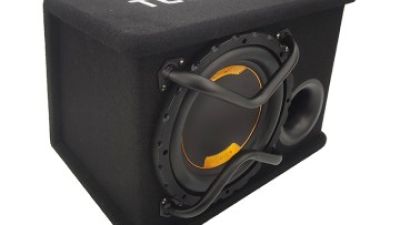
The automotive audio market continues to move toward compact systems that deliver powerful, immersive sound without sacrificing valuable cabin space. A wholesale 10-inch high-power trapezoidal active car subwoofer is designed to meet this demand, combining a built-in amplifier with a space-efficient enclosure. Its distinctive trapezoidal shape allows flexible placement in the trunk or under selected seating areas, while the 10-inch driver produces deep, controlled bass that adds energy and dimension to every track.

The shocking bass follows your rhythm, making your heart flutter. It is specially crafted for those who truly understand music. With responsive low-frequency performance, this active subwoofer can enhance vocals, instruments, and electronic beats without overwhelming the rest of the sound system. Its high-power design supports a richer listening experience during daily commutes, weekend drives, and long-distance journeys. For distributors and retailers, the product offers an appealing combination of strong output, integrated functionality, and practical installation, making it a compelling choice for drivers seeking a more dynamic in-car audio experience.

FAQS

What does a car audio subwoofer do?

It reproduces deep bass that ordinary door speakers often cannot handle cleanly. Kick drums feel heavier. It should add controlled pressure, not constant cabin shaking.

Where should I install a subwoofer?

Measure the trunk, cargo floor, or rear-seat area before choosing equipment. A shallow enclosure suits compact vehicles and limited storage. Keep useful space.

What is the difference between sealed and ported enclosures?

A sealed enclosure usually produces tighter, more accurate bass. A ported enclosure can create stronger output around its tuned frequency. Poor tuning may sound boomy.

Should I choose a powered or component subwoofer?

A powered subwoofer combines the speaker and amplifier in one housing. It suits factory systems and limited wiring space. A component subwoofer offers more flexibility for future upgrades.

How do I match a subwoofer with an amplifier?

Compare RMS ratings at the same impedance. Ignore peak wattage when possible. It can exaggerate real performance. Leave modest headroom instead of pushing the amplifier constantly.

Why does voice coil configuration matter?

Dual voice coils can create different final impedances through series or parallel wiring. The amplifier must support the selected configuration safely. Never guess.

How should I adjust the subwoofer?

Start with modest gain and set the crossover near 70–90 hertz. Use familiar recordings, including vocals and acoustic instruments. Listen from the driver’s seat. Louder is not always clearer.

How can I avoid damaging the system?

Verify polarity, fuse placement, grounding, and enclosure security. Watch for distortion, hot cables, or protection shutdowns. Keep listening levels moderate inside the sealed cabin. I once trusted peak ratings too much. Rechecking RMS values would have helped.

Conclusion

Choosing the best Subwoofer Car Audio system in 2026 starts with understanding how a subwoofer enhances low-frequency sound, adding depth and impact to music without overpowering the rest of the system. Consider whether a powered, passive, enclosed, or component subwoofer suits your vehicle, available space, and installation preferences. Size also matters: smaller models can provide controlled bass in compact cabins, while larger models may deliver deeper and more powerful output for listeners who enjoy strong bass response.

Before buying, match the subwoofer’s power handling with a compatible amplifier, paying attention to RMS ratings rather than peak figures alone. Select an enclosure design that balances sound quality, efficiency, and trunk space, then compare materials, sensitivity, and frequency response to understand how the system may perform. Finally, check wiring, mounting depth, ventilation, and installation complexity. Durable construction, reliable connections, and proper setup will help maintain consistent performance and long-term listening enjoyment.
Elena

Elena

Elena is a dedicated marketing professional at Foshan Shunde Keshenglang Audio Industry Co., Ltd., renowned for her exceptional expertise in the audio production sector. With a profound understanding of the company’s core offerings, she plays a pivotal role in promoting innovative audio solutions......
Previous China Top 10 Slim Subwoofer Manufacturers for Global Buyers