Leave Your Message
Picking out a powered Car Subwoofer isn’t just about hunting for the biggest bass punch. Honestly, it’s more about finding that sweet spot between sound quality, how much space you’ve got in your car, your electrical system’s capacity, and what’s convenient for your daily driving. For example, a small under-seat sub might work perfectly in a Honda Civic, but if you’re rolling in an SUV, you might be better off with a bigger enclosure. The wrong choice could result in annoying rattling panels, weak vocals, or even overloading your factory system — nobody wants that.
Steve Meade, who’s pretty much a go-to guy in the car-audio world, says it best: “Bass should be felt, but it still needs to sound like music.” That’s a point worth keeping in mind. Don’t just look at peak wattage. It’s important to check out the continuous RMS power, impedance, how efficient your amplifier is, the design of the enclosure, and whether you can control the low-pass crossover. Brands like KICKER, JL Audio, and Rockford Fosgate usually share useful specs, but let’s be honest — those numbers can sometimes be confusing. For instance, a 300-watt RMS sub might sound way cleaner than a louder one that’s poorly tuned.
Always measure twice. The installation process can reveal details you might overlook — like whether the unit will fit under your seat, leave room for proper ventilation, or connect safely to your car’s wiring. If you’re using the factory head unit, you might need a line-output converter. Some cars also require careful signal integration to avoid automatic volume adjustments that weaken your bass. From my experience, a modest, well-tuned system often feels a lot better than trying to power a huge sub that’s not properly set up. But hey, this isn’t a one-size-fits-all deal. Your musical tastes, vehicle type, and budget all come into play. This guide is here to walk you through those factors so you can pick a powered car subwoofer with realistic expectations, and hopefully, avoid wasting money on something that doesn’t work for you.
How to Choose a Powered Car Subwoofer?
Understanding What a Powered Car Subwoofer Does
A powered car subwoofer combines a speaker, amplifier, and enclosure in one compact unit. It strengthens low frequencies that standard Door Speakers often cannot reproduce clearly. You hear deeper bass, not merely louder music. It is not magic. The unit still depends on correct installation, suitable settings, and enough electrical power.
The amplifier drives the subwoofer without requiring a separate external amplifier. This simplifies wiring and saves space under a seat or inside a trunk. Check the continuous power rating, not only the impressive peak number. A well-matched system can produce tight bass without making the door panels rattle. In a small cabin, excessive output may sound boomy and hide vocals.
Installation affects performance more than many buyers expect. The unit needs a stable mounting surface and protected wiring. Its input connection must match the vehicle’s audio system. Set the gain carefully; it is not a volume control. I would test several recordings with steady bass, then adjust the low-pass filter gradually. Phase settings also deserve attention because bass can weaken from certain listening positions.
I have sometimes judged a subwoofer from one short demo and regretted it. That mistake taught me to listen inside the actual car, with the engine running. Road noise changes what you perceive. A practical choice balances bass depth, available space, electrical demands, and daily listening habits.
| Selection Dimension | Typical Specifications | What It Does | What to Look For |
|---|---|---|---|
| Subwoofer Type | Powered Subwoofer with a built-in amplifier | Combines the speaker driver, enclosure, and amplifier in one unit. This reduces installation complexity and saves interior space compared with separate components. | Choose a powered design when you want a simpler installation, compact footprint, and matched amplifier performance. |
| RMS Power | Approximately 75–300 watts RMS for many compact car models | Indicates the continuous power the subwoofer can handle during normal operation. It is more useful for comparing performance than peak power. | Match the RMS output to the vehicle's electrical system and the desired bass level. Avoid choosing based only on the largest peak-power number. |
| Peak Power | Often about two times the RMS rating | Describes short-term maximum power handling or output under brief conditions. It does not represent continuous listening performance. | Use peak power as a secondary reference. Give priority to RMS power, sensitivity, enclosure design, and installation quality. |
| Driver Size | Approximately 6.5–12 inches | Larger drivers can move more air and generally produce deeper, fuller bass, while smaller drivers are easier to fit under a seat or in a compact trunk area. | Choose 6.5–8 inches for tight spaces, 8–10 inches for a balance of size and output, or 10–12 inches for stronger low-frequency performance. |
| Frequency Response | Commonly around 20–150 Hz, depending on design | Shows the range of low-frequency sound the unit is designed to reproduce. The lower limit relates to deep bass, while the upper limit affects integration with the main speakers. | Look for a useful low-end response and an adjustable low-pass filter so the subwoofer blends smoothly with the vehicle's speakers. |
| Enclosure Design | Sealed, ported, or passive-radiator enclosure | A sealed enclosure usually provides controlled and accurate bass. Ported and passive-radiator designs can produce more output around their tuning range but may require more space. | Select sealed for compact installation and precise bass; select ported or passive-radiator designs when higher output is more important than minimum size. |
| Form Factor | Under-seat, slim, or conventional enclosure | Determines where the unit can be installed and how much cabin or cargo space it occupies. | Measure height, width, depth, cable clearance, and ventilation space before purchasing. Never rely only on advertised exterior dimensions. |
| Input Compatibility | Speaker-level inputs and/or RCA line-level inputs | Speaker-level inputs connect to factory speaker wiring, while RCA inputs connect to a compatible aftermarket receiver or signal processor. | For a factory audio system, choose a model with speaker-level inputs or a suitable signal-sensing connection. |
| Low-Pass Filter | Adjustable cutoff commonly within approximately 50–150 Hz | Removes higher frequencies so the subwoofer focuses on bass and integrates with the front and rear speakers. | Choose an adjustable filter and set the cutoff near the low-frequency limit of the main speakers, then fine-tune by listening. |
| Phase Control | 0°/180° switch or variable phase adjustment | Helps align the subwoofer's bass waves with the vehicle's other speakers. Incorrect alignment can make bass sound weak at the listening position. | A phase switch is useful for basic setup; variable phase control provides more precise adjustment when placement is difficult. |
| Remote Bass Control | Optional wired remote level control | Allows the driver to adjust subwoofer level from the front seat without changing the main audio volume. | Choose this feature if music styles vary frequently or if quick bass adjustment is important. |
| Power Requirements | Usually connected directly to the vehicle battery through a fused power cable | The built-in amplifier needs a stable supply of current. The vehicle's electrical system, wiring, ground connection, and fuse all affect reliability. | Use the fuse size and cable gauge specified in the installation instructions, and install the main fuse close to the battery. |
| Efficiency and Heat Management | Class D amplification is common in compact powered subwoofers | Class D amplifiers generally produce less heat and use less electrical power than many older amplifier designs at comparable output. | Ensure adequate ventilation around the amplifier section and avoid covering heat sinks or mounting the unit where moisture can collect. |
| Sound Character | Tight, balanced, or high-output bass | The enclosure, driver, amplifier, vehicle cabin, and crossover settings all influence whether the bass sounds controlled or emphasizes impact. | For everyday listening, prioritize clean integration and low distortion over maximum volume alone. |
| Installation Location | Under a seat, in a trunk, or against a cargo-area panel | Placement affects available space, sound distribution, wiring length, and protection from luggage or passengers. | Keep the unit secure, protect it from water and loose objects, and confirm that it does not interfere with seat movement or safety equipment. |
| Best Choice by Priority | Space saving, balanced performance, or maximum bass output | Different designs suit different vehicles and listening goals. No single specification determines overall performance. | Compare RMS power, driver size, enclosure type, dimensions, inputs, controls, and installation requirements as a complete system. |
Specifications shown are typical reference ranges rather than requirements for every vehicle. Always verify the vehicle's available space, electrical capacity, wiring requirements, and audio-system compatibility before installation.
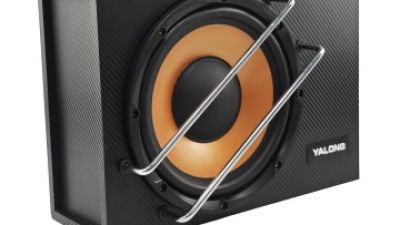
The YL-1013-D Customized Soundstage Art brings a distinctive trapezoidal subwoofer design to the car audio experience. Built from durable wood, its sculpted enclosure adds visual character while helping create a focused and immersive soundstage. The angled shape is designed to integrate naturally into a vehicle’s interior, making the subwoofer more than a functional component—it becomes a refined part of the cabin’s audio architecture. With its carefully considered proportions, the enclosure supports a clean installation and complements customized interior layouts.
Powered at 150W RMS, the YL-1013-D delivers powerful, controlled bass for drivers who want greater depth and impact from their music. Its 20Hz–4kHz frequency response helps reproduce low-end energy with added fullness while supporting a smooth transition across the listening range. The wood construction contributes to a warm, resonant character, and the Super Bass feature gives drums, electronic rhythms, cinematic effects, and other bass-rich content a stronger physical presence. Designed for car audio enthusiasts seeking both performance and individuality, this trapezoidal subwoofer turns the listening space into a more expressive and engaging sound environment.
: It combines a woofer, amplifier, and enclosure in one unit. This saves space and simplifies installation.
Speaker-level inputs suit factory stereos. RCA inputs usually provide cleaner adjustment when available.
Continuous RMS power better reflects daily performance than peak power. Large peak numbers can distract from weak integration.
Useful controls include a low-pass filter, phase adjustment, gain, bass boost, and remote level control. Thermal protection also matters.
Start with the gain low. Raise it slowly while listening for rattling, muddy drums, or harsh distortion.
Play a steady bass line with the seat positioned normally. Listen for clean kick drums and separate notes.
Choose a secure location with space around the amplifier for cooling. Small enclosures fit neatly but may sound less effortless.
Run the subwoofer moderately for thirty minutes. Watch for burning smells, shutdowns, harsh noise, or loose panels.
Include wiring, installation, tuning, and possible sound-deadening materials. A cheaper unit may cost more after repeated adjustments.
No. Compare RMS power, controls, frequency response, warranty terms, and service access. Personal taste still matters. Not always.
Choosing the right Powered Car Subwoofer can greatly improve your vehicle’s audio experience by adding deeper, more powerful bass without requiring a complicated system upgrade. Start by understanding how a powered subwoofer combines a speaker and built-in amplifier in one unit. Check your vehicle’s audio system, available connection options, and the space under a seat, in the trunk, or in another suitable area. Then consider the subwoofer’s size and power rating, selecting a model that fits your listening preferences and works well with your existing system.
You should also compare enclosure types, installation requirements, input options, adjustable controls, and amplifier features such as crossover and bass adjustment. Sound quality, durability, energy use, and overall reliability are equally important when comparing products. Finally, set a realistic budget that includes any installation accessories or professional fitting costs. A balanced choice will provide clear, controlled bass while fitting comfortably into your vehicle and complementing the rest of the audio system.






 Email
 whatsapp