When you're looking to boost your car's audio setup, honestly, the right subwoofer can totally change the game. Picking a good subwoofer isn’t just about cranking up the volume—it's about adding that deep, rich bass that makes your favorite songs sound so much better and more alive. I know, with so many options out there, it can feel kinda overwhelming trying to find the perfect one for your car. But don’t worry—just a few key tips can make the whole process way easier and help you pick a subwoofer that fits your style and your car’s personality.
In this little guide, I’ll go over some important things to think about when choosing a subwoofer, like size, wattage, and what kind of enclosure works best. Keep these in mind, and you’ll be able to find something that really matches your setup—giving you a balanced, full sound that makes every ride more enjoyable. Whether you’re just a casual listener or actually serious about your audio, the right subwoofer can turn your car into a mini concert hall. Trust me, once you get it right, every trip feels way more fun and immersive.
Understanding Subwoofer Basics and Their Role in Car Audio
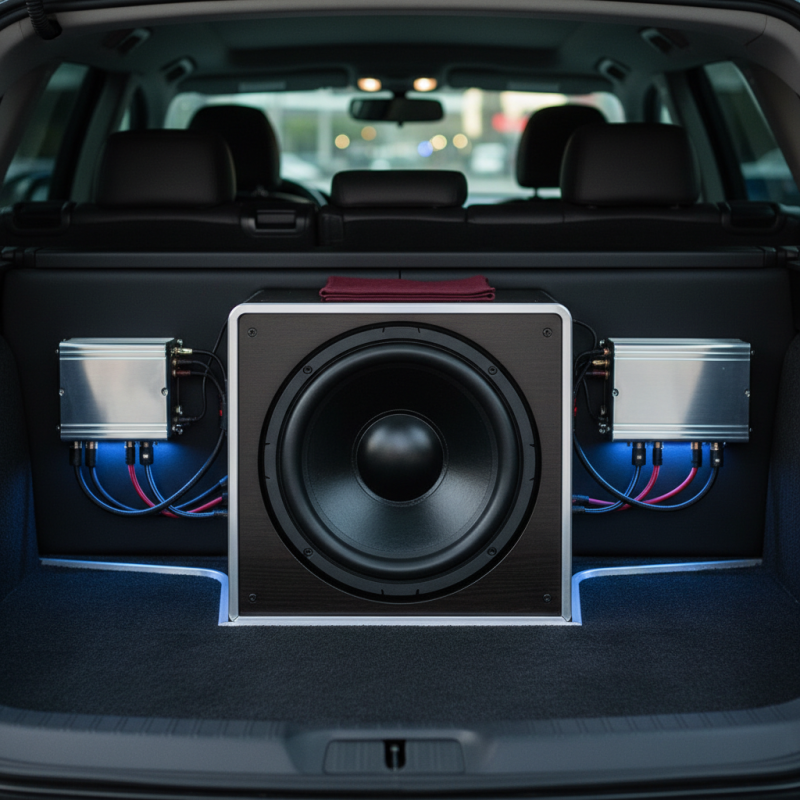
When it comes to enhancing your car’s audio experience, understanding the role of a subwoofer is fundamental. A subwoofer is specifically designed to reproduce low-frequency sounds, typically ranging from 20Hz to 200Hz. These frequencies are essential for creating a full-bodied sound, complementing the midrange and high frequencies that standard speakers handle. Without a dedicated subwoofer, the audio in your car may sound flat, lacking depth and the rich bass that adds excitement to your favorite music.
Choosing the right subwoofer involves considering its size, power handling, and enclosure type. Larger subwoofers tend to produce deeper bass but may require more power and space. Conversely, smaller subwoofers can fit in tighter spaces and still deliver impressive sound when paired with a suitable amplifier. Additionally, different types of enclosures—sealed, ported, or bandpass—directly affect sound performance. Sealed boxes generally offer tighter bass while ported designs can amplify lower frequencies, making it crucial to match your subwoofer choice with your listening preferences and car setup. By grasping these basics, you can make an informed decision that enhances your overall car audio experience.
Types of Subwoofers: Sealed vs. Ported and Their Features
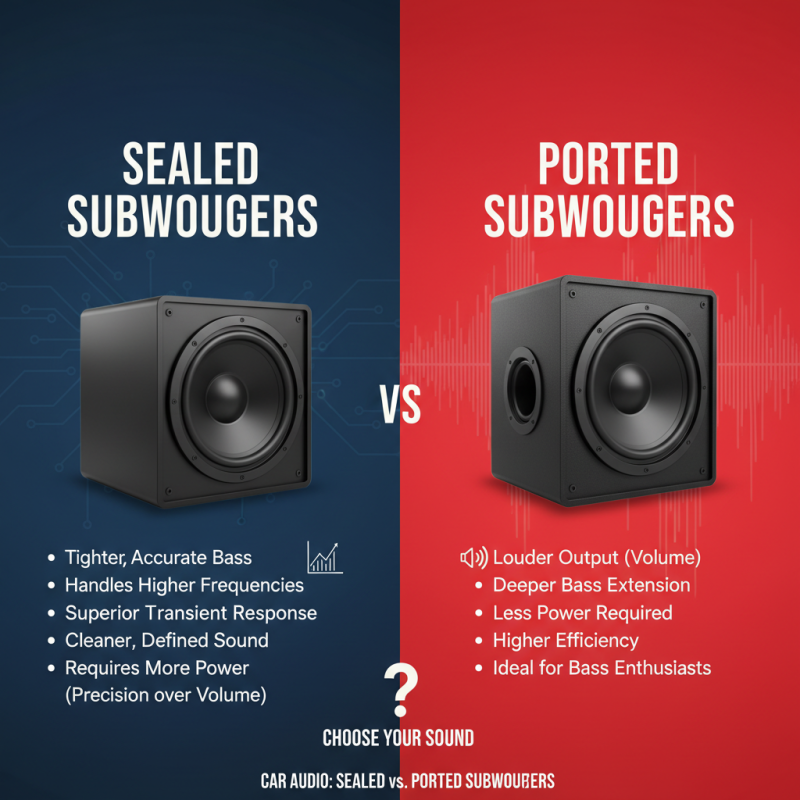
When choosing a subwoofer for your car sound system, understanding the differences between sealed and ported subwoofers is crucial. Sealed subwoofers, also known as acoustic suspension subwoofers, provide a tighter and more accurate bass response. They are often appreciated for their ability to handle higher frequencies while maintaining sound quality. According to industry data, sealed enclosures typically perform better in terms of transient response, resulting in a cleaner, more defined sound. However, they generally require more power to produce the same output level as their ported counterparts, making them ideal for audiophiles seeking precision over sheer volume.
On the other hand, ported subwoofers, or bass reflex subwoofers, utilize a vent or port to enhance efficiency and low-end output. This design allows them to produce deeper bass at lower power levels, which is particularly beneficial in larger vehicle spaces or for those who prefer a booming sound. Reports indicate that ported subwoofers can be 3 to 6 dB more efficient than sealed designs, translating to a more impactful bass experience. However, they may compromise some clarity in the upper bass frequencies. Understanding these fundamental differences can guide car audio enthusiasts in selecting the subwoofer that best suits their listening preferences and sound system architecture.
Key Specifications to Consider When Selecting a Subwoofer
When selecting the best subwoofer for your car sound system, several key specifications should be considered to ensure optimal performance and sound quality. First and foremost, the subwoofer's power handling capacity, measured in watts, is crucial. This indicates how much power the subwoofer can withstand before distortion or damage occurs. Look for a model that can handle your amplifier's output, allowing for clear, distortion-free bass even at high volumes. Additionally, pay attention to the sensitivity rating, which measures how efficiently a subwoofer converts power into sound. A higher sensitivity rating means that the subwoofer will produce more sound output with less power, making it a critical factor for maximizing your sound system's performance.
Another important specification is the subwoofer's frequency response range, which indicates the lowest and highest frequencies the sub can reproduce. For deep, rich bass, choose a subwoofer with a low-frequency range, ideally below 30 Hz. This ensures that you capture the full depth of bass sounds. Furthermore, consider the subwoofer's enclosure type—sealed or ported—as this influences the overall sound quality and efficiency. Sealed enclosures tend to offer tighter and more accurate bass, while ported enclosures can produce louder, boomier bass. By carefully evaluating these specifications, you can make an informed decision when choosing the best subwoofer for your car, enhancing your listening experience for both music and movies.
Power Handling: RMS vs. Peak Power Explained
When selecting a subwoofer for your car sound system, understanding power handling is crucial, particularly the concepts of RMS (Root Mean Square) and peak power. RMS power refers to the continuous power level that a subwoofer can handle without distortion over time. It is a reliable indicator of a speaker's capacity to deliver rich, consistent bass, making it an essential figure to consider when matching a subwoofer with an amplifier. Subwoofers with higher RMS ratings typically provide better performance and longevity, as they can deliver tight, controlled low frequencies suitable for various music genres.
On the other hand, peak power signifies the maximum power a subwoofer can handle for short bursts without damage. While it may seem appealing to focus on peak power, it can be misleading, as it doesn’t represent The Speaker's ability to produce sound over prolonged periods. Focusing solely on peak power can lead to underwhelming performance and may result in undesirable distortion during regular listening sessions. Therefore, it's crucial to prioritize RMS ratings when choosing a subwoofer, ensuring that it matches well with your amplifier to achieve the best sound quality and maintain the integrity of your car audio experience.
Matching Subwoofers with Your Car Stereo System
When selecting a subwoofer for your car audio system, it's crucial to consider how it will integrate with your existing stereo setup. The output capacity of your head unit plays a significant role in determining the type of subwoofer you should choose. For instance, if your stereo system has a built-in amplifier, you'll want a subwoofer that matches its power output to ensure optimal performance. Aim for a subwoofer that can handle the wattage produced by your stereo without distortion or damage to either component.
Additionally, the impedance of both your car stereo and the subwoofer must be compatible. Most Car Subwoofers come with different impedance ratings, usually2, 4, or 8 ohms. If your head unit or amplifier is designed for a specific impedance, pairing it with a subwoofer of the same rating will help achieve the best audio quality. It's also important to consider the space available in your vehicle. A subwoofer that is too large for your car may not only compromise sound quality but can also affect installation ease and overall aesthetics. Therefore, balancing size, power, and impedance is key to enhancing your car's sound system experience.
Space Constraints: Choosing the Right Size for Your Vehicle
When selecting a subwoofer for your car, understanding the space constraints of your vehicle is paramount. According to a survey conducted by the Consumer Electronics Association, approximately 68% of car owners express dissatisfaction with their car audio systems due to limited bass output. This commonly stems from either the size of the factory-installed speakers or inadequate enclosure options in compact vehicles. The need for a proper fit becomes even more critical in smaller cars, where every inch of space is valuable. Therefore, it is essential to evaluate the available trunk or cabin dimensions before making a purchase.
Different types of subwoofers cater to varying spatial limitations. Compact, shallow-mount subwoofers are designed specifically for vehicles with tight spaces, providing powerful bass without requiring excessive room. According to industry studies, these subwoofers can often produce sound pressure levels comparable to their larger counterparts while occupying significantly less volume—some achieving around 85% of the bass output of traditional models. Choosing the right size not only ensures optimal performance but also preserves cargo space and maintains the aesthetic quality of the vehicle’s interior. Thus, careful consideration of vehicle dimensions and subwoofer specifications is vital for enhancing the overall listening experience without compromising on space.
Budgeting for Quality: Balancing Cost and Performance in Subwoofers
When selecting a subwoofer for your car sound system, budgeting effectively is crucial. High-quality subwoofers can significantly enhance your audio experience, but prices can vary greatly. To find the right balance between cost and performance, it’s essential to set a realistic budget based on your specific needs and preferences. This means considering not only the cost of the subwoofer itself but also the potential expenses for installation and the necessary additional components, such as an amplifier or a proper enclosure.
Investing in a well-designed subwoofer can yield superior sound quality, providing deep and powerful bass that enriches your overall listening experience. However, it’s important to remember that a higher price does not always guarantee the best performance. Researching specifications, reading reviews, and understanding your personal sound preferences can help you make an informed decision. Look for options that offer a good balance of features and price—sometimes, spending a little more can lead to enhanced performance that justifies the investment, while in other cases, budget-friendly choices may surprise you with their quality.
Subwoofer Quality vs. Price Analysis
This chart illustrates the relationship between the quality rating and the price of various subwoofers. Each data point represents different subwoofers analyzed based on their cost-efficiency for car sound systems.
Innovative Design and Features of the YL-109C Ultra-Thin Aluminum Alloy Subwoofer for Under-Seat Installation
The YL-109C Ultra-Thin Aluminum Alloy Subwoofer is an innovative solution for those who desire high-quality sound without compromising space. Designed specifically for under-seat installation, this subwoofer utilizes cutting-edge engineering to produce deep and powerful sound waves that enhance the auditory experience in any vehicle. Its ultra-thin profile allows for seamless integration into various car interiors, making it an ideal choice for compact cars or those looking to maintain their aesthetic without bulky audio equipment.
Featuring a robust aluminum alloy construction, the subwoofer delivers not only durability but also superior sound quality. By positioning the sound source directly beneath the seat, it ensures that the audio reverberates throughout the cabin, providing a rich listening experience. This design choice minimizes the loss of sound energy typically seen with traditional subwoofers, resulting in clearer bass and a more dynamic range of frequencies. Whether you're driving or parked, the YL-109C ensures that your music is felt as much as it is heard, transforming everyday commutes into exhilarating sound journeys.
FAQS
: RMS (Root Mean Square) power refers to the continuous power level that a subwoofer can handle without distortion over time, indicating its capacity to deliver consistent bass.
RMS power is a reliable indicator of a subwoofer’s ability to produce sound over prolonged periods, while peak power only represents short bursts and can be misleading regarding actual performance during regular use.
It’s essential to consider the output capacity of your head unit and ensure the subwoofer can handle its wattage, as well as match the impedance of both components for optimal performance.
Most car subwoofers typically come with impedance ratings of 2, 4, or 8 ohms, and it's important to pair them with a head unit or amplifier designed for the same impedance.
You should consider the available space in your vehicle to ensure the subwoofer fits well, as sizing affects both sound quality and installation ease.
Set a realistic budget that includes the cost of the subwoofer, installation, and any additional components needed, and focus on finding a good balance between cost and performance.
Researching specifications, reading reviews, and understanding your sound preferences can help you decide if a subwoofer offers the quality that justifies its price.
Not always; higher prices do not necessarily ensure superior performance, so it's important to evaluate features relative to cost and not rely solely on price as an indicator of quality.
Conclusion
When enhancing your car audio experience, selecting the right subWoofer Car is crucial for achieving deep, impactful bass. Understanding the basics of subwoofers and their role in car audio systems sets the groundwork for making an informed choice. You'll encounter various types of subwoofers, such as sealed and ported, each offering unique features that influence sound quality and performance.
Key specifications, including power handling measured in RMS and peak power, play an essential role in determining a subwoofer's capabilities. It's important to match the subwoofer car with your existing stereo system to ensure compatibility. Additionally, consider space constraints in your vehicle when selecting the size of the subwoofer, as well as budgeting wisely to balance cost and performance, ensuring you get the best value for your investment in a high-quality subwoofer.










 Email
 whatsapp