Leave Your Message
0%

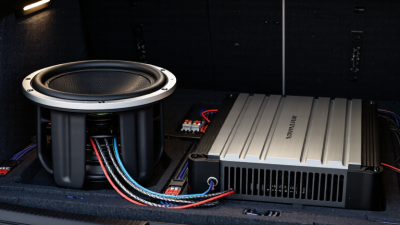
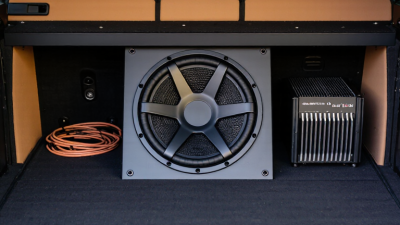
So, what's the best Car Speaker subwoofer? Honestly, there's no single winner that works for every vehicle. It really comes down to your specific setup—your cabin, the music you jam to, your amp, and how much space you're willing to give up. A compact sealed subwoofer tucked under a seat? That can give you tight, controlled bass without hogging cargo room. But if you're chasing that chest-thumping impact, a bigger enclosure might be the way to go—just be ready to lose some trunk space. At the end of the day, fit is everything.

Let’s be clear about one thing right off the bat: the Grand View Research report on the automotive audio market is looking at the whole category, not ranking subwoofers against each other. And honestly, that distinction is important. Knowing the market is growing won’t tell you which sub is going to sound amazing in your actual car. If you want to compare options that matter, you should look at RMS power handling, enclosure specs, impedance, and the measured frequency response. And peak power? Take it with a grain of salt—those numbers don’t really reflect what you’ll hear day to day.

There’s another way to look at this, and it comes from research. Harman’s Dr. Sean Olive ran a bunch of published listening tests and found that people tend to prefer a “flat, smooth, extended frequency response.” Now, he wasn’t testing every car speaker subwoofer in every vehicle—his work is more about loudspeakers in general. But the takeaway still holds: louder bass doesn’t automatically mean better bass. You want clean notes, not just a shaking rearview mirror. And honestly, in a noisy showroom it’s hard to judge small differences. So a little skepticism goes a long way. Alright, let's be real – this guide tries to balance how things actually fit in the real world, what specs you can trust, and what you're really listening for. But at the end of the day, your own taste and how well you install stuff can totally flip the results.
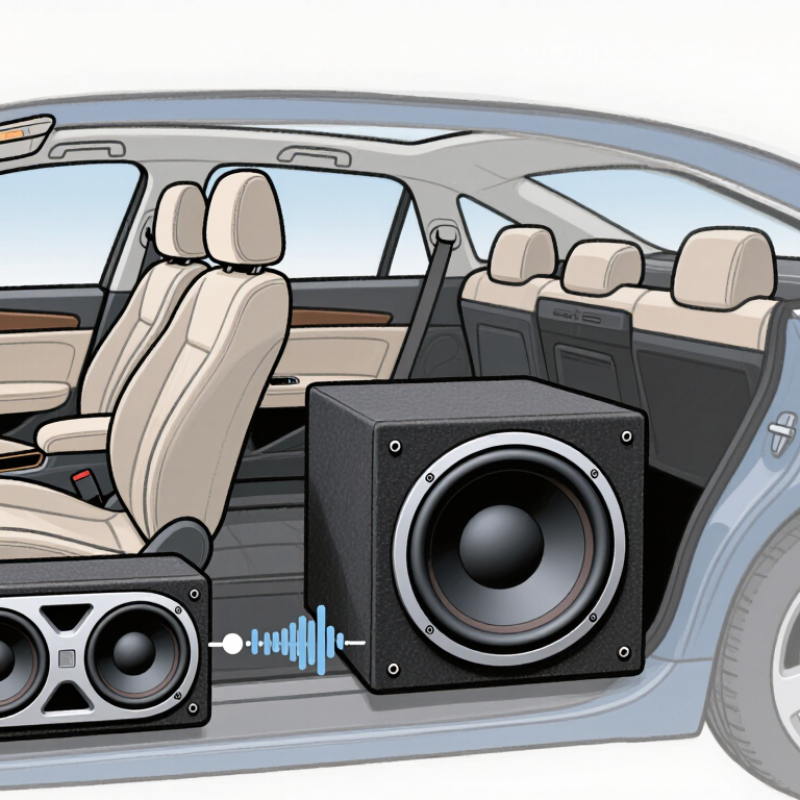
What Is the Best Car Speaker Subwoofer?

What a Car Subwoofer Does in a Vehicle Audio System

A subwoofer handles the low bass that small Door Speakers often struggle to reproduce cleanly. It adds weight to a kick drum and depth to a low engine-like effect in a soundtrack. You should feel the bass as a controlled pulse, not hear the door trim rattle.That distinction matters.

The ITU-R BS.775-3 multichannel audio standard specifies an LFE channel bandwidth up to 120 Hz. This is a useful reference, not a mandatory car-audio crossover setting: cabin size, speaker placement, and system tuning all affect the result. A subwoofer also lets smaller speakers focus on midrange detail, but poor level or crossover choices can make bass sound detached from the rest of the cabin. More output is not automatically better. I would treat published frequency limits as starting points, not proof that a system will sound balanced in every vehicle.

Tips: Start with a moderate subwoofer level. Play a familiar track, then lower the setting until bass blends with vocals and door speakers. Check for rattles at ordinary listening volume; a little adjustment may reveal an imperfect installation before you buy more equipment.

How Subwoofer Design Shapes Bass Performance

A car subwoofer’s bass depends on more than cone size. The enclosure matters just as much. A sealed box often produces controlled, compact bass and fits tighter spaces. A ported enclosure can create stronger output near its tuned frequency, but it needs more room and careful design. That trade-off is easy to miss. A poorly matched port may sound boomy, even with a capable driver. Cone area and excursion affect how much air the system can move. Bigger is not always better.

The driver’s suspension, motor strength, and enclosure volume work together. Adequate excursion helps reproduce low notes without strain, while a well-matched enclosure supports smoother response. Yet specifications alone cannot predict sound inside a car. Cabin size, placement, and crossover settings all change what reaches the seat. A subwoofer tucked into a trunk corner may sound louder from the driver’s seat than one aimed elsewhere. Listen from your usual position. Small details matter.

Fit comes first. Measure the available space, then compare it with the enclosure’s recommended volume. Match amplifier output to the subwoofer’s rated range, and set gain carefully; it is not simply a volume control. I’d leave room for adjustment, too. A spec sheet cannot capture every cabin, and a setup that sounds impressive with one track may feel muddy with another.

What Is the Best Car Speaker Subwoofer? How Subwoofer Design Shapes Bass Performance

Bass wavelength decreases as frequency rises. Values below are calculated using a sound speed of 343 m/s.

Low bass has long wavelengths, so enclosure volume, port tuning, and installation can affect how a subwoofer performs in a car. This chart shows wavelength—not a measured comparison of specific subwoofer designs.

Which Specifications Matter When Comparing Subwoofers

What Is the Best Car Speaker Subwoofer?

Which Specifications Matter When Comparing Subwoofers

The best choice depends on your cabin, amplifier, and listening habits—not cone size alone. Compare continuous power handling, measured in RMS watts, with the amplifier’s output at the subwoofer’s impedance. Peak-power figures describe brief bursts and can mislead. CTA-2006-A provides standardized test methods for mobile-audio amplifier power ratings, making matched test conditions essential when comparing power claims. For the driver itself, AES2-2012 (r2020) outlines repeatable loudspeaker measurement methods. Check frequency response and sensitivity, too. A 3 dB sensitivity increase can deliver similar output with roughly half the power, when measurements use comparable conditions.

Enclosure type changes the result. A sealed box often gives controlled bass in a compact space; a ported box can play louder around its tuned frequency, but needs careful sizing. Picture a 10-inch subwoofer behind a seat: the driver may fit, yet the enclosure and airflow may not. Check mounting depth, box volume, impedance, and the response curve—not just the advertised low-frequency limit. I’d treat any single specification cautiously; test conditions vary, and car interiors reshape bass.

Tips: Match RMS ratings at the actual impedance. Measure the available space, then check the enclosure’s recommended volume. A small mismatch matters.

How Enclosure Type Affects Sound and Installation

What Is the Best Car Speaker Subwoofer?

The best subwoofer depends partly on its enclosure. A sealed box is compact and usually produces controlled, even bass. It can suit music with quick, defined notes. A ported enclosure uses an opening to move more air near a tuned frequency, often creating louder bass from the same amplifier. That extra output comes with trade-offs: the box is typically larger, and notes outside its tuning range may sound less controlled. Neither design is automatically better.

Installation matters as much as sound preference. Measure the available space before choosing an enclosure, including room for wiring and ventilation. A box that blocks a seat latch or sits loosely in the trunk can become a nuisance. Check the subwoofer’s recommended enclosure volume and match the amplifier’s power and impedance to its specifications. Secure the enclosure firmly; a heavy box should not slide during sudden stops.

I once underestimated how much trunk space a ported box would take. It looked manageable on paper.

Tips: For tight, balanced bass, consider sealed. For stronger output and deeper emphasis near its tuning, consider ported. Listen at your usual volume, then adjust placement and crossover settings in small steps. Small changes matter. If the bass sounds boomy, check the enclosure position and settings before assuming the subwoofer itself is the problem.

How to Match a Subwoofer to Your Car Audio System

What Is the Best Car Speaker Subwoofer?

How to Match a Subwoofer to Your Car Audio System

The best subwoofer is one your amplifier can power safely and your car can accommodate. Start by checking the amplifier’s supported impedance and continuous power rating. Match the subwoofer’s RMS power handling to the amplifier’s output at that impedance. Peak numbers can mislead. They describe brief bursts, not steady listening.

Next, measure the available space, including room for the enclosure and wiring. A box that barely fits on paper may block a seat latch or cargo panel. Enclosure type and internal volume affect bass response, so follow the subwoofer’s specified range rather than guessing. Small details matter. Confirm that the factory or aftermarket system has a suitable low-pass crossover, then adjust gain gradually; it is not a volume control. Listen for rattling, distortion, or bass that overwhelms vocals. A little compromise is normal: a compact enclosure may save trunk space but sound different from a larger one. Recheck the fit and settings after a few days of real driving, because the first setup is rarely perfect.

What Is the Best Car Speaker Subwoofer? - How to Match a Subwoofer to Your Car Audio System

Subwoofer Type Typical Driver Size Typical RMS Power Range Common Impedance Options Space and Enclosure Considerations Best Match for Key Matching Check
Compact sealed system 8 in (20 cm) 100–300 W Commonly 2 Ω or 4 Ω; some models use dual voice coils Small enclosure; sealed boxes are typically compact and provide controlled bass. Cars with limited cargo space and listeners seeking a modest bass upgrade. Confirm the enclosure volume is within the driver’s recommended range and the amplifier supports the final load.
Everyday sealed or ported system 10 in (25 cm) 150–500 W Commonly 2 Ω or 4 Ω; dual voice-coil configurations are also available Usually needs more enclosure space than an 8-inch system; ported boxes are generally larger than sealed boxes. Balanced daily listening, with stronger low-frequency output than many compact setups. Match the subwoofer’s RMS rating to the amplifier’s RMS output at the actual wiring impedance.
Higher-output sealed or ported system 12 in (30 cm) 200–800 W Commonly 2 Ω or 4 Ω; dual voice-coil configurations are also available Requires a larger enclosure and adequate mounting depth; ported designs can use substantial cargo space. Listeners who want fuller, louder bass and have room for a larger enclosure. Check the vehicle’s available space, enclosure specifications, amplifier stability, and electrical-system capacity.
Large-driver, high-output system 15 in (38 cm) 300–1,000 W Commonly 2 Ω or 4 Ω; dual voice-coil configurations are also available Typically needs a large enclosure, significant cargo space, and careful installation planning. High-output setups where enclosure space and supporting power are available. Verify the enclosure’s internal volume and tuning requirements; a larger driver is not automatically louder or better in every vehicle.
Under-seat powered system Often 6.5–8 in (16.5–20 cm) Varies by model; compare the stated RMS rating Built-in amplifier and driver; load is usually not user-configurable Designed for compact installation; check dimensions, ventilation, and clearance before buying. Vehicles with very limited cargo space and listeners seeking a simple, moderate bass addition. Check whether the unit accepts the car stereo’s signal type and whether it includes the wiring and controls needed for installation.

How to choose: Compare RMS power ratings rather than peak or “max” figures, confirm the amplifier can safely drive the subwoofer’s final impedance, and use an enclosure that meets the driver’s specifications. Sensitivity, installation quality, available space, and vehicle acoustics also affect the result; driver size alone does not determine which system is best.

How to Choose the Best Subwoofer for Your Vehicle and Listening Needs

A good car subwoofer is not simply the one with the biggest cone or highest power rating. Match its RMS power handling to the amplifier’s clean output, then check that the enclosure fits your vehicle. Measure the available space, including room for wiring and airflow. A sealed box often suits tight spaces and controlled bass; a ported box can play louder around its tuning range, but needs more room. Fit matters.

Think about what you actually listen to. For clear vocals and steady kick drums, a modest subwoofer, properly crossed over with the main speakers, may be enough. For deep electronic bass, check the subwoofer’s frequency response and enclosure design rather than relying on peak-watt claims. Those numbers can look impressive. They do not tell the whole story: cabin shape, placement, and door-speaker performance all affect what you hear. A careful installer can measure response in the vehicle, though even good measurements cannot make every seat sound identical.

Set volume with hearing health in mind. NIOSH’s occupational noise recommendations use 85 dBA for eight hours and halve recommended exposure time for each 3 dB increase. That is a workplace guideline, not a car-audio listening target, but it illustrates how quickly louder sound adds up. I would not treat a phone sound-meter reading as exact; cabin measurements vary by device and position. Start with conservative gain, listen for distortion, and leave some headroom. I still find that “more bass” can become tiring faster than expected.

A Buyer’s Guide to the YL-1010C Ultra-Thin Aluminum Alloy Under-Seat Subwoofer

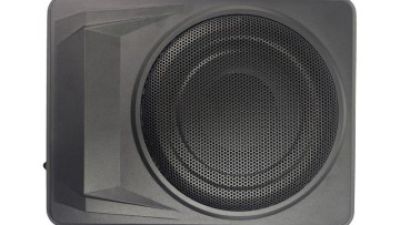
The YL-1010C is an ultra-thin under-seat subwoofer designed for vehicles where cabin space is limited. Its aluminum-alloy enclosure helps keep the unit compact while providing a rigid housing, and its position beneath a seat lets low-frequency sound spread through the cabin without taking up cargo space. When comparing under-seat models, check the available mounting height, power and signal connections, and whether the unit can be adjusted to blend with the vehicle’s existing speakers. Installation clearance matters: seat rails and wiring should remain unobstructed, and the enclosure should be secured against movement.

A subwoofer adds bass rather than replacing the full-range speakers, so sensible level and crossover settings are important for balanced sound. As a listening reference, the U.S. National Institute for Occupational Safety and Health’s *Criteria for a Recommended Standard: Occupational Noise Exposure* recommends limiting exposure to 85 dBA over an eight-hour workday; that workplace guidance is not a vehicle-audio specification, but it illustrates why prolonged high-volume listening deserves care. Before choosing the YL-1010C, confirm that its dimensions and electrical requirements suit the vehicle, then position and tune it so bass is clear without overwhelming voices or music.

FAQS

Does a larger subwoofer always produce better bass?

No. Cone area matters, but excursion, enclosure design, and cabin placement matter too. Bigger is not always better.

What is the difference between sealed and ported enclosures?

A sealed enclosure often produces controlled bass and fits tighter spaces. A ported enclosure can play louder near its tuned frequency, but needs more room.

How should I match a subwoofer with an amplifier?

Compare the subwoofer’s RMS power handling with the amplifier’s clean output at the correct impedance. Set gain carefully; it is not a volume control.

What should I measure before buying a subwoofer?

Check available space, mounting depth, enclosure volume, and room for wiring and airflow. A driver may fit behind a seat while its box does not.

Which specifications are useful when comparing subwoofers?

Compare RMS power handling, impedance, sensitivity, frequency response, and recommended enclosure volume. Peak-power numbers can look impressive but describe brief bursts.

Can subwoofer placement change how bass sounds?

Yes. A subwoofer in a trunk corner may sound louder from the driver’s seat than one aimed elsewhere. Listen from your usual position.

How do music choices affect subwoofer selection?

Clear vocals and kick drums may need only a modest subwoofer and careful crossover settings. For deep electronic bass, check frequency response and enclosure design.

How can I avoid bass that sounds muddy or tiring?

Start with conservative gain, listen for distortion, and leave some headroom. More bass can become tiring faster than expected; I still find that easy to overlook.

Conclusion

A Car Speaker Subwoofer reproduces the low-frequency sounds that smaller speakers often struggle to deliver, adding depth and impact to music throughout a vehicle. Its design—including cone size, power handling, sensitivity, and frequency response—helps shape how bass sounds, from tight and controlled to fuller and more pronounced. Comparing these specifications can help drivers understand a subwoofer’s capabilities, but the figures should be considered together rather than treated as a guarantee of sound quality.

The enclosure also plays an important role: sealed designs tend to offer precise bass, while ported designs can emphasize output and efficiency. Before choosing, consider available space, installation requirements, amplifier compatibility, and the balance of bass you prefer. The best option is the one that fits your vehicle and audio system, suits your listening habits, and delivers the sound you enjoy without sacrificing practicality.
Sofia

Sofia

Sofia is a dedicated marketing professional at Foshan Shunde Kesheng Lang Audio Co., Ltd., renowned for her expertise in the audio industry. With a deep understanding of the company's products, she excels in communicating their unique advantages to a wider audience. Sofia frequently updates the......
Previous Top 10 Best Car Subwoofers to Buy in 2026?