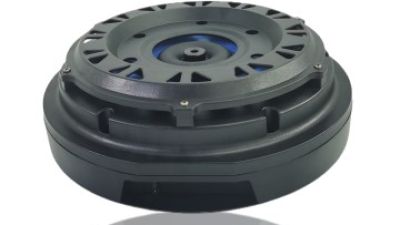
When you're out shopping for the perfect car Audio Subwoofer, experience really matters. As Joe Dehner, a well-known audio engineer at Sound Dynamics, once said, 'A great subwoofer really brings music to life.' That just goes to show how important it is to understand your own sound preferences and what kind of environment you're dealing with.
Honestly, the world of Car Subwoofers can feel pretty overwhelming at first. With so many models and specs out there, it’s easy to get lost. Think about your car size and how you typically listen to music. Some folks want that deep, thunderous bass, while others prefer a more subtle, refined sound. Oh, and keep in mind — not every subwoofer will be a good fit for every car.
A common mistake people make is putting too much focus on power and not enough on sound quality. That’s pretty typical, honestly. The quality of craftsmanship and the materials used can really make a huge difference in how it sounds. Take your time, do some research, and, if possible, listen to different options before making a decision. In the end, the right car audio subwoofer can totally elevate your driving experience, but it’s all about careful consideration and finding what truly works for you.
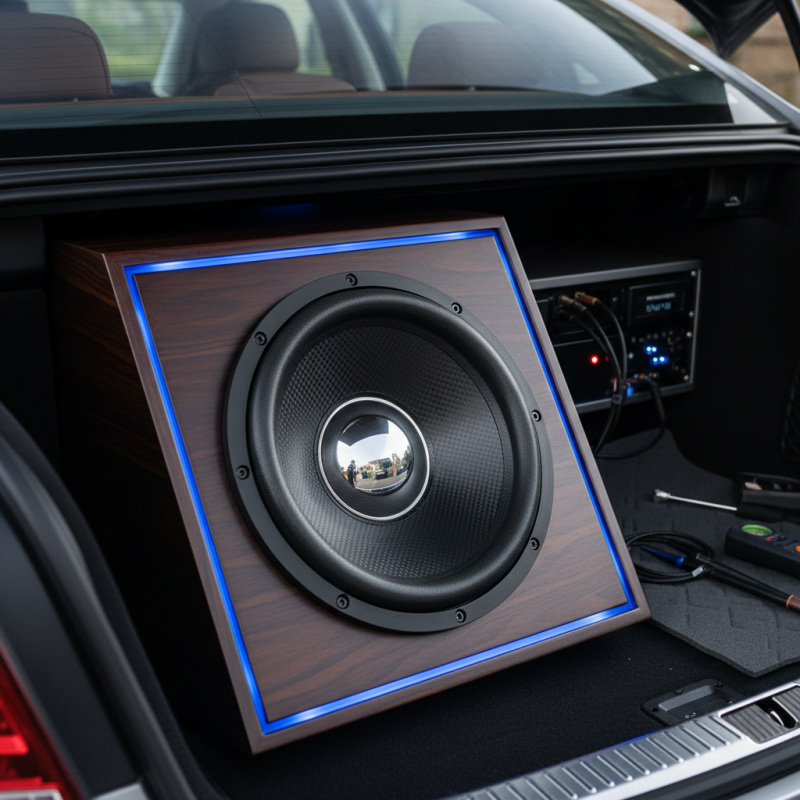
Understanding Car Audio Subwoofers: A Comprehensive Guide
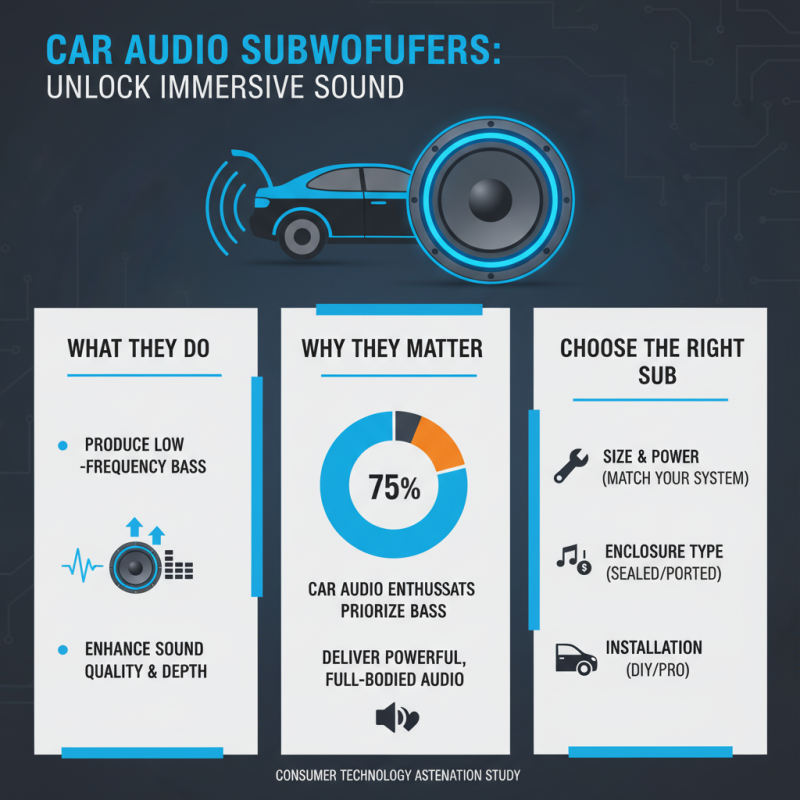
Choosing the right car audio subwoofer can feel overwhelming. It’s essential to understand what subwoofers do and how they enhance sound quality. A study by the Consumer Technology Association found that over 75% of car audio enthusiasts prioritize bass performance. This shows how important subwoofers are in delivering the immersive experience that people crave.
Subwoofers come in various sizes and specifications. The general guideline suggests that larger subwoofers produce deeper sounds. However, they may also require more power and space. For example, a typical 12-Inch Subwoofer can handle about 300-600 watts, making it a popular choice among users. Many often overlook the importance of matching the subwoofer with the amplifier. Poor matching can lead to suboptimal performance.
Another factor to consider is enclosure type. A sealed enclosure offers tight, accurate bass, while a ported one provides more volume but can sometimes lose clarity. Research from the International Business Times indicates that nearly 60% of buyers do not think enough about the enclosure when selecting a subwoofer. This highlights a critical area for improvement. Making informed choices can elevate your car audio experience tremendously.
Key Features to Consider When Choosing a Subwoofer for Your Car
When choosing a car audio subwoofer, it’s essential to focus on key features. Power handling is a critical aspect. Subwoofers are rated in watts. A range of 300-1000 watts RMS is typical. Higher wattage means deeper bass. However, extreme power can lead to distortion. It’s important to find balance.
The enclosure type also matters. Sealed boxes produce tight bass. Ported boxes create more volume but less accuracy. Data shows that sealed enclosures can enhance sound quality by up to 20%. Consider the material of the subwoofer cone, too. Polypropylene offers durability. Fiberglass provides a lightweight option.
Lastly, impedance affects compatibility. Typical values are 2 ohms or 4 ohms. Lower impedance can draw more power. But it can also stress your amplifier. Matching the subwoofer with your car's audio system is crucial. Remember, an improper setup can lead to significant performance issues. Assess your needs carefully to avoid costly mistakes.
Types of Car Subwoofers: Pros and Cons of Each
When it comes to car audio subwoofers, there are several types to consider. Each has unique advantages and disadvantages. Understanding these can help you make informed decisions.
Sealed enclosures offer tight sound and accurate bass response. They work well for most music genres. However, they may lack the loudness some enthusiasts desire. According to industry reports, sealed boxes often deliver around 3-6 dB less output compared to ported designs. This can impact the overall experience during music playback.
Ported subwoofers, on the other hand, produce more efficient bass. They are great for those who enjoy deep, booming sounds. Yet, this type can compromise clarity. Music may sound less precise, especially at higher volumes. Additionally, installation can be more complex due to larger box requirements. Many users find this challenging, reflecting the need for careful planning.
Lastly, bandpass subwoofers provide a mix of both sealed and ported designs. They can hit impressive low frequencies. However, they often require precise tuning and expertise to perform well. This might not be the best option for beginners, as misconfiguration can lead to disappointing sound quality. Each type offers a different experience; weighing these factors is crucial for any audio enthusiast.
2026 Best Car Audio Subwoofers Comparison
This chart compares the pros and cons of different types of car audio subwoofers based on a subjective rating scale from 1 to 5. The pros and cons are evaluated on attributes like sound clarity, durability, and ease of installation.
Determining the Right Size Subwoofer for Your Vehicle
When choosing the right size subwoofer for your vehicle, several factors come into play. First, consider your vehicle’s space. Measure the area where the subwoofer will be placed. A compact car might limit you to smaller subwoofers, while SUVs offer more flexibility. If you want deep bass, a larger subwoofer often provides better sound. However, it can also lead to poor sound quality if not appropriately matched to your vehicle.
Next, think about the subwoofer's power handling. A powerful subwoofer requires adequate space and correct placement. Otherwise, it may rattle your car or create distortion. Pay attention to the enclosure type, as a sealed box delivers tight bass, while a ported box can enhance volume. The installation can also impact the final sound.
Many people overlook these details, leading to unsatisfactory audio experiences. Oversizing can cause issues like box resonance. Additionally, small subwoofers may not produce the desired impact. Reflect on your sound preferences and vehicle characteristics. Making an informed choice will save you time and money in the long run.
Power Ratings and Specifications: What You Need to Know
When selecting a car audio subwoofer, understanding power ratings and specifications is critical. The peak power rating, often flashy, indicates the maximum power the subwoofer can handle in short bursts. However, the RMS (Root Mean Square) rating is more significant. It reflects the continuous power the subwoofer can handle safely. According to industry data, many subwoofers deliver average RMS ratings between 200 to 500 watts. This peak to RMS ratio often misleads consumers.
Another vital specification is sensitivity. Sensitivity, measured in decibels (dB), indicates how efficiently a subwoofer converts power into sound. A sensitivity rating of 85 dB is typical for subwoofers. Higher sensitivity allows for more volume with less power, which might save energy but can sacrifice sound quality. Consequently, it’s essential to find a balance. Not all high-sensitivity subwoofers produce the rich bass expected. Reviewers often find that sensitivity can vary widely in actual use, leaving some users wanting.
Additionally, it’s important to consider enclosure type. Sealed boxes offer tight, accurate sound but may lack punch. Ported enclosures produce louder volume at certain frequencies but can reduce sound clarity. Many enthusiasts often face dissatisfaction when their choice does not match their music preference. Therefore, careful consideration of specifications can aid in avoiding costly mistakes.
Installation Options: DIY vs. Professional Installation
Installing a car audio subwoofer can be a daunting task. The choice between DIY and professional installation often confuses many. DIY installation allows for creativity and a sense of achievement. However, without proper knowledge, this could lead to mistakes. Every tool and wire matters when connecting a subwoofer. Miswiring can damage expensive components or create inefficiencies.
On the other hand, professional installation provides expertise. Technicians can ensure optimal performance and avoid common pitfalls. They might recommend tailored solutions, but this comes at a cost. Depending on the installer, prices can vary significantly. Some may even overlook specific preferences you have. Always ask questions to involve yourself in the process.
If you choose DIY, preparation is vital. You’ll need the right tools and a clear plan. Researching tutorials can be helpful, but they don’t guarantee perfect results. After installation, sound testing plays a critical role. Adjusting settings takes patience and a good ear. Ultimately, balancing your confidence with the complexity of the task will lead to a better decision.
Budgeting for Your Car Audio Setup: Costs of Subwoofers and Accessories
When budgeting for your car audio setup, it’s crucial to understand the costs associated with subwoofers and accessories. The price can vary significantly based on size, brand, and features. Entry-level subwoofers can start around $50, while high-end models can exceed $300. Don’t forget to factor in installation costs, which might add another $100 or more.
Tips: Always keep an eye on sales. Look for discounts during holidays or special events. You can save a significant amount.
Accessories like amplifiers, speaker wire, and enclosures will also affect your budget. They are necessary for optimal performance. Basic amplifier kits can range from $80 to $200. Quality speaker wires and enclosures will enhance sound quality, but they can be pricey.
Tips: Prioritize what you need first. Maybe start with a good subwoofer and upgrade accessories over time. It’s easier to spread out expenses.
Don’t overlook the importance of personal preferences. Some might prefer deep bass, while others value clarity. Reflect on what sounds best to you. This will guide your purchasing decisions and ensure satisfaction with your setup.
Revolutionizing Car Audio: The Impact of the 12 Inch Kilowatt Level Active Subwoofer TLS-12 on Sound Experience
The evolution of car audio systems is ushering in a new era with the introduction of cutting-edge products like the 12 Inch Kilowatt Level Active Subwoofer TLS-12. Unlike traditional subwoofers that often struggle to reproduce deep bass frequencies, typically around 30Hz, this revolutionary subwoofer efficiently operates at an unprecedented 20Hz infrasound range. This capability signifies not just an enhancement, but rather a fundamental redefinition of the acoustic experience within a vehicle, allowing listeners to experience a depth of sound that was previously unattainable.
At the heart of this innovation lies a robust military-grade power architecture that delivers an impressive 600W rated power and a staggering 1300W peak power. This architectural prowess functions similarly to turbocharging in automotive engineering, amplifying the sound waves for a more immersive listening experience. Coupled with a state-of-the-art D-class digital amplifier, the subwoofer maintains an incredibly low total harmonic distortion of less than 1.0%. This ensures that music is delivered with crystal-clear purity while simultaneously providing each bass note with explosive energy. According to industry reports, a well-designed amplifier can improve sound clarity and dynamics significantly, highlighting the importance of quality amplification in modern audio systems.
Furthermore, the advanced circuit protection system incorporated into the subwoofer, featuring a 30A fuse, guarantees stability and performance even under the most demanding conditions. This level of reliability is essential for audiophiles who seek both power and precision in their audio systems. As the car audio industry continues to evolve, the TLS-12 stands as a testament to the potential for transformative sound experiences, paving the way for future innovations in mobile audio technology.
FAQS
: You can find a wide range of items covering various categories. The selection varies frequently.
Most products are generally of decent quality. However, there can be inconsistencies.
Guarantees may vary by seller. It's essential to read the details before purchasing.
You typically receive a tracking number after shipping. Check your email or account for updates.
Immediately contact customer support with photos of the damage. They will guide you on the next steps.
Return policies differ by seller. Review the policy before buying to avoid surprises.
Customer service is often reachable via email or chat. Phone support may not be available.
Various payment options are usually available. Credit cards and digital wallets are common choices.
Shipping times can vary widely. Some orders may arrive quickly, while others may take longer.
Conclusion
When it comes to enhancing your vehicle's sound system, choosing the right car audio subwoofer is essential for achieving that deep bass and rich audio experience. A comprehensive understanding of car audio subwoofers involves knowing the key features to consider, including power ratings, size, and installation options. Different types of subwoofers come with their own pros and cons, making it crucial to determine what fits best in your vehicle.
Additionally, determining the appropriate size of the subwoofer and understanding its specifications can significantly impact the overall sound quality. Whether opting for a DIY installation or hiring a professional, it’s important to budget for both the subwoofer and any necessary accessories. By carefully evaluating these factors, you can choose a car audio subwoofer that not only meets your audio needs but also enhances your driving experience.






 Email
 whatsapp