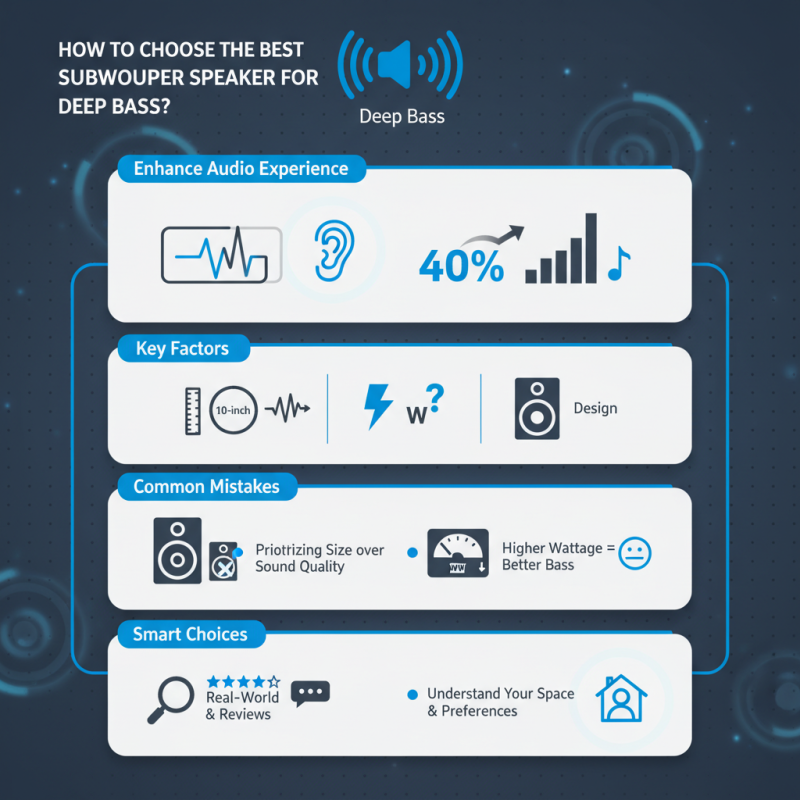
Picking out the right subwoofer for those deep, punchy bass sounds really can make a big difference in your overall audio experience. When you choose a good one, it’s like your music and movies come to life with richer, more powerful low-end sounds. Funny enough, I read somewhere recently—in a report by the Consumer Technology Association—that having a solid subwoofer can boost your sound satisfaction by up to 40%. No joke!
When you're shopping for a subwoofer, things like size, wattage, and design matter a lot. The efficiency of the sub determines how well it reproduces those deep frequencies. For example, a 10-Inch Subwoofer often hits a good balance, offering decent bass without some of the issues bigger models might bring, like distortion. Of course, not all brands sound the same, so it’s worth doing some research before pulling the trigger.
Honestly, trying to compare different models can feel pretty overwhelming. A lot of folks tend to overlook their actual needs and maybe focus too much on how big the sub is. A common mistake I see is assuming that a higher wattage always means better bass—that’s not always the case. Some high-watt models don’t perform as expected, so, honestly, reading reviews and testing things out in real life is super helpful. In the end, just knowing what kind of space you have and what sounds you prefer will really help you find that perfect subwoofer that hits all the right notes.
Understanding Subwoofer Specifications for Deep Bass Performance
When selecting a subwoofer for deep bass, understanding specifications is crucial. Start with the frequency response range. A good subwoofer usually operates between 20Hz to 200Hz. If it can reach lower frequencies, the sound experience improves significantly. Low frequencies create that rumbling effect felt in your chest.
Consider the power handling capability. It indicates how much power a subwoofer can handle effectively. Look for RMS ratings rather than peak power. RMS provides a realistic view of performance over time. Be cautious of high numbers; more power doesn't always mean better sound.
Ported or sealed enclosures play a role, too. Ported designs produce louder bass, while sealed enclosures deliver tighter sound. If you prefer accuracy over volume, a sealed box might be your best bet.
With these specifications in mind, it’s important to test the subwoofer before purchasing. Listen carefully, and reflect on your preferences. You may find that numbers don’t tell the whole story.
Key Factors Influencing Subwoofer Size and Design for Bass
Subwoofer size and design play critical roles in achieving deep bass. The physics of sound dictate that larger drivers generally produce lower frequencies more effectively. Research shows that a subwoofer with a cone size of 12 inches can handle frequencies as low as 30 Hz, enhancing the listening experience for genres like rap or electronic music. However, larger sizes also create challenges. They can lead to difficulties in placement and may overwhelm smaller rooms.
Port design is another key factor. A subwoofer with a well-engineered port can increase efficiency. Studies indicate that bass-reflex designs can improve the low-frequency response by up to 3 dB compared to sealed boxes. Yet, this comes at a cost — tuning the port requires precise calculations to avoid distortion. Misjudging the parameters can lead to performance issues, diminishing sound quality.
Room acoustics also matter. Hard surfaces reflect sound waves, while soft materials absorb them. A subwoofer may excel in one setting but perform poorly in another due to room dynamics. Reports suggest that 30% of homeowners face challenges with bass performance due to improper room handling. Understanding these nuances ensures better choices for bass enthusiasts. Recognizing the limitations of subwoofer design and placement can lead to a more satisfying experience.
Power Handling Capabilities: What Watts Mean for Deep Bass
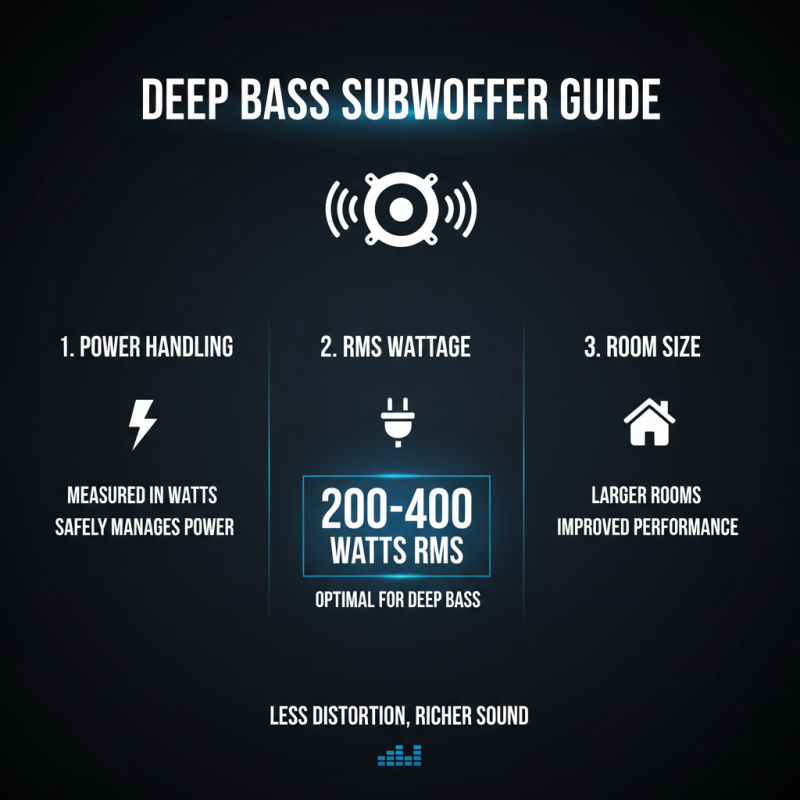
When selecting a subwoofer speaker for deep bass, understanding power handling capabilities is crucial. Power handling, usually measured in watts, indicates how much power a speaker can safely manage without distortion. Ideally, for deep bass, look for models with at least 200-400 watts RMS. This range often delivers optimal performance in larger rooms.
Industry reports suggest that a 10% increase in wattage can lead to a noticeable improvement in sound quality, particularly in low frequencies. However, wattage alone doesn’t guarantee exceptional bass. Some models may require higher power to reach their maximum potential. Inconsistent power input can result in disappointing bass response.
Consider the size of your listening space. A powerful subwoofer may overwhelm a small room. On the other hand, an underpowered unit might struggle to fill a larger area. Acoustic properties of the room also play a role. Every space has its unique characteristics, affecting sound performance. Therefore, don’t just rely on wattage figures. Evaluate all aspects to find the best fit for your audio needs.
Enclosure Types: Sealed vs. Ported Subwoofers Explained
When choosing a subwoofer, the enclosure type greatly influences sound quality. Sealed and ported designs each have unique characteristics. Sealed subwoofers are compact and offer tight, accurate bass. They work well in smaller spaces. The downside? They may lack the deep rumble some desire. Data shows they typically operate better in the 20-200 Hz range.
On the other hand, ported subwoofers feature a vent. This design enhances bass output. They can reach lower frequencies and provide a booming sound that many enjoy. However, they might not deliver the same clarity as sealed designs. Some users report that ported designs can create muddiness at high volumes, affecting overall sound quality.
Understanding these options is essential. Each design serves different listening preferences. Consider your room size and music style. Remember, the choice of enclosure can make or break your experience. So, reflect on what matters most: depth or accuracy? Your ideal sound awaits.
Frequency Response Range: Ideal Specs for Deep Bass Experience
When choosing a subwoofer for deep bass, frequency response range is crucial. Ideally, a subwoofer should handle frequencies from 20 Hz to 200 Hz. This range captures the deep lows that create a powerful audio experience. Reports indicate that many audio enthusiasts prefer subwoofers that effectively reproduce sound below 30 Hz. This frequency range often delivers the most immersive bass.
Consider this tip: pay attention to the specs. Look for a low-frequency extension below 25 Hz if you want true bass depth. A subwoofer's peak power is another key specification. Subwoofers rated at 200 watts RMS are recommended for spacious rooms. However, oversizing your subwoofer can lead to less effective bass response in smaller spaces.
Placement affects performance. Subwoofers may sound different based on their location. Experiment with placement to find where the bass feels the strongest. It’s not always easy to achieve a perfect setup. Sometimes, you might need to adjust your configuration multiple times before reaching the ideal experience.
Placement and Room Acoustics: Maximizing Subwoofer Performance
Placement plays a crucial role in achieving deep bass from your subwoofer. Positioning it in a corner might amplify the sound, but it can also create unwanted vibrations. A subwoofer needs space to breathe. Try placing it along the front wall or near the main seating area. Experimenting with different locations can lead to unexpected results. Don’t be afraid to move it around.
Room acoustics are another factor to consider. Hard surfaces reflect sound, creating echoes. Soft furnishings, like rugs and curtains, help to absorb excess noise. Room size also matters. In a small room, a powerful subwoofer might overwhelm the space. In contrast, a larger room might require more volume to fill it effectively. Addressing these details can greatly enhance your listening experience.
Taking the time to set up your Subwoofer Properly is essential. It’s easy to get caught up in the excitement of deep bass. However, proper placement and acoustic treatment are key. Remember,trial and error is part of the process. Don’t hesitate to reflect on what works best in your unique environment. Each room is different and may give surprising outcomes.
Budget Considerations: Finding Quality Subwoofers Within Your Price Range
When shopping for a subwoofer, budget plays a significant role. You want deep bass but without breaking the bank. Set a clear limit before you start looking. This will help narrow down your options right away. Many quality subwoofers are available at various price points. However, don’t sacrifice sound quality for a low price.
Look for customer reviews and ratings online. Real user experiences can guide your choice. Many affordable models may not deliver the deep, resonant bass you seek. Test different speakers if possible. Listen closely to the bass response. Can it handle the low frequencies without distortion? This matters.
Sometimes you may feel pressured to spend more for better performance. It’s easy to get carried away with high-end features. Remember, features can be less important than actual sound quality. Find a balance that works for you. Aim for a subwoofer that fits your home theater needs while staying within budget. Expect some trial and error before you find the perfect match.
Transforming the In-Car Experience: Insights from Recent Audio Trends and the Impact of Feel The Bass, Elevate Your Drive ST-101 on Sound Quality
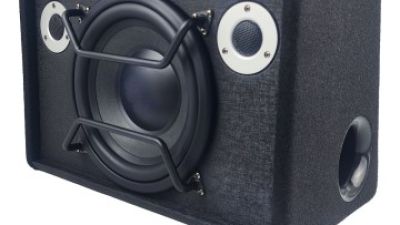
In recent years, the in-car audio experience has undergone a remarkable transformation, driven by advancements in sound technology and changing consumer preferences. One of the standout products that has contributed to this shift is the ST-101 Car Active Subwoofer, which boasts a 10-inch size and dual tweeter configuration. This model is designed to enhance the bass performance of any vehicle’s original audio system. According to industry reports, high-quality audio systems can significantly increase overall driving satisfaction, with studies indicating that up to 70% of drivers prefer vehicles equipped with premium sound systems.
The ST-101 subwoofer operates within a frequency response range of 20Hz to 800Hz, providing a robust and clear bass that enhances the standard audio experience. With an RMS power rating of 200 Watts and an impedance of 4 ohms, it ensures dependable performance while maintaining sound clarity. Notably, this subwoofer is compatible with various audio sources, including CD players and navigation systems, making it a versatile choice for diverse user needs. Reports emphasize that improved sound staging and clarity not only enhance enjoyment but can also make navigation instructions clearer, thus improving driver focus and safety during travel.
Furthermore, the construction of the ST-101 from high-quality wooden materials elevates the durability and acoustic performance of the product. Given the increasing demand for premium audio options in vehicles, integrating reliable subwoofers like the ST-101 can significantly elevate the overall driving experience. By integrating cutting-edge sound technology like this, drivers can enjoy an immersive audio environment that transforms routine commutes into a pleasurable journey.
FAQS
: The product aims to enhance user experience and improve daily tasks.
Follow the instructions in the manual for the best results. Start with small tasks.
Yes, important features include user-friendly interface and adjustable settings for personalization.
Check the troubleshooting section first. If problems persist, contact support.
It is designed for various settings, but performance may vary based on conditions.
Yes, occasional maintenance ensures optimal performance. Follow provided guidelines closely.
Lifespan can vary widely based on usage and care. Some users report years of use.
Yes, warranty details are included with the product. Review them carefully for limitations.
Yes, but may need additional settings adjusted for different users.
Consider reflecting on your usage. There may be adjustments that improve your experience.
Conclusion
When selecting a subwoofer speaker for deep bass, understanding specifications is crucial for optimal performance. Factors like subwoofer size, design, and power handling capabilities significantly influence how well a speaker can reproduce low frequencies. Power ratings, often expressed in watts, indicate how much power the subwoofer can handle, affecting its ability to deliver deep, clear bass.
Additionally, the choice between sealed and ported enclosures can impact bass quality, with each offering distinct advantages. The frequency response range also plays a vital role in defining the overall bass experience, while thoughtful placement and consideration of room acoustics can enhance performance. Lastly, budget considerations are essential for finding quality subwoofer Speaker Bass options without overspending, ensuring a rich audio experience that suits your needs.





 Email
 whatsapp