Picking out the best Car Subwoofer with an amplifier can honestly feel overwhelming at first. But hey, thanks to insights from industry expert John Marshall, things are a lot clearer. He’s quoted as saying, “A great subwoofer can really change your listening experience,” and I gotta say, that really hits home in today's audio-loving world.
When you’re trying to choose the right setup, think about what kind of music you’re into. Do you crave deep, pounding bass, or are you more into crisp, clear vocals? Different systems cater to different tastes, so it’s worth considering what suits you best. Also, don’t forget to check out the specs—it can get pretty confusing sometimes. Not every subwoofer is compatible with every car, and installing one isn’t always straightforward.
More than just size and wattage, quality really matters. Making the wrong choice could mean underwhelming sound, or worse, damage to your system. So, it’s smart to do your homework—maybe even chat with a pro. It’s kind of eye-opening to realize some of the mistakes we might’ve made before. Taking your time to choose carefully will pay off, giving you a killer audio setup that truly matches your vibe.
Choosing the right car subwoofer and amplifier begins with understanding their roles. A subwoofer reproduces low frequencies. It adds depth to music. An amplifier boosts the sound. Together, they create a fuller audio experience.
Consider the size of your space. A larger subwoofer may produce more power. However, it can take up significant trunk space. A smaller subwoofer might fit better but could lack impact. Think about your music preferences. Do you enjoy bass-heavy genres? Then, invest in a subwoofer that excels in low frequencies.
Don’t forget about the amplifier. Its power rating should match the subwoofer's needs. An underpowered amplifier may distort sound. Too much power can damage the subwoofer. Finding balance is key. Many overlook this. Researching specs is essential. Pay attention to sensitivity ratings. They indicate efficiency. Inadequate knowledge may lead to disappointment.
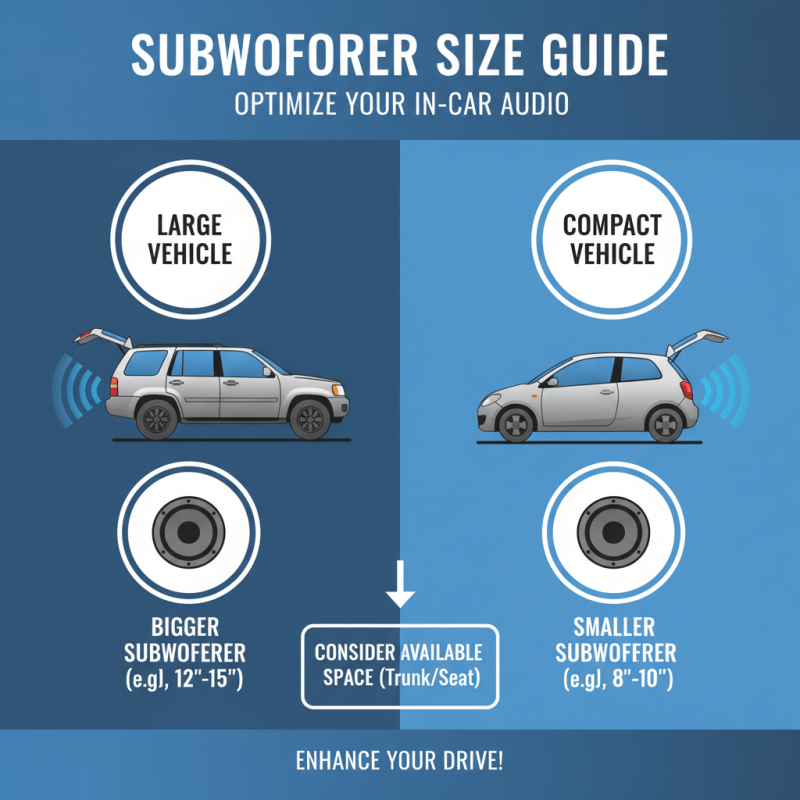
When choosing a car subwoofer, several key factors come into play. The size of the subwoofer is crucial. Larger subs generally produce deeper bass. However, they also require more space. Be realistic about your car's available area. A 10-inch sub might fit better, but many enthusiasts crave that 12-inch boom.
Another important consideration is power handling. Look for a subwoofer that can handle the wattage from your amplifier. It should match or exceed the power output. This ensures clean sound without distortion. Remember, not all amplifiers pair well with every sub. Sometimes, it takes trial and error to find the perfect match.
Don't overlook sensitivity ratings. This figure indicates how efficiently the subwoofer converts power into sound. A higher number means louder sound at lower power levels. It's a balancing act. While being tempted by high specs, consider your listening habits. Can you live with the imperfections, or do you aim for perfect sound?
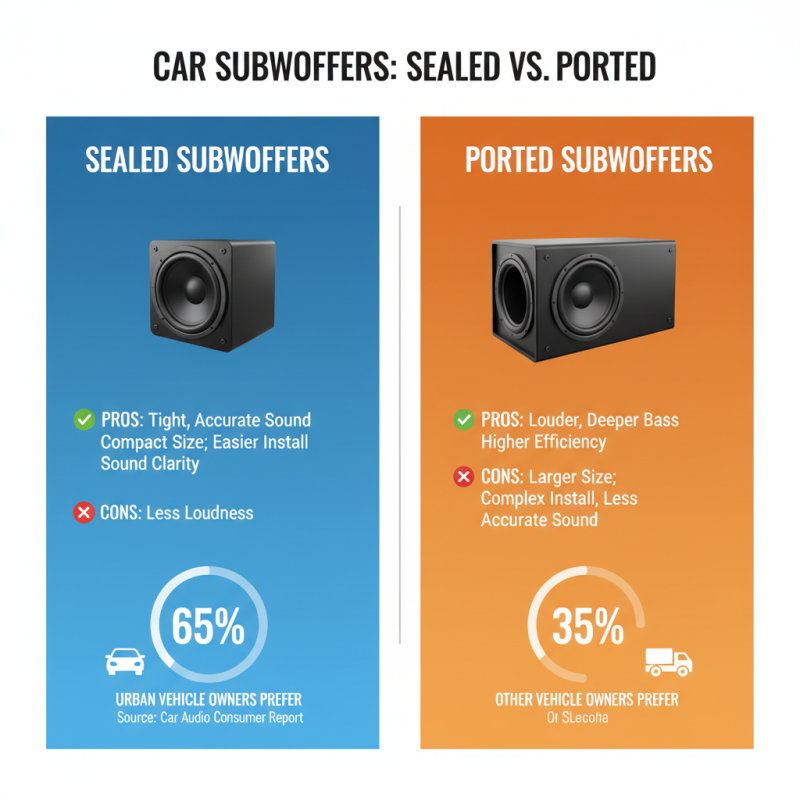
When considering car subwoofers, understanding the pros and cons of different types is essential. Generally, two main categories stand out: sealed and ported subwoofers. Sealed subwoofers are known for their tight, accurate sound. They usually require less space and are easier to install. Many car audio enthusiasts prefer them for their sound clarity. According to data from the Car Audio Consumer Report, 65% of users favor sealed subwoofers for urban vehicles.
On the flip side, ported subwoofers can offer a deeper bass response. However, they take up more space and can be tricky to install. A study by Sonic Sound Labs indicates that around 40% of users find ported designs less manageable due to their larger enclosures. This could mean more complex setups for those who lack experience. Additionally, the potential for distortion on high volume is a significant issue with these systems.
Choosing the right subwoofer involves weighing these factors carefully. For example, sealed boxes might fit better under seats. However, if deep bass is a priority, a ported subwoofer could be more satisfying. Each choice presents unique challenges. Consider the space and your audio preferences to find the best fit for your vehicle.
Choosing the right size subwoofer for your vehicle can greatly enhance your audio experience. Vehicle size plays a crucial role. A larger car may accommodate a bigger subwoofer, while a compact car often works best with a smaller model. Understanding the space available in your trunk or back seat helps in making an informed decision.
**Tips:** Measure the Available Space. Take precise measurements of where you plan to install the subwoofer. Knowing the depth, width, and height can prevent any surprises later. Pay attention to the enclosure type as well. Sealed enclosures may require more space compared to ported ones.
Think about the power requirements. A powerful subwoofer often produces better sound quality, but it must match your amplifier's capacity. Installing a subwoofer that’s too big can lead to power issues. It may not only sound bad but could also damage your audio system.
**Tips:** Don't Rush the Installation. Take your time to ensure everything fits well. An improper installation can compromise sound quality and durability. Test the system before finalizing the setup. Listen for any distortion. Adjust your plans based on what you hear, not just what looks good.
Choosing the right amplifier for your subwoofer can be challenging. Not all amplifiers are created equal. They have different power outputs and specifications. Think about the size of your subwoofer. Larger subwoofers often need more power. A mismatch can lead to poor performance. It's essential to match the amplifier's RMS rating to the subwoofer.
Consider your listening preferences too. Are you looking for deep bass or clear sound? The amplifier's features can enhance your listening experience. Look for options like Bass Boost and low-pass filters. These can dramatically affect quality. Connecting everything correctly is crucial. Poor connections can lead to sound issues. It’s worth spending time on this.
Don't forget about enclosure types. The subwoofer's enclosure affects how it sounds with the amplifier. Ported boxes create more bass. Sealed boxes provide tighter sound. Your choice makes a difference. Sometimes, it’s not just about power but how well it fits your system. Balancing these factors can be tricky. Experimenting may lead to unexpected discoveries. Be prepared to tweak settings and configurations.
When choosing a car subwoofer with an amplifier, matching impedance is crucial. Most subwoofers have an impedance rating of either 2 ohms or 4 ohms. This affects the power transfer between the amplifier and the subwoofer. If an amplifier is designed for a 4-ohm load, using a 2-ohm subwoofer may lead to overheating. A report from the Car Audio Journal stated that mismatched impedance accounts for up to 25% of audio performance issues in vehicles.
Power ratings are equally important. Look for RMS (Root Mean Square) power ratings rather than peak power. RMS values provide a realistic figure for continuous power handling. For optimal performance, ensure that the amplifier's RMS output matches or slightly exceeds the subwoofer's RMS rating. Failing to do so can result in distortion or even damage. According to industry studies, a proper match can increase sound quality significantly, with reported increases in clarity and depth by as much as 30%.
It’s vital, however, to consider your vehicle’s acoustics. A sealed box provides tight response but may require more power. A ported box can enhance efficiency but might blur the sound. Both setups have pros and cons. Personal preferences also play a big role. Experimentation is often necessary to find the right balance. Even seasoned audio enthusiasts sometimes miss the mark initially. Listening and adjusting becomes an artform in itself.
| Subwoofer Model | Impedance (Ohms) | Power Handling (RMS Watts) | Recommended Amplifier Power (Watts) | Frequency Response (Hz) |
|---|---|---|---|---|
| Model A | 4 | 300 | 400 | 25-200 |
| Model B | 2 | 600 | 800 | 20-180 |
| Model C | 4 | 400 | 500 | 30-200 |
| Model D | 1 | 800 | 1000 | 15-160 |
When installing car subwoofers and amplifiers, placement matters. Many experts recommend placing subwoofers in the trunk. This location enhances bass response. A recent study noted that proper subwoofer placement can increase perceived loudness by 30%. However, not all vehicles allow for such placement.
Wiring the system can be tricky. Use high-quality cables to minimize loss. Poor connections can result in sound distortion. Consider the power requirements as well. Many subwoofers need specific power ratings for optimal performance. Failing to meet these ratings can lead to underwhelming results.
Ventilation shouldn't be overlooked. Amplifiers generate heat during operation. Keeping them cool prevents thermal shutdowns. Some users have reported overheating issues due to inadequate airflow. These factors highlight the importance of thoughtful installation. Achieving perfect sound is often an ongoing process, requiring modifications and adjustments.
In the pursuit of enhancing your car audio experience, selecting the right tweeters can significantly impact sound quality. The TW-280 series, featuring high-grade silk diaphragm technology, stands out as an effective solution for audiophiles looking for quality without breaking the bank. Constructed with durable aluminum alloy, these tweeters promise longevity and resilience, making them an ideal choice for vehicle-mounted applications.
According to industry reports, the demand for high-fidelity car audio systems has surged over the past few years, with the global Car Audio Equipment market projected to reach $13.5 billion by 2025, growing at a compound annual growth rate (CAGR) of approximately 8.5%. This growth is largely driven by consumers' desire for superior sound clarity and immersive listening experiences while on the road. Incorporating quality tweeters like the TW-280 can elevate the entire auditory spectrum of your system, ensuring crisp high frequencies that enhance your favorite music genres.
Moreover, affordability remains a crucial factor for many consumers. The TW-280 tweeters offer a cost-effective solution without compromising sound performance. As more drivers seek to upgrade their audio systems, investing in high-performing yet budget-friendly components will allow enthusiasts to achieve a well-rounded sound profile that rivals that of premium systems. With the right tweeters, every journey can be transformed into an exhilarating audio experience.
: This product is often used for daily tasks. People enjoy its versatility and convenience. It helps simplify routine activities.
Regular cleaning is essential. Use mild soap and water. Avoid harsh chemicals that could damage the surface.
Yes, it is designed for a wide range of users. However, younger users might require supervision for safety.
It is made from durable materials. They are often selected for their strength and lightweight properties.
It streamlines tasks, saving time. Users often report completing activities faster than before.
Yes, it has certain restrictions. For example, it may not perform well in extreme temperatures. Users should be aware of this.
When choosing the best car subwoofer with amplifier, it's essential to understand the fundamentals of how these components work together to enhance your audio experience. Key factors to consider include the types of subwoofers available and their respective advantages and disadvantages, such as sealed vs. ported designs. Finding the right size of subwoofer that fits your vehicle's specifications is crucial, alongside selecting an appropriate amplifier that can effectively drive the subwoofer without distortion.
Additionally, matching the impedance and power ratings between the subwoofer and amplifier is vital for optimal performance. Proper installation is also important to ensure that the system operates efficiently and delivers high-quality sound. By considering these factors, you can select the ideal car subwoofer with amplifier setup that meets your audio preferences and enhances your driving experience.