When you're looking to boost your car’s sound system, picking the right subwoofer for your speakers is a pretty big deal. Did you know that according to IBISWorld, the car audio market is expected to hit around $6 billion by 2025? That definitely shows how much folks are into having better sound quality while driving. James Anderson, an expert sound tech at SoundTech Innovations, puts it simply: "Getting the right subwoofer can seriously change how your car sounds." So, yeah, choosing the perfect one is pretty important.
But here’s the thing—many people don’t realize they should really think about how the subwoofer matches with their car’s existing audio setup. It’s not just about cranking up the volume; clarity and deep bass are key if you want your tunes to sound awesome. Plus, if it fits well, it’ll give you a balanced sound that matches your personal music style. Sure, many manufacturers claim their products are the best, but let’s be real, real-world performance can sometimes be a different story.
And don’t get me started on the specs! Power ratings, frequency response, speaker size—these things all play a big role in how your sound turns out. A survey from CarAudio Pro in 2022 found that about 70% of car audio enthusiasts wish they'd done more research before making their purchase. Honestly, a little effort upfront can go a long way in making your driving experience more enjoyable.

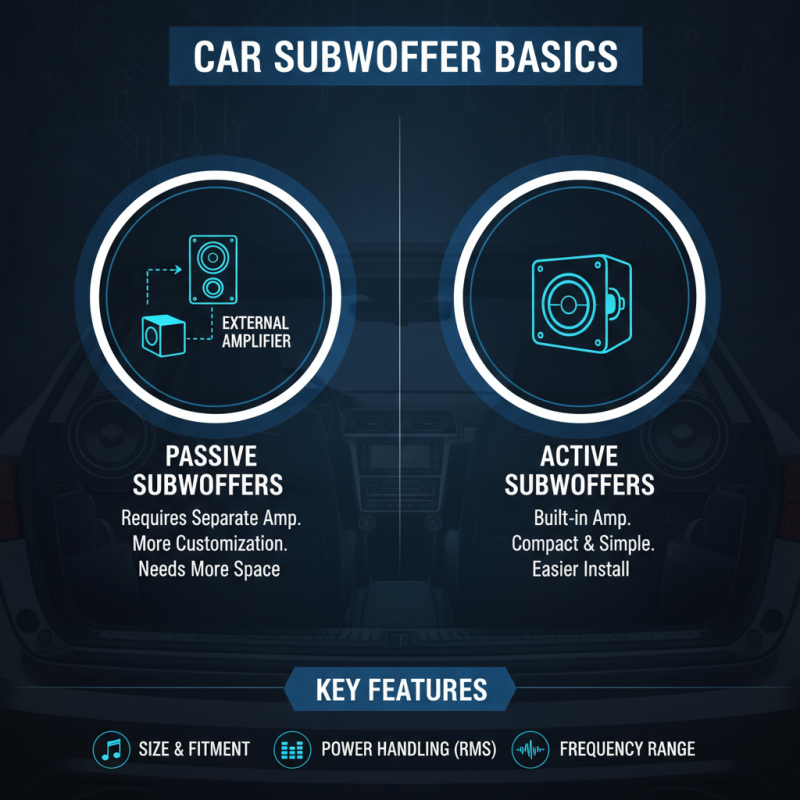
Selecting a car Speaker Subwoofer requires understanding the various types and features available. There are two main types of subwoofers: passive and active. Passive subwoofers need an external amplifier to function, while active subwoofers come with built-in amplifiers. This fundamental difference affects your choice based on your vehicle's audio system and available space.
When considering features, pay attention to the size and power handling of the subwoofer. Generally, larger subwoofers provide deeper bass but require more space. In contrast, smaller subwoofers save space yet may offer less powerful sound. It’s essential to find a balance between your audio preferences and the constraints of your vehicle.
Tips: Always check the sensitivity rating of a subwoofer. Higher sensitivity means better performance with less power. Remember to consider enclosure types as well. Sealed enclosures provide tight bass, while ported enclosures enhance low frequencies. Don’t hesitate to test different options before making a decision. It’s easy to overlook how they integrate with current speakers, so take time to ensure compatibility.
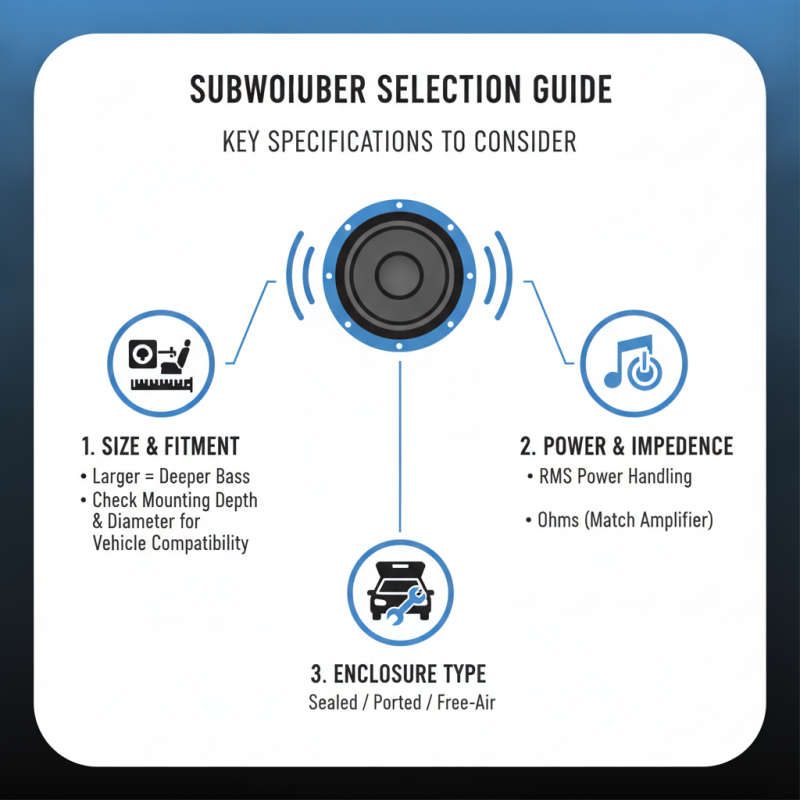
When choosing a car speaker subwoofer, key specifications greatly influence your decision. Start by considering the size. A larger subwoofer typically produces deeper bass. However, it must fit your vehicle's space. Check the mounting depth and diameter to ensure compatibility.
Next, pay attention to power handling. Look for RMS and peak power ratings. RMS power indicates how much power the subwoofer can handle continuously. Peak power shows its maximum capacity for short bursts. Both ratings help you understand performance. High sensitivity ratings are crucial too. This specification indicates how efficiently the subwoofer converts power into sound.
Don’t overlook the enclosure type. It significantly affects sound quality. Sealed enclosures offer tight bass, while ported designs provide louder and deeper bass. Your choice will depend on personal preferences. Lastly, consider the impedance rating, which affects compatibility with your car's audio system. Balancing all these factors ensures that you choose a subwoofer that meets your needs and enhances your driving experience. Choosing the right subwoofer involves some trial and error, but it's worth it for the perfect sound.
Choosing the right subwoofer for your vehicle requires attention to the acoustic space. The size of the subwoofer can significantly impact sound quality. A subwoofer that is too large may overpower your car’s acoustic environment. Conversely, a subwoofer that is too small may fail to deliver the desired bass response.
Consider the space available in your vehicle. Measure the dimensions of your trunk or cargo area. This will help you identify a subwoofer that fits comfortably. Also, think about how sound waves travel. A larger space might require a larger subwoofer, while a compact area may benefit from a smaller model.
Tips: Always test different subwoofer sizes before making a purchase. Listen to various music styles to gauge whether the subwoofer meets your expectations. Paying attention to sound clarity is just as crucial as the bass depth. Also, take note of any vibrations that may occur when the subwoofer plays loudly. This could indicate mismatched sizes. Understanding your vehicle's acoustic characteristics will ultimately lead to a more enjoyable listening experience.
When selecting a car speaker subwoofer, understanding power handling and sensitivity ratings is crucial. Power handling measures how much power a subwoofer can safely handle. This is usually given in watts RMS (Root Mean Square). A subwoofer with a higher RMS rating can produce more sound without distorting. According to industry data, subwoofers with an RMS rating of 200 watts often deliver a balanced performance but may not fully satisfy audiophiles seeking high volume.
Sensitivity ratings indicate how efficiently a subwoofer converts power into sound. This rating is expressed in decibels (dB). A sensitivity rating of 90 dBmeans the Subwoofer Produces 90 decibels from 1 watt of power at 1 meter. Higher ratings usually result in louder sound with less power. For instance, a subwoofer with asensitivity of 94 dB can achieve a louder output than a 90 dB subwoofer using the same power. Industry analysis shows that sound enthusiasts favor subwoofers with a sensitivity above 90 dB for optimal performance.
Reflecting on these attributes reveals that higher power handling doesn’t always mean better sound. Sometimes, a well-balanced sensitivity rating enhances the listening experience. An ideal setup may require a blend of both features, tailored to personal taste and vehicle acoustics. Each vehicle has unique characteristics, and the choice of a subwoofer should consider these variables to achieve the best audio experience.
When choosing a subwoofer for your car, the active versus passive debate is crucial. Active subwoofers come with a built-in amplifier. This integration simplifies installation. You don't need to purchase an external amp, which can save space and reduce complexity.
On the other hand, passive subwoofers require an external amplifier. This option offers flexibility in choosing amplifier power. However, it can lead to a more complicated setup. You might find it harder to configure everything correctly. Some users prefer this approach for customizing their sound experience, but it can be overwhelming for beginners.
Consider your needs carefully. An active subwoofer can deliver powerful bass without much technical hassle. But if you enjoy tinkering and optimizing your audio system, a passive subwoofer might be your choice. Be prepared for potential challenges with wiring and compatibility.
Each option has its pros and cons, so choose based on your comfort level and sound preferences.
When choosing the best car speaker subwoofer, the enclosure type significantly affects sound quality. A sealed enclosure results in tight bass and clear sound reproduction. Research indicates that sealed boxes can enhance sound clarity by up to 20%. This clarity is crucial for music with intricate details, allowing listeners to enjoy their favorites fully.
In contrast, ported enclosures provide deeper bass tones. These designs utilize a vent to increase airflow, making them popular for bass-heavy genres. Studies show that ported designs can increase bass output by around 3 dB compared to sealed models. However, they may lack the punch and accuracy found in sealed designs.
Choosing between these two options requires thoughtful consideration. For some, the precision of a sealed enclosure outweighs the deep rumbles of a ported one. It's worth noting that improper installation can lead to sound distortion, regardless of the enclosure type. Ensuring a proper fit and seal is crucial for optimizing sound performance. Each car and listener is unique, making it essential to evaluate personal preferences carefully.
| Enclosure Type | Description | Sound Quality | Recommended For |
|---|---|---|---|
| Sealed | Simple enclosure with no venting, offering tight and accurate sound. | Excellent sound accuracy and depth. | Listeners who prioritize sound clarity. |
| Ported | Includes a vent or port that enhances low-frequency response. | Rich bass and higher volume capacity. | Bass enthusiasts and parties. |
| Bandpass | Combines sealed and ported designs, creating a unique sound. | Very loud and powerful bass. | Home theater systems or high SPL competitions. |
| Infinite Baffle | Uses a large area (like a trunk) as the enclosure. | Deep bass, but less control. | Those with space for installation flexibility. |
When budgeting for your car's audio system, it's vital to balance cost and performance. Many enthusiasts believe that higher prices guarantee better sound. However, this isn’t always true. You can find excellent options that fit modest budgets. Researching your needs before spending is crucial.
Consider the type of music you frequently enjoy. Different genres may require distinct sound profiles. For instance, bass-heavy music benefits from certain types of subwoofers. You don’t necessarily need the most expensive item to achieve satisfying quality. Sometimes, a substantial investment doesn't yield the expected results. It's essential to listen before you buy.
Installing an audio system can be a DIY challenge. Many people take on this project to save money. But, improper installation can lead to poor sound quality and damage. It’s common to overlook small details during setup. For instance, not securing components can result in rattling sounds. Take your time in the selection and installation processes for the best outcome.
This chart illustrates the relationship between the cost and performance score of car audio systems across three different pricing tiers: entry level, mid-range, and high-end. It highlights how spending more generally correlates with better performance, helping you make an informed decision when budgeting for your car's audio system.
: Choose a size that fits your vehicle's space. Larger subwoofers produce deeper bass, but fit is crucial.
Look for RMS and peak power ratings. RMS shows continuous power handling, while peak indicates short burst capacity.
Sensitivity ratings tell how efficiently the subwoofer converts power into sound. Higher ratings mean better sound performance.
Your choice affects sound quality. Sealed enclosures yield tight bass; ported designs offer louder, deeper bass.
Impedance rating affects compatibility with your car's audio system. Consider it carefully to avoid issues.
Not necessarily. Higher prices don't guarantee better sound. Research for options within your budget.
Yes, but improper installation can harm sound quality. Small mistakes can lead to major issues, like rattling.
Different genres need specific sound profiles. For bass-heavy music, select subwoofers designed for those needs.
Overlooking details can hurt sound quality. Ensuring all components are secure is essential for optimal performance.
Yes, finding the perfect subwoofer often involves trial and error. It’s worth it for the ideal sound experience.
When selecting the best car speaker subwoofer for your vehicle, it's essential to understand the various types and features available. Key specifications such as power handling, sensitivity ratings, and subwoofer size play a critical role in ensuring the right fit for your car's acoustic space. Additionally, choosing between active and passive subwoofers can significantly affect your audio experience.
The type of enclosure used for the subwoofer also impacts sound quality, making it crucial to consider different options. Lastly, budgeting for your car's audio system involves balancing cost and performance to achieve optimal sound. By following these guidelines, you can enhance your vehicle’s audio experience with the right car speaker subwoofer tailored to your needs.