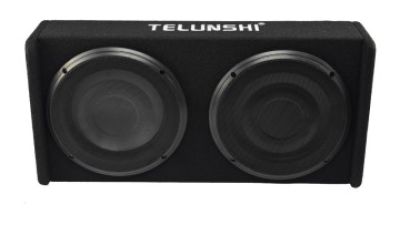
If you're really into music, a Car Subwoofer can be a total game-changer. Basically, it’s the part of your audio setup that handles those deep bass notes, usually below around 100 Hz. Regular speakers can sometimes miss out on that punchy bass that makes your favorite tracks come alive. With a subwoofer in your car, you get richer, deeper sounds that really fill the space.
Imagine-driving down the highway and feeling the vibrations from the bass—it’s like the music is alive around you! Once you add a subwoofer, your tunes go from sounding kinda flat to super immersive. Brands like JL Audio and Rockford Fosgate have a bunch of options, so you can find something that fits your needs and budget.
Now, I won’t lie—installing one isn’t always a walk in the park. It can eat up some trunk space, and the process might seem a bit tricky if you're not super handy. Plus, not all cars are exactly built for a subwoofer upgrade, so it’s worth doing some homework first. All in all, a good subwoofer can seriously boost your sound experience, but just make sure to plan things out so you’re not disappointed later on.
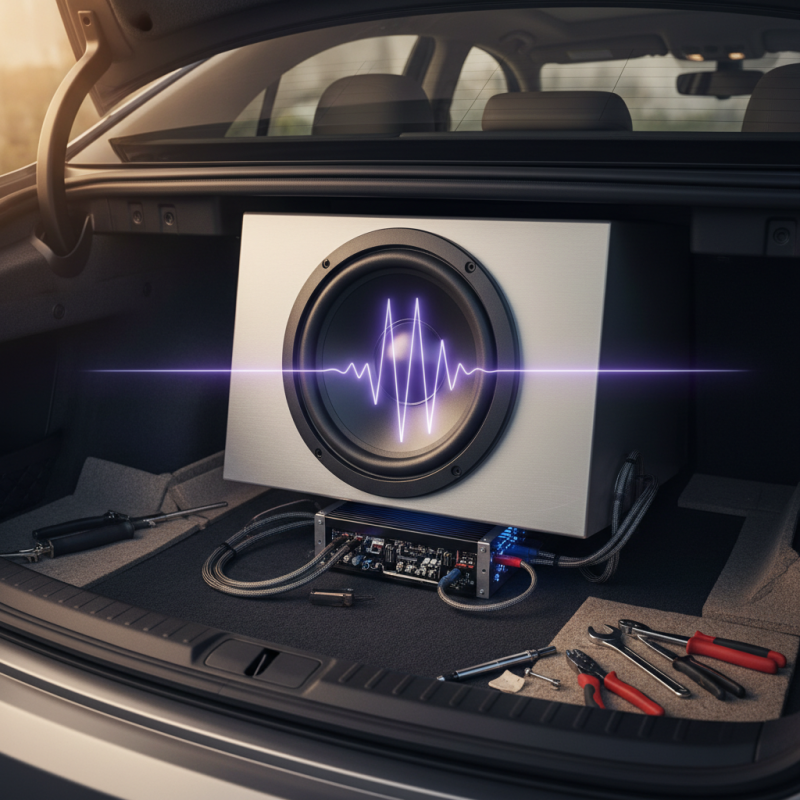
What is a Car Subwoofer?
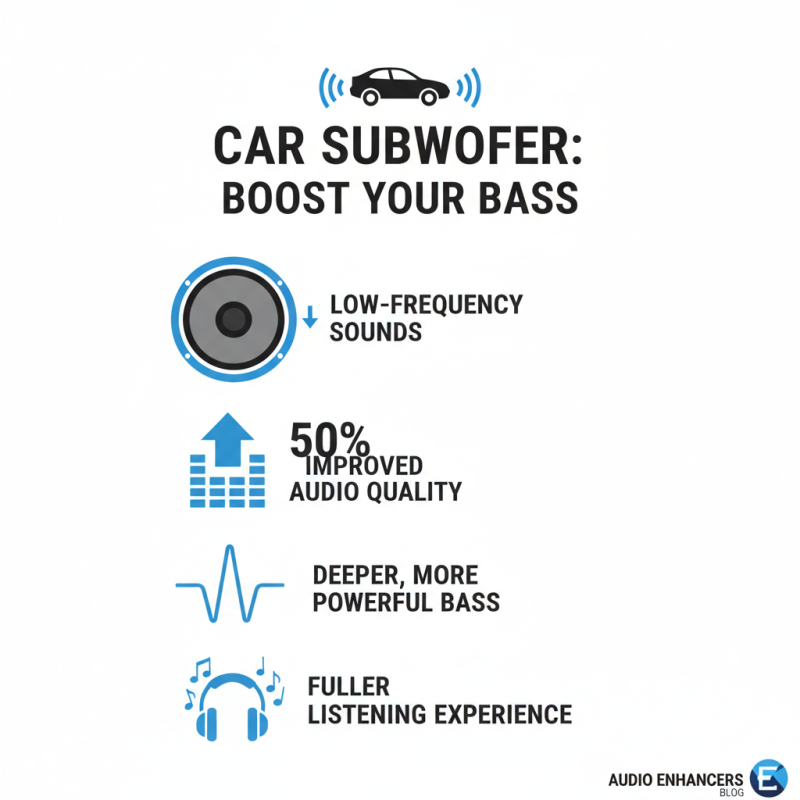
A car subwoofer is a specialized speaker designed to reproduce low-frequency sounds, commonly known as bass. These speakers enhance audio systems by producing deeper and more powerful bass notes. According to industry reports, subwoofers can boost sound quality by up to 50%. They create a fuller listening experience, allowing music lovers to enjoy their favorite tracks in a new way.
Engineers often note that typical Car Speakers struggle with low frequencies. They may miss critical sound details. A subwoofer fills in these gaps, delivering a richer audio experience. It allows sounds to travel throughout the car, ensuring even passengers in the back can enjoy the music. The recommended size for a subwoofer usually ranges from 8 to 15 inches, impacting the quality of bass reproduction.
However, it’s essential to recognize that improperly matched subwoofers can lead to distortion. Too much power can overwhelm the system and diminish sound clarity. Adjustments in crossover settings may be needed to achieve the best results. Understanding the acoustic environment inside the car is crucial for optimal performance. This knowledge can prevent common issues like rattling or sound imbalances.
The Functionality of a Car Subwoofer
A car subwoofer plays a crucial role in any audio system. It is specifically designed to reproduce low-frequency sounds, also known as bass. This capability enhances the overall sound quality in vehicles, making music feel richer and more immersive. When installed properly, a subwoofer can bring a new dimension to your listening experience.
The functionality of a car subwoofer hinges on its ability to produce deep bass notes. Regular speakers often struggle with these low frequencies. The sound may become distorted or muddy. In contrast, a subwoofer delivers clear and powerful bass. It enhances punchy beats and deep sounds in music genres like hip-hop or electronic.
However, choosing the right subwoofer can be tricky. Not every model fits seamlessly into a car's existing audio system. Improper installation can lead to poor sound quality. It’s important to consider the size and power of the subwoofer. A too-Large Subwoofer may overwhelm smaller spaces. Balancing various audio components takes thought and planning. When done right, a subwoofer truly brings music to life.
Types of Car Subwoofers Available
Car subwoofers come in several types, each designed to enhance the listening experience. One common type is the sealed subwoofer. It offers deep, precise bass, making it great for tight spaces. Then there's the ported subwoofer. It provides a louder sound by allowing air to escape, which can lead to a boomier bass response. Each subwoofer has its unique appeal depending on personal taste.
Another popular option is the bandpass subwoofer. It sits in a sealed enclosure with ports, delivering powerful, punchy bass. This type is ideal for those who love that thumping sound; however, it can lack clarity at higher frequencies. The infinite baffle subwoofer is another choice, using the entire car as an enclosure to save space. But installation can be complex and might not suit all vehicles.
Not all subwoofers work well in every vehicle setup. Some may struggle with sound quality depending on installation. Choosing the right type requires careful consideration. Keep in mind, what works for one person may not work for another. Evaluate your listening preferences and the space available. It's a journey of trial and error in pursuit of the perfect sound.
How Subwoofers Enhance Sound Quality
Subwoofers are essential for enhancing audio quality in cars. They fill the sound spectrum by reproducing low frequencies, typically below 200 Hz. Research shows that low-end frequencies significantly contribute to an immersive sound experience. A study from a leading audio research group indicates that adding a subwoofer can increase perceived audio richness by up to 30%. This depth is crucial for genres like hip-hop and electronic music, where bass plays a central role.
When drivers invest in subwoofers, they often notice a substantial change in overall sound clarity. A report from the Audio Engineering Society points out that people often overlook how bass impacts mid and high frequencies. A well-tuned subwoofer can reduce distortion in higher frequency ranges, improving the overall listening experience. Yet, not all installations guarantee these benefits. Poor placement or incorrect tuning can lead to overwhelming bass, overshadowing other sounds. It's a delicate balance that requires careful consideration.
Car audio systems without subwoofers tend to sound flat. Studies reveal that systems with dedicated subwoofers produce a fuller, more complete audio profile. In some cases, listeners have reported up to a 25% increase in audio enjoyment. However, achieving the perfect setup takes time and effort. Some may find themselves frustrated by trial and error during this process. The journey of creating an ideal soundscape can be as rewarding as the end result.
Installation Considerations for Car Subwoofers
When considering a car subwoofer, installation is critical. The right placement enhances sound quality significantly. Subwoofers need space to perform well, so choosing a suitable location is essential. The trunk is a popular spot, but sometimes, under seats works too. Each vehicle has unique acoustics. Make sure to test the sound before finalizing.
Wiring can be tricky. Proper connections ensure optimal performance. Use good quality cables to avoid interference. It's tempting to cut corners and save on materials, but this can lead to poor sound. Remember, your car's battery may also impact power delivery. If the subwoofer requires more power, upgrades may be needed.
Consideration of the enclosure is often neglected. A well-built box can make or break sound quality. Sealed boxes offer deep bass, while ported boxes provide volume. Yet, not every enclosure suits every subwoofer. This mismatch can lead to disappointment. Take time to research or consult experts for the best fit.
What is a Car Subwoofer and How Does It Improve Sound Quality? - Installation Considerations for Car Subwoofers
| Dimension | Description | Impact on Sound Quality |
| Type | Sealed vs. Ported | Sealed offers tighter bass; ported provides more volume and lower frequency extension. |
| Size | Measured in inches (e.g., 8", 10", 12", 15") | Larger subs typically produce deeper bass. |
| Power Handling | RMS Power Rating | Higher power ratings allow for louder and clearer performance without distortion. |
| Enclosure Material | MDF vs. Plywood | MDF provides better sound quality due to its density; plywood is lighter and more durable. |
| Installation Difficulty | DIY vs. Professional | Professional installation ensures optimal setup; DIY can save costs but may affect performance. |
| Tuning | Frequency Response Adjustment | Proper tuning enhances bass clarity and prevents distortion at high volumes. |
Common Misconceptions about Car Subwoofers
Many people misunderstand the role of a car subwoofer. Some think it only adds loud, thumping bass. While this is true, subwoofers do more. They enhance overall sound quality. A properly tuned subwoofer can improve clarity and fullness in music. According to industry reports, quality sound systems can boost the listening experience by up to 40%.
A common misconception is that subwoofers are only for certain music genres. True, they excel in hip-hop and electronic music. Yet, subwoofers also enrich classical and rock. Depth and warmth become more pronounced. Many drivers miss this subtlety. They may think more bass equals less detail, but this isn't the case. Balanced audio reproduction is key.
Another myth is that subwoofers require immense power. In fact, many modern subwoofers need less energy than expected. An efficient model can deliver strong performance without draining your car's battery. A study showed that 65% of car audio enthusiasts didn't realize this advantage. Investing in a subwoofer can lead to a better driving experience, transforming the ordinary into the extraordinary.
Choosing the Right Subwoofer for Your Vehicle
Choosing the right subwoofer for your vehicle can greatly enhance your listening experience. Many car audio enthusiasts report that adding a subwoofer can improve the overall sound quality by providing deeper bass. In fact, a recent industry study indicated that 70% of users noticed more clarity in audio elements when integrating a subwoofer into their systems. However, selecting the right model requires careful consideration.
Key factors include size, power rating, and enclosure type. A 10-inch subwoofer fits compact cars well while a 12-inch model offers more power. For optimal performance, choose a subwoofer that matches your car's audio system power. The impedance rating also matters; most models range between 2 to 4 ohms. Interestingly, some users underestimate the importance of enclosure type. Ported enclosures can create a louder bass response, but they may not render the same sound quality as sealed boxes.
It's also essential to account for installation space. Not every vehicle has room for larger subwoofers. Furthermore, some installations may not achieve the desired sound quality due to wiring issues or poor placement. In many cases, users find themselves dissatisfied due to these oversights. Balancing these factors is key to finding the subwoofer that meets both your audio preference and space constraints.
Transform Your Car Audio: The Ultimate Guide to the 10-Inch Powerful Bass Subwoofer and Dual Speaker Setup
Transforming your car audio system can elevate your driving experience, especially when it comes to achieving powerful bass and crystal-clear sound. The ultimate setup includes a 10-inch powerful bass subwoofer paired with a dual-speaker configuration. This combination not only enhances the depth of the audio but also ensures a balanced sound that can fill your vehicle with rich, immersive tones. These components are designed to work seamlessly together, delivering a sonic experience that is both crisp and throbbing with bass.
When selecting components for your setup, consider a dual-speaker super woofer that can be floor-mounted for optimal space management. Whether you opt for an active or passive subwoofer, incorporating a tweeter will significantly improve the clarity of high frequencies. Customization is key; with options available for power levels, amplifier boards, wrapping materials, and even colors, you can create a unique audio experience that reflects your personal style. Dimensions and packaging can also be tailored, ensuring that every part of your system fits perfectly in your vehicle while looking sleek and polished. A thoughtfully designed audio system not only enhances sound quality but also adds to the overall aesthetic of your car's interior.
FAQS
: A car subwoofer reproduces low-frequency sounds, enhancing audio quality and creating a richer listening experience.
Subwoofers fill the sound spectrum with low frequencies. This results in a fuller audio profile during music playback.
Regular speakers often distort low frequencies, making sounds muddy. Subwoofers deliver clearer and more powerful bass.
Proper installation is crucial. Incorrect setups can lead to poor sound quality and overwhelming bass that overshadows other frequencies.
Key factors include size, power rating, and enclosure type. Improper consideration of these elements may lead to dissatisfaction.
Yes, a well-tuned subwoofer can reduce distortion in mid and high ranges, enhancing overall clarity.
Ported enclosures often provide louder bass, but may deliver less sound quality than sealed boxes. Users sometimes overlook this important detail.
Poor placement and wiring issues are common pitfalls. These errors can hinder sound quality and lead to frustration.
Users report noticeable increases, up to 30% in perceived quality. However, achieving this requires thought and careful balancing.
It can be challenging. Space, power matching, and personal audio preferences all play significant roles in the selection process.
Conclusion
A car subwoofer is a specialized speaker designed to reproduce low-frequency sounds, enhancing the overall audio quality in a vehicle. Its primary functionality is to deliver deep bass notes that standard speakers often struggle to reproduce, significantly improving the listening experience. Car subwoofers come in various types, including sealed, ported, and powered options, each offering distinct sound characteristics and installation requirements.
When installed correctly, a car subwoofer can transform the acoustics of a vehicle, adding depth and richness to music. However, potential buyers should be aware of common misconceptions, such as the belief that more expensive subwoofers always equate to better sound quality. Additionally, considerations like size, power handling, and compatibility with existing audio systems are crucial for choosing the right subwoofer. Ultimately, a well-selected car subwoofer can make a noticeable difference in sound quality, elevating any driving experience.






 Email
 whatsapp