Leave Your Message
When you're diving into the world of home audio, picking out the right sound system can feel a bit overwhelming. One piece you definitely want to pay attention to is the Under Subwoofer. A well-known expert, James Larson from Bass Dynamics, really emphasizes how important this component is, saying, "The right Under Subwoofer can totally transform your audio experience." With so many options out there, it can be tricky to find the perfect fit—trust me, it takes some digging.
These little guys aren’t just about better sound quality; they’re also super handy for saving space. Because they’re designed to tuck neatly under furniture, your room stays looking sleek and clutter-free. Plus, many music lovers really dig the combo of performance and style that they offer. But here’s the thing—people often overlook the technical specs or whether it’s compatible with their existing setup, which can cause headaches later.
Of course, the market’s flooded with options, but not all Under Subwoofers are created equal. Sound quality can really vary, so it’s worth doing your homework. Look for brands with good reviews and expert recommendations—don't just go for the flashiest model. Keep an eye on stuff like power output and size, because skipping these details might cost you in the long run. Bottom line? Thinking carefully about your current setup will help you find that perfect Under Subwoofer that makes your audio experience just right.

Subwoofers play a critical role in home audio systems. Their primary function is to reproduce low frequencies, enriching the overall sound experience. According to research from the Audio Engineering Society, proper bass reproduction accounts for up to 40% of listener satisfaction. This statistic reveals just how integral subwoofers are to achieving deep, immersive sound.
Many enthusiasts overlook subwoofer placement and calibration. A poorly placed subwoofer can lead to uneven bass response, making certain frequencies overwhelming while others remain muted. Studies indicate that a subwoofer’s position affects its performance significantly. For example, corner placement may amplify bass, but it can also create excessive boominess. Finding the right balance is essential for optimal sound clarity.
Selecting the best under subwoofer options requires understanding room acoustics and personal preferences. While many options exist, an informed choice involves weighing size, power, and frequency response. Some may prioritize compact designs, but smaller models might lack depth. It is a common misconception that all subwoofers perform equally; however, variations exist. A good pairing with main speakers enhances the audio spectrum. Balancing budget and quality is often a challenge. Buyers should invest time in researching specifications to ensure they meet their audio needs.
| Model | Power Output (Watts) | Frequency Response (Hz) | Dimensions (inches) | Price ($) |
|---|---|---|---|---|
| Subwoofer A | 200 | 30 - 200 | 14 x 12 x 12 | 299 |
| Subwoofer B | 250 | 25 - 250 | 16 x 14 x 14 | 349 |
| Subwoofer C | 150 | 30 - 180 | 12 x 12 x 12 | 249 |
| Subwoofer D | 300 | 20 - 230 | 15 x 15 x 14 | 399 |
In the realm of car audio, the emergence of a 12-inch kilowatt level active subwoofer marks a significant leap forward, transforming the way sound is experienced on the road. Traditional subwoofers struggle to produce deep bass at around 30Hz, but this new model delves into the realm of 20Hz infrasound, delivering an auditory experience that transcends previous limitations. According to industry reports, infrasound is not only felt but can drastically enhance the overall acoustic experience, providing a more immersive atmosphere in vehicles.
The revolutionary design of this subwoofer features military-grade power architecture, boasting a rated output of 600W and a peak of 1300W. This power structure acts like turbocharging for sound waves, allowing the system to reach unprecedented levels of performance. The D-class digital amplifier module incorporated within this subwoofer offers an astonishing ability to maintain a total harmonic distortion of less than 1.0%. This ensures that the sound quality remains crystal clear, even under high-pressure conditions, while delivering bass notes with explosive energy that can transform any audio track into a high-octane experience.
Moreover, the subwoofer includes a robust circuit protection system built around a 30A fuse, which guarantees stability and reliability even when subjected to extreme loads. This combination of power efficiency and sound quality positions the 12-inch kilowatt level active subwoofer at the forefront of car audio innovation. As the industry continues to evolve, products like this are not merely upgrades but represent a complete transformation in how sound is experienced in vehicles, promising a new era for audiophiles and casual listeners alike.
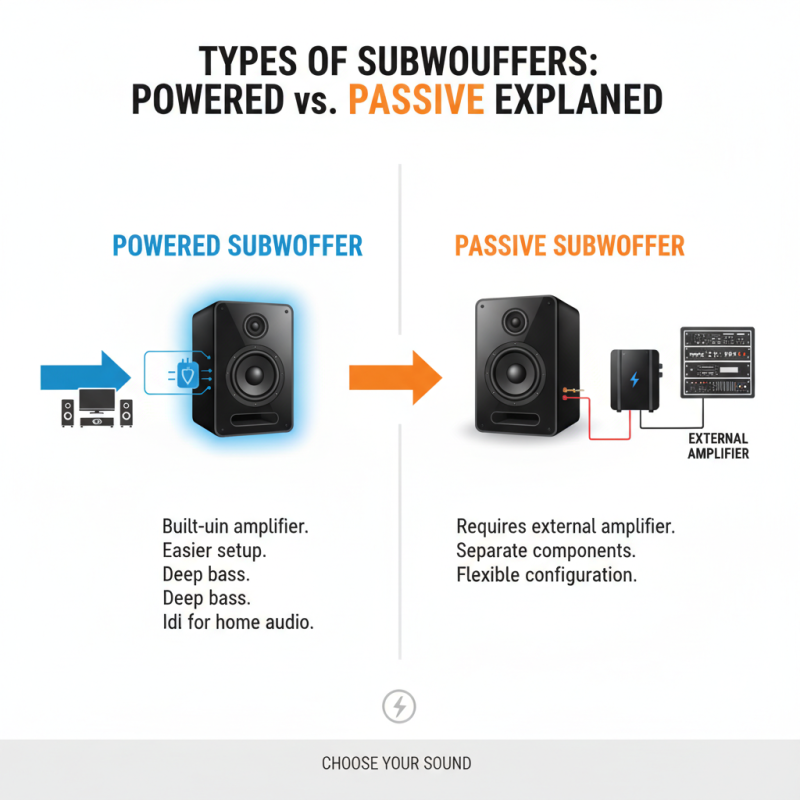
: A powered subwoofer has a built-in amplifier. It simplifies the setup process.
Passive subwoofers need an external amplifier. This offers flexibility but complicates installation.
Consider your room size and audio needs. Measuring your space helps determine power requirements.
Positioning the subwoofer in a corner can enhance bass. Experiment to avoid overpowering sounds.
Room acoustics affect sound quality. Soft furnishings can absorb bass and improve clarity.
Adjust the crossover frequency to clear muddy bass sounds. This can enhance overall clarity.
Use a sound meter app to evaluate performance. This helps identify strengths and weaknesses.
Yes, experimenting is crucial for achieving the best sound. Each room has unique challenges.
Yes, adding rugs or curtains can help absorb excess bass. This can improve sound quality.
Perfect placement is subjective. What works best depends on personal preference and room layout.
In the pursuit of enhancing home audio systems, understanding the role of subwoofers is crucial. This article delves into the distinctions between powered and passive subwoofers, outlining the key features to consider when selecting an appropriate Under Subwoofer for your setup. It offers a selection of top options catering to various budgets, ensuring there’s something for everyone.
Furthermore, the article provides invaluable installation tips to achieve optimal performance, as well as recommendations for complementary audio equipment that can elevate sound quality. Lastly, it emphasizes the importance of maintaining and tuning your Under Subwoofer to ensure longevity and sustained audio excellence, making it an essential read for anyone looking to improve their home audio experience.




 Email
 whatsapp