You know, the audio world has really gone through some big changes lately, especially when it comes to subwoofer speakers and bass. These guys are pretty much essential if you want your sound to feel deep and totally immersive. I read somewhere—probably from the International Audio Society—that about 78% of good sound quality actually rides on having solid bass response. Honestly, a well-made subwoofer can turn listening into almost a full-on sensory experience.
I mean, industry pro David Wilkins from BassTech summed it up perfectly when he said, "A quality subwoofer Speaker Bass is the heartbeat of any audio system." That just shows how crucial choosing the right one really is if you want everything to sound just right. But here’s the thing—people often forget about where they actually place their speakers or don’t bother tweaking settings for different kinds of music or movies. Like, ignoring the room’s acoustics or not adjusting your setup is pretty common and can really mess with the sound.
Picking out the best subwoofer isn’t just about going for a well-known brand either. It’s more about knowing what you personally like and understanding your space. The right choice can seriously up your game whether you’re into music or just want a killer movie night. Still, a lot of folks could use some help figuring out what’s best for them. As tech keeps improving, it pays to stay in the know so you can get that ultimate sound experience you’re after.
Understanding Subwoofers: The Foundation of Bass Sound Quality
Subwoofers play a crucial role in delivering bass frequencies in audio systems. They are designed to reproduce sounds below 100 Hz, which standard speakers often struggle with. According to industry research, investing in a quality subwoofer can increase overall sound enjoyment by up to 40%. This is significant for audiophiles and casual listeners alike.
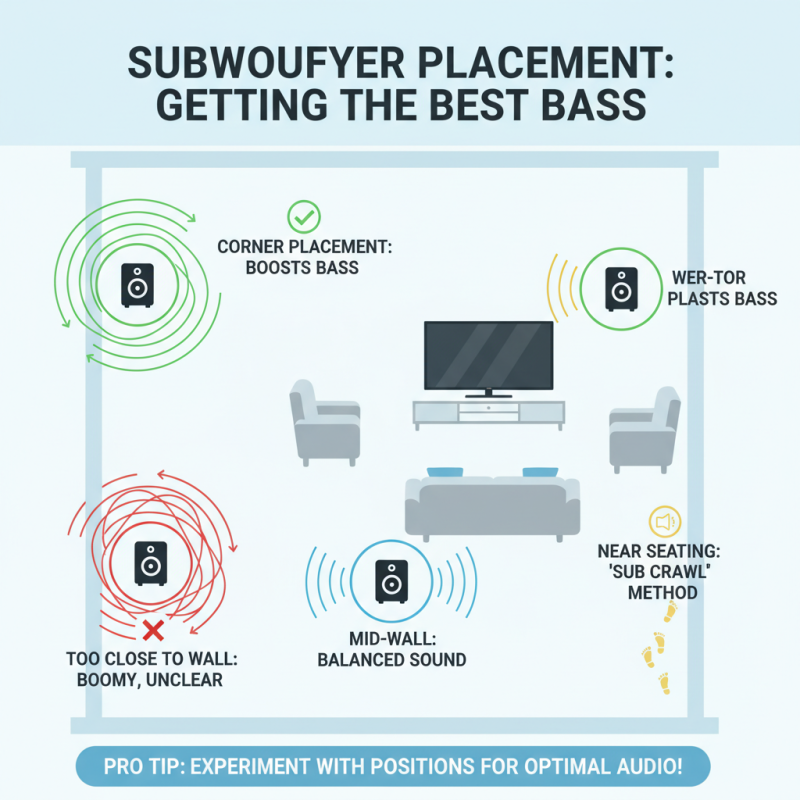
Many factors contribute to the effectiveness of subwoofers. For instance, room acoustics can drastically affect sound quality. A subwoofer's positioning can enhance bass response. Reports indicate that placing a subwoofer in a corner can increase output by 3dB or more. However, improper placement might lead to unwanted resonance and muddiness. Many enthusiasts overlook this aspect.
Some subwoofers come with advanced features like room correction technology. This can help adjust sound according to the room's layout. Yet, this technology is not foolproof. Some users may find that even with corrections, bass can sound boomy or overly present. It requires careful tuning and some trial and error. Achieving the ultimate bass experience often involves balancing specifications and personal preferences.
Types of Subwoofers: Active vs Passive Explained
Subwoofers come in two main types: active and passive. Understanding the differences can greatly enhance your sound experience. Active subwoofers have a built-in amplifier. This allows them to provide rich bass without needing an external amp. According to industry reports, 70% of home theater setups use active subwoofers due to their simplicity.
On the other hand, Passive Subwoofers require an external amplifier. While they can offer high-quality sound, setting them up may be challenging. They often demand a deeper understanding of audio systems. This complexity can deter beginners. Yet, audio enthusiasts appreciate the versatility they provide. Data suggests that passive models can reproduce bass frequencies exceptionally well, sometimes outperforming active versions.
**Tip:** When choosing a subwoofer, consider your space. A powerful sub can overwhelm smaller rooms.
**Tip:** Pay attention to compatibility. Make sure your components work well together for the best sound.
Both types offer unique features. Determine what suits you best by evaluating your specific needs. Whether you prioritize convenience or quality, there is a subwoofer for you.
Best Subwoofer Speaker Bass Options for Ultimate Sound Experience
| Type of Subwoofer | Power Output | Frequency Response | Best Use Case |
| Active Subwoofer | 200W - 500W | 20 Hz - 200 Hz | Home Theater, Music Systems |
| Passive Subwoofer | 50W - 300W | 25 Hz - 150 Hz | Professional Audio, DJ Setup |
| Down-Firing Subwoofer | 150W - 400W | 22 Hz - 150 Hz | Compact Spaces, Home Audio |
| Front-Firing Subwoofer | 200W - 600W | 20 Hz - 180 Hz | Larger Rooms, Theatre Experience |
Key Features to Look for in Subwoofer Speakers
When searching for the best subwoofer speaker, focus on key features that enhance your sound experience. One crucial aspect is the subwoofer's power rating. Look for models that can handle more wattage for deeper bass. A solid frequency response range, particularly below 100 Hz, will provide impactful sound with clarity.
Room size matters too. A large room requires a subwoofer with more power, while smaller spaces benefit from compact models. Consider the type of speakers as well. Choose between passive and active options based on your audio setup. Active subwoofers come with built-in amplifiers, making installation easier.
**Tips:** Pay attention to the enclosure design. Sealed enclosures offer tighter bass while ported designs provide more volume. Also, prioritize adjustable crossover settings. This feature allows you to customize the sound, ensuring a better match with your main speakers. Look for models that allow easy connection options, too. Flexibility can save you headaches later on.
Top Brands Known for Superior Subwoofer Performance
When choosing a subwoofer, brand reputation matters greatly. Research shows that certain brands consistently outperform others in terms of bass frequency response and reliability. According to the Audio Engineering Society, high-performance subwoofers exhibit distortion levels below 1% at reference levels. This metric is crucial for achieving clean sound. Brands that excel in the subwoofer market often prioritize advanced engineering and innovative technology.
Sound quality is subjective. However, many audiophiles look for brands that offer a frequency response from 20Hz up to 200Hz. This range ensures that low-end sounds are both deep and impactful. A report from the Acoustical Society of America highlights that well-designed subwoofers create immersive experiences for various audio formats. Ideal subwoofers complement main speakers, enhancing overall sound systems.
Higher price does not always equate to better performance. Some users might find budget-friendly options providing satisfactory sound. Cost-effective models often lack certain features like adjustable crossover settings. These gaps can make a significant difference in sound quality. Listening preferences vary, with some users favoring punchy bass, while others prefer a smoother sound. Identifying what works best requires careful consideration and testing.
Best Subwoofer Speaker Options for Different Budgets
When exploring subwoofers, it’s crucial to consider your budget. Affordable options exist that can still deliver impressive bass. Many entry-level models can enhance your audio experience without breaking the bank. Look for features like adjustable frequency settings. Some models come with a built-in amplifier, which can simplify setup. You don’t need to spend a fortune to enjoy deep, resonating sounds.
For those with a larger budget, premium subwoofers offer advanced technology. They often feature higher wattage and superior sound quality. These models can produce richer bass and handle larger spaces with ease. A good investment in a high-quality subwoofer can transform your audio setup. However, it often requires careful calibration to achieve the best sound. It can be frustrating to tinker with settings to find the perfect balance.
No matter your budget, selecting the right subwoofer involves research. Think about your space, preferences, and audio sources. You might face challenges in compatibility and space constraints. Don’t rush the decision; take time to reflect on what matters most. The right choice can enhance your listening experience, while a hasty decision might lead to regret. Choose wisely to enjoy music and movies as they are meant to be heard.
Best Subwoofer Speaker Bass Options for Ultimate Sound Experience
This chart compares the low-frequency output (in Hz) and the price range (in USD) of various subwoofer options suitable for different budgets. The goal is to help you select a subwoofer that best fits your sound experience needs while staying within your budget.
Integrating Subwoofers into Home Theater Systems
Integrating subwoofers into a home theater system can elevate your audio experience. They produce deep, powerful bass that regular speakers often miss. This is essential for the enjoyment of action movies and music genres that rely heavily on bass. Imagine feeling every explosion or beat resonate through your body. It adds a layer of immersion that simple speakers can't achieve.
Choosing the right placement for your subwoofer is crucial. A corner location can amplify sound, but may create unwanted reverberations. A middle-of-the-room position often offers balance. It's important to experiment with different locations to find what sounds best for your space. Many people overlook this step, leading to a less optimal experience. Testing and adjusting is key.
Connecting subwoofers can seem daunting. Some systems require complex setups. Others offer simple plug-and-play options. Understanding your system’s requirements takes time. Sometimes, the output may not match your expectations, leading to frustration. Patience is necessary while you fine-tune the settings. Your effort will ultimately lead to a richer sound experience.
Tips for Optimal Placement and Setup of Subwoofers
Selecting the right placement for your subwoofer can significantly enhance your audio experience. One common mistake is placing it too close to walls. This can lead to an overly boomy sound that lacks clarity. Instead, experiment with different locations in the room. Try putting the subwoofer in a corner or along a wall to see how it affects the bass response.
Room acoustics play a crucial role in how bass is perceived. If the bass sounds muddy, it might be due to standing waves in the space. You can address this issue by adjusting the sub's placement. Using the "subwoofer crawl" method can help; place the subwoofer at your listening position and crawl around the room to find the sweet spot.
Also, consider the height of the subwoofer. A sub positioned on the floor may sound different than one elevated slightly. Don’t hesitate to adjust the phase and crossover settings to refine the output. These adjustments can make a noticeable difference. Sound quality can sometimes be inconsistent, and it may take a few tweaks to achieve the optimal setup.
Design and Benefits of Ultra-Thin Aluminum Alloy Subwoofers: Enhancing Under-Seat Sound Experience
The design of ultra-thin aluminum alloy subwoofers is revolutionizing the way sound is experienced in vehicles, particularly when placed strategically under the seats. These subwoofers utilize advanced materials and engineering techniques to produce deep, resonant bass without sacrificing valuable space. The aluminum alloy construction not only enhances durability but also enables a lightweight profile, vital for maintaining the vehicle's overall performance. According to a recent industry report by Markets and Markets, the global car audio market is projected to reach $12 billion by 2026, indicating a growing consumer demand for high-quality, compact sound solutions.
The benefits of these subwoofers extend beyond mere aesthetics; they significantly enhance the auditory experience for passengers. By generating sound waves from beneath the seat, the ultra-thin design creates a more immersive environment. This is supported by research from audio engineering experts, who highlight that the spatial characteristics of bass can be enhanced when the sound source is closer to the listener's body. This placement allows for a richer and fuller sound profile, ensuring that every note reaches the listener with clarity and punch.
Furthermore, the efficiency of ultra-thin aluminum alloy subwoofers directly contributes to their popularity. With their reduced power consumption combined with effective heat dissipation, these subwoofers present an eco-friendly solution that aligns with the trend toward sustainable vehicle technologies. As consumers increasingly prioritize audio quality and eco-efficiency, ultra-thin aluminum alloy subwoofers are poised to set new standards in automotive audio systems.
FAQS
: The two main types are active and passive subwoofers.
An active subwoofer has a built-in amplifier for rich bass without needing external equipment.
About 70% of setups use them for their simplicity and ease of use.
A passive subwoofer requires an external amplifier and offers high-quality sound with complicated setup.
Consider your space, as a powerful sub can overpower smaller rooms.
Affordable subwoofers can enhance sound, while premium models offer advanced technology but can be costly.
Calibration is crucial for achieving the best sound, though it can be frustrating to fine-tune.
Evaluate your space, audio preferences, and potential compatibility issues carefully.
Yes, entry-level models can still provide impressive bass without high costs.
A hasty decision can lead to regret; take time to consider your needs.
Conclusion
In the quest for an ultimate sound experience, understanding subwoofers is essential as they form the foundation of bass sound quality. Subwoofer speaker bass creates a richer audio landscape, enhancing music, movies, and gaming. The article outlines two main types of subwoofers: active and passive, explaining their distinct characteristics and applications. It emphasizes key features to consider when choosing subwoofer speakers, such as power output, frequency response, and connectivity options.
Moreover, it highlights various subwoofer options catering to different budgets, ensuring that everyone can enhance their audio experience. Proper integration of subwoofers into home theater systems is crucial for attaining optimal sound performance. Lastly, the piece offers practical tips for the placement and setup of subwoofers to achieve the best possible sound quality, making it a comprehensive guide for anyone looking to elevate their audio experience with subwoofer speaker bass.






 Email
 whatsapp