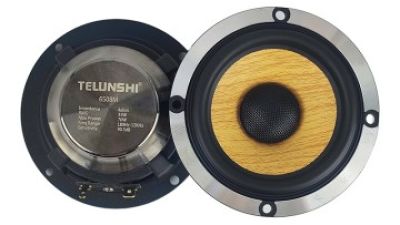
Figuring out the best 8-Inch Subwoofer from China really depends on how it performs in your car or listening room. Honestly, just knowing it’s an 8-inch model isn’t enough — it could work well in a sealed box, a vented enclosure, or powered systems, and those setups will sound pretty different. Sure, a deep-bass claim sounds nice, but it doesn’t tell the whole story. You’ll want to dig into the specs: check the usable frequency range, continuous power rating, impedance, sensitivity, and recommended enclosure size. And don’t just trust the product page — it’s a good idea to look at independent measurements to get a clearer picture. Little details, like shallow mount depth (which can be handy if your trunk’s tight) or how the enclosure and amp are matched, really do influence how tight and controlled the bass sounds. Keep in mind, no single spec is a guarantee of perfect performance—it’s about the whole setup.
When you’re shopping Chinese brands or suppliers, it’s worth knowing what to look for. Ask about their testing methods, how consistent their samples are, warranty options, availability of replacement parts, and what kind of tech support they offer. If they can provide frequency response or distortion data, with clear test conditions, that’s a big plus — otherwise, it’s hard to really compare. If possible, test the sub with familiar tunes, and listen for rattles or unwanted noises around the enclosure. Fit matters a lot too — a cheaper model might be tempting, but don’t forget to factor in shipping, installation, and enclosure costs. Sometimes those extras can add up. The best choice isn’t just about the highest power rating; it’s about what fits your space, your amp, and your personal sound preferences. And beware of listings that don’t give much detail — it’s better to be cautious. I can’t replace hands-on testing, but hopefully, this guide helps you narrow down your options and ask the right questions before making a purchase.
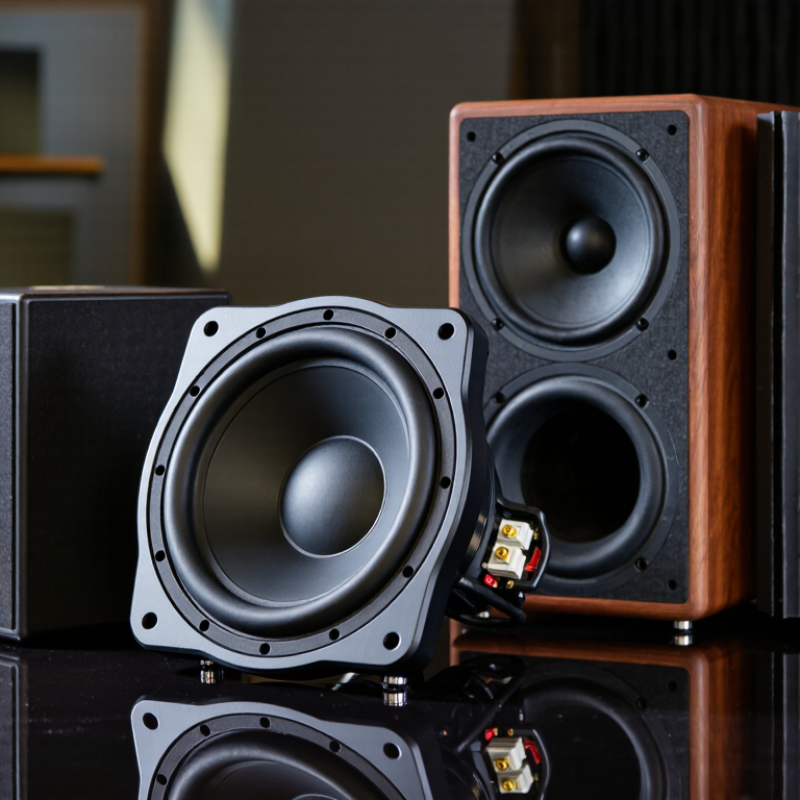
What “8 Inch” Means: 203 mm Cone Diameter and Effective Radiating Area
What Is the Best 8 Inch Subwoofer from China?
An “8 inch” label sounds precise, but it usually describes a nominal driver class. Eight inches converts to 203.2 mm. It does not guarantee a 203 mm cone. The IEC 60268-5 loudspeaker measurement standard covers performance measurements, not a universal rule for commercial size labels.
Not quite.
Effective radiating area, or Sd, is more useful for comparing drivers. It is calculated from the effective piston diameter, commonly measured to the midpoint of the surround. A 203 mm circle covers about 324 cm², but an 8-inch driver with a 150 mm effective diameter has an Sd of about 177 cm². The difference matters. Thiele-Small loudspeaker design literature, including work published in the Journal of the Audio Engineering Society, uses Sd alongside other parameters to describe driver behavior.
When evaluating an 8-inch subwoofer made in China, ask for Sd in square centimetres, not just the nominal diameter. Check the drawing. A clear specification sheet should also state measurement conditions and tolerances; otherwise, two listed values may not be directly comparable. I would verify the cone and surround dimensions against a physical sample, too. Paper specifications can be tidy, while production details vary.
Which Thiele–Small Parameters Matter: Fs, Qts, Vas, and Xmax
For an 8-inch subwoofer, “best” depends on the enclosure and target bass, not its country of manufacture. Thiele and Small’s loudspeaker research, published in the Journal of the Audio Engineering Society in 1971 and 1972, established the parameter framework still used to evaluate driver-and-box behavior. Fs is the driver’s free-air resonance: lower Fs can support deeper bass, but it does not guarantee strong output inside a small cabinet. Check the measured value, not just a catalog claim.
Qts describes total damping and helps indicate which enclosure alignments may suit a driver; it is not a quality score. Vas estimates the air volume with the same compliance as the driver’s suspension, so it helps assess cabinet demands. Xmax is the linear one-way cone travel, commonly reported in millimeters. More Xmax can support greater low-frequency output before excessive excursion, but measurement conventions vary. IEC 60268-5:2003 provides standardized loudspeaker measurement methods; ask suppliers how they measured excursion and impedance. Then compare the complete test sheet with your intended box volume and amplifier power. A neat specification table is useful, but it can still hide inconsistent methods. The enclosure changes the result.
How to Compare RMS Power, Impedance, and Sensitivity Ratings
What Is the Best 8 Inch Subwoofer from China?
How to Compare RMS Power, Impedance, and Sensitivity Ratings
Choosing an 8-inch subwoofer is easier when its ratings match your amplifier and enclosure. RMS power describes the continuous power the driver can handle under specified conditions. It does not tell you how loud the subwoofer will play by itself. A 300-watt RMS rating, for example, is not a promise of 300 watts of clean output in every installation. Check the test conditions and avoid treating peak-power figures as equivalent.
Impedance affects how an amplifier delivers power. Many subwoofers use 2-ohm or 4-ohm voice-coil configurations, but the right choice depends on the amplifier’s supported load and wiring. Confirm the final impedance before connecting anything. Small wiring differences matter. Sensitivity ratings also need context: compare figures measured with the same method, such as 1 watt at 1 meter. A 2.83-volt measurement can be misleading when comparing drivers with different impedances.
Numbers need context. In a real setup, a compact sealed box may sound controlled, while a ported enclosure can emphasize output around its tuning frequency. Neither result is automatic; enclosure volume and construction matter. Ask for a frequency-response graph, impedance details, and test conditions, then compare them with your available space. One rating may still be unclear, so verify it rather than assuming the listing tells the whole story.
How Enclosure Volume and Tuning Frequency Shape Bass Response
What Is the Best 8 Inch Subwoofer from China?
How Enclosure Volume and Tuning Frequency Shape Bass Response
An eight-inch subwoofer’s bass depends on more than cone size. The enclosure changes the air spring behind the cone, while port tuning sets the system’s low-frequency behavior. In his 1973 Journal of the Audio Engineering Society paper, “Vented-Box Loudspeaker Systems: Small-Signal Analysis,” Richard H. Small modeled these interactions using driver and enclosure parameters. The practical point: there is no universally best box without the driver’s Thiele-Small data.
Consider a modeled example, not a product specification: a 10-liter vented enclosure tuned to 40 Hz may sound tighter than a 15-liter enclosure tuned to 35 Hz. The larger, lower-tuned box may extend deeper, but it needs a correctly sized port and careful excursion checks. Below port tuning, a vented driver can lose acoustic control quickly. That matters.
Listen for it. A kick drum should feel defined, not hollow; a low sustained note should not turn into a port “chuff.” Measure the actual internal volume after subtracting the driver, port, and bracing. Then test near the intended listening level, because small-box compromises become obvious when the cone moves hard. Models help, but cabin placement and room response can overturn neat predictions. One detail is easy to miss: changing port length during tuning also changes its end effects, so the final frequency should be measured rather than guessed.
How to Assess Chinese Manufacturers’ Testing and Quality-Control Data
Choosing the best 8-inch subwoofer from China starts with more than a power rating. Ask for test reports tied to the exact model and production revision. A useful report identifies the sample count, test conditions, measurement equipment, and date. Numbers need context. If a factory lists continuous power, check how long the unit was tested and how failure was defined.
For performance, look for frequency-response curves, impedance measurements, and distortion data at stated input levels. The test setup matters: enclosure volume, microphone position, and room conditions can change results. Request the raw curves, not just a polished specification sheet. That matters. A subwoofer that handles a short burst may behave differently after sustained playback heats its voice coil. Ask whether thermal and excursion tests were repeated across several samples.
Quality-control records can show whether those results reflect normal production. Check incoming-material inspections, in-process checks, and final audio tests. Ask how many units are sampled per batch, what triggers rejection, and how defects are tracked. A clear serial or batch record helps connect a returned sample to its production data. Even careful testing has blind spots. Small sample sizes, changing suppliers, or undocumented retests can weaken confidence, and a neat spreadsheet will not fix that. Request recent records and compare them with a sample you can inspect independently.
How to Match an 8-Inch Subwoofer to an Amplifier and Listening Space
What Is the Best 8 Inch Subwoofer from China?
How to Match an 8-Inch Subwoofer to an Amplifier and Listening Space
Matching an 8-inch subwoofer starts with its continuous power rating and impedance, not the largest number printed on a product page. Compare the subwoofer’s RMS power handling with the amplifier’s RMS output at the same impedance. Leave some headroom, and avoid turning up a small amplifier until its sound becomes harsh. Clipping can damage a speaker even when the amplifier’s advertised wattage seems modest. Check the wiring options, too. A dual voice coil can offer flexibility, but the final wiring must stay within the amplifier’s supported load.
The enclosure matters as much as the driver. A sealed box often gives controlled bass and can fit neatly in a compact room; a ported box may play louder around its tuned frequency. Use the manufacturer’s recommended internal volume and account for the space taken by the driver and bracing. Measure before building. A box that looks right from outside can be too small inside. Even careful measurements can miss a detail, so check the finished internal dimensions.
Then consider where the bass will be heard. In a small room, bass can build up near walls and corners, making one note sound much louder than others. Try the subwoofer in a few positions and listen with familiar music at moderate volume. Keep it away from rattling shelves, and secure the enclosure if it sits in a vehicle. Small changes matter. A well-matched system should sound balanced, not merely loud.
Automotive Speaker Market Trends: How 2-Inch, 70W Dome Mid-High Drivers Fit Industry Sound-System Data Reports
Automotive sound-system reports typically track speaker configuration, vehicle production and replacement demand rather than treating wattage alone as a measure of audio quality. OICA’s 2023 production statistics record approximately 93.5 million motor vehicles built worldwide, a large installed base for factory audio and later upgrades. That figure is not a speaker-sales estimate, but it helps explain why compact drivers and replacement door sets remain relevant across many vehicle types.
A 2-inch, 70W dome mid-high driver can complement a system by handling upper midrange and high frequencies, while larger Door Speakers provide more low- and mid-frequency output. Check whether the 70W figure is RMS or peak, and match the driver’s impedance and crossover range to the rest of the system. In practice, a small dome driver is usually an addition to a balanced setup, not a direct substitute for a full-range door speaker.
For front-door upgrades, 4-inch, 5-inch and 6.5-inch speaker sets cover common fitment sizes, subject to the vehicle’s mounting depth and opening. A 4-inch set can suit compact locations, while 5-inch and 6.5-inch options generally offer more cone area for fuller midrange and bass response. Pairing correctly sized door speakers with a suitable mid-high driver can support clearer, more evenly distributed sound without relying on power ratings alone.
FAQS
Not necessarily. Eight inches equals about 203 mm, but the label describes a nominal driver class. Measure the cone and surround.
Sd estimates the cone’s effective moving area, usually measured to the surround’s midpoint. An effective diameter of 150 mm gives about 177 cm². That is far less than a 203 mm circle’s roughly 324 cm².
Ask for Sd in square centimetres, a drawing, measurement conditions, and tolerances. Compare the drawing with a physical sample. Paper can look precise.
No. RMS describes continuous power handling under stated conditions, not guaranteed loudness. Check how the test was performed. Peak power is different.
Match the subwoofer’s final wired impedance to the amplifier’s supported load. Confirm the wiring before connecting it. Small changes matter.
Only when the measurement methods match. Check whether sensitivity was measured at 1 watt and 1 meter. A 2.83-volt figure can mislead when impedances differ.
A compact sealed box may sound controlled. A ported box can emphasize output near its tuning frequency. Volume and construction matter.
Request model-specific reports, raw response curves, impedance and distortion data, sample counts, and test conditions. Ask about batch checks and defect tracking, too. Small samples leave blind spots.
Conclusion
Choosing the best Subwoofer 8 Inch from China requires more than comparing advertised wattage or price. An 8-inch model has a cone diameter of approximately 203 mm, while its effective radiating area may vary depending on the surround and cone design. Important Thiele–Small parameters include Fs for low-frequency capability, Qts for system behavior, Vas for enclosure requirements, and Xmax for output and distortion control. RMS power, impedance, and sensitivity should also be evaluated together rather than separately.
Enclosure volume and tuning frequency strongly influence bass depth, efficiency, and transient response, so the driver must be matched to a suitable sealed or ported cabinet. Buyers should request testing and quality-control information, including frequency-response measurements, distortion results, power testing, and production consistency data. Finally, amplifier power and impedance must match the subwoofer’s specifications, while the listening room, available space, and desired volume should guide the final selection. A balanced design is generally more valuable than the highest single rating.







 Email
 whatsapp