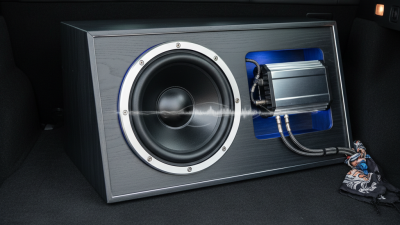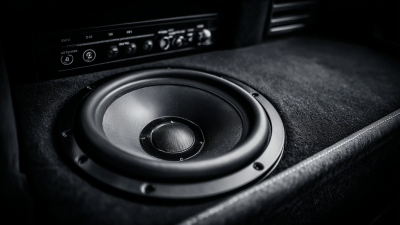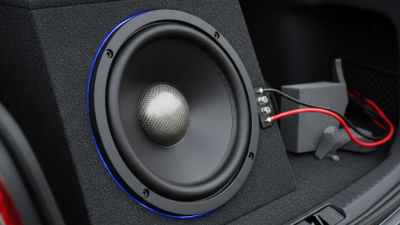
So, an auto subwoofer is basically the speaker in your car that kicks out those deep, punchy bass notes. It handles those really low frequencies that your regular Door Speakers just can’t quite reproduce clearly. You might even feel its thump through your seat before you actually hear the notes — that’s how physical and visceral bass can be. It’s this physical response that really changes the vibe of your car’s sound system, making it feel more alive.
In this guide, when I say 'Subwoofer Auto,' I’m talking about a subwoofer made specifically for cars. We’re going to look at all the key parts — the cone, voice coil, magnet, enclosure, amp, wiring — because each one plays a role in how well it performs, how safe it is, and how good it sounds. Just getting a bigger sub doesn’t mean you’ll get better bass, though. Things like your car’s size, how much power you have, the enclosure type, and how everything’s tuned really matter more than just size or looks. Those elements need to work together.
From my own experience, I can tell you that messing up the gain settings can cause distortion— even if you’ve got top-notch gear. And a loose ground wire? That can lead to weird noises or systems that don’t work reliably. Those little details often slip under the radar but make a big difference. I’ve seen setups that sounded pretty good at low volume, but as soon as you hit the gas, they got harsh and loud. It’s a good reminder that more power isn’t always the answer.
Trusted brands usually publish specs like impedance, sensitivity, power handling, and frequency range. But it’s worth comparing these numbers carefully, since testing methods can vary from brand to brand. This guide will also explain how your auto sub converts electrical signals into those crazy air movements that create sound. Plus, I’ll talk about where you should place it, different enclosure types, and good setup practices. The goal isn’t just loud bass—it’s clean, balanced, and reliable sound on your daily drives. A properly designed system should sound controlled, natural, and dependable, no matter where you’re driving.
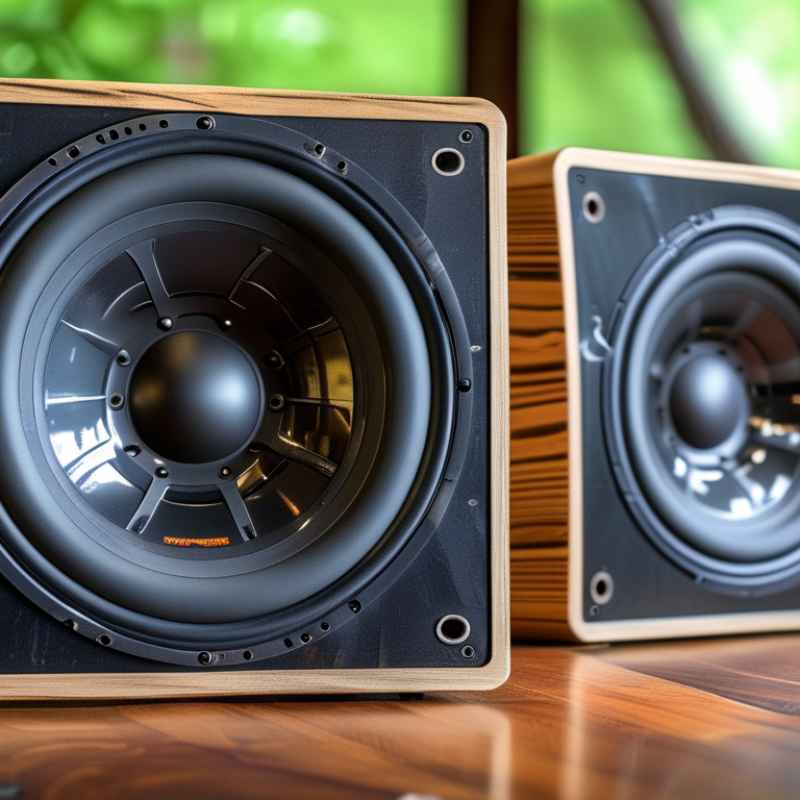
An auto subwoofer is a dedicated speaker designed to reproduce deep bass, usually below 100 Hz. Its purpose is not simply to make music louder. It handles the low notes that ordinary door speakers often distort, including kick drums, engine-like effects, and the lowest tones in electronic music. A subwoofer uses a large cone, an enclosure, and an amplifier to move more air efficiently. A crossover directs bass signals to it, while higher frequencies remain with the main speakers.
The market is growing steadily. Grand View Research’s 2024 car audio market analysis estimates continued expansion through 2030, supported by demand for better in-vehicle entertainment. However, this figure covers complete car audio systems, not subwoofers alone. That distinction matters. Industry reports can show market direction, but they cannot guarantee better sound inside every vehicle.
In practical testing, bass quality depends on enclosure volume, cabin shape, electrical power, and installation accuracy. A larger cone is not automatically better. Poor tuning may create a loose boom that masks vocals and road detail. Correct placement can make a modest system sound balanced, with bass felt near the seat rather than heard from the trunk. Yet expectations should remain realistic. A subwoofer cannot repair weak recordings or badly adjusted speakers. The best setup usually adds depth, not noise.
An auto subwoofer is a low-frequency speaker designed to produce deep bass inside a vehicle.
Its main working parts are the cone, voice coil, magnet, suspension, and speaker frame. Together, they convert electrical signals into controlled air movement.
The cone is the visible surface that pushes air. Beneath it, the voice coil receives changing electrical current from an amplifier. This coil moves inside a magnetic field, pulling the cone forward and backward.
The suspension keeps that movement centered. Without it, the cone could rub against the frame or produce distorted sound. The magnet provides the force, while the frame holds every component in alignment.
The enclosure also matters.
A sealed box usually delivers tight, controlled bass. A ported box can create louder, deeper output, but its design must match the subwoofer.
I always check the box volume, wiring, and amplifier power before judging performance. A powerful amplifier cannot fix a poorly matched enclosure.
The crossover removes higher frequencies, allowing the subwoofer to focus on bass. It sounds simple, but small wiring mistakes can weaken output.
Even experienced installers sometimes overlook cabin noise and seat placement. A bass response that sounds excellent in one vehicle may feel slow or uneven in another. Testing different settings remains necessary.
An auto subwoofer is designed to reproduce the lowest part of recorded music. These frequencies often range from about 20 to 120 hertz. They create the deep kick of a drum, the rumble of an engine, and the physical pressure felt in the cabin.
The process begins with an electrical audio signal from the receiver or amplifier. That signal flows through a voice coil positioned inside a magnetic field. The coil moves rapidly as the signal changes. It pushes and pulls the attached cone, which moves air and produces low-frequency sound. The cone needs space to move, so the enclosure controls its motion and reduces unwanted vibration. A sealed enclosure usually gives tight, controlled bass. A ported enclosure can produce louder output around a selected frequency, though poor design may sound loose.
A crossover prevents the subwoofer from handling sounds it cannot reproduce clearly. The amplifier supplies the extra power required for large cone movement. In a vehicle, the cabin can strengthen bass through natural acoustic gain. Placement also matters. A subwoofer aimed toward the rear may sound different from one aimed upward or forward. In my experience, small changes in position can alter the bass more than expected. I once blamed the speaker for weak output, but the real problem was an incorrect phase setting. That mistake remains a useful reminder: measurements help, but careful listening still matters.
An auto subwoofer is a speaker designed to reproduce deep bass that ordinary door speakers often cannot handle. It moves more air through a larger cone, creating the physical impact of a kick drum or a low engine note. The amplifier supplies controlled electrical power to this movement. Without enough power, the subwoofer may sound weak or distorted. Too much power, however, can damage the voice coil or speaker suspension.
The enclosure controls how the subwoofer behaves. A sealed box usually produces tight, accurate bass and needs less space. A ported enclosure can play louder around certain frequencies, but it requires careful design and may sound loose when poorly matched. The internal air volume, port size, and subwoofer specifications must work together. There is no perfect box for every cabin. Even a technically correct setup can sound uneven because seats, windows, and metal panels reflect bass differently. Testing the system from the driver’s seat matters.
Tips: Set the amplifier gain gradually, rather than using it as a volume control. Start with the crossover near 80 Hz, then adjust by ear. Keep the bass clean, not merely loud. Check wiring, grounding, and enclosure mounting before extended listening. A small air leak can weaken output. I also recommend listening to familiar tracks at moderate volume; very loud testing can hide problems and encourage poor adjustments.
An auto subwoofer is a speaker designed to reproduce low bass frequencies that ordinary door speakers often miss. It uses a large cone and powerful magnet to move more air. The amplifier sends a filtered bass signal to the subwoofer, creating the deep impact heard in drums, engines, and electronic music. Installation quality matters. Loose panels can turn clean bass into rattling noise.
Sealed subwoofers use an airtight enclosure. They usually deliver tight, controlled bass and need less space. Their response can feel accurate inside a small car. Ported subwoofers include a tuned opening, called a port. This design produces louder bass around specific frequencies, but it needs a larger enclosure. Poor tuning may create boomy or uneven sound. Bandpass enclosures place the subwoofer inside a sealed chamber with a ported chamber in front. They can produce strong output, though their sound may feel less natural.
Powered subwoofers combine the speaker and amplifier in one housing. They are convenient for compact vehicles and simpler upgrades. Component subwoofers use separate parts, allowing more control over power and enclosure design. Shallow-mount models fit beneath seats or behind narrow panels. I have found that cabin size changes the result more than many specifications suggest. A louder system can still sound worse. Measurements help, but careful listening remains necessary. The best enclosure depends on available space, amplifier power, music preference, and the vehicle’s interior materials. Even a small wiring mistake can weaken performance.
An auto subwoofer is a speaker designed to reproduce deep bass, typically from about 20 Hz to 200 Hz. It uses a large cone, a voice coil, and an amplifier to move more air than a standard door speaker. Enclosure design strongly affects bass extension, efficiency, and transient response.
The chart shows common approximate enclosure-volume ranges used in car-audio installations. Sealed boxes are usually compact and provide controlled, accurate bass. Ported and bandpass designs generally require more space but can produce greater output around their tuned frequency. Infinite-baffle systems use the vehicle structure as the enclosure, while powered under-seat units prioritize compact installation over maximum output.
An auto subwoofer is a dedicated speaker that produces deep, low-frequency sound. Its performance depends on installation, electrical power, and available vehicle space. A larger cone does not always mean better bass. The enclosure, amplifier, and cabin shape matter just as much.
Installation begins with safe wiring and accurate measurements. The power cable should match the amplifier’s current demand and include a fuse near the battery. Signal cables must stay separated from power cables to reduce unwanted noise. Secure the enclosure firmly, especially under a seat or in a trunk. A loose box can rattle, shift, or become dangerous during sudden braking. I have seen poor grounding create more trouble than a weak speaker. Check the ground point for clean, bare metal. Small details matter.
Power ratings require careful reading. Use the amplifier’s continuous RMS output, not only its larger peak number. The subwoofer’s impedance must match the amplifier’s supported load. Excessive volume can cause distortion, overheating, or permanent speaker damage. Vehicle compatibility also deserves attention. Measure trunk depth, seat clearance, and ventilation space before buying equipment. Some compact vehicles have limited charging capacity, while older electrical systems may struggle with heavy audio loads. A professional installer can test voltage drop and confirm whether the alternator, battery, and factory audio system are suitable. Still, even expert advice needs verification against the vehicle’s exact year and configuration.
| Consideration | Typical Data | How It Works | Installation and Compatibility Notes |
|---|---|---|---|
| Basic Function | Low-frequency sound reproduction | A subwoofer uses a large driver and enclosure to move more air than a typical door speaker, producing bass commonly felt as well as heard. | It supplements the vehicle's existing speakers rather than replacing the entire sound system. |
| Common Driver Sizes | 6.5, 8, 10, 12, and 15 inches | Larger drivers generally move more air, while smaller drivers can require less space and may respond more quickly in compact installations. | Measure the available mounting depth, width, height, and clearance before selecting a size. A larger driver is not automatically better for every vehicle. |
| Enclosure Types | Sealed, ported, bandpass, and vehicle-specific enclosures | Sealed boxes usually provide controlled, accurate bass. Ported designs can produce higher output around a tuned frequency but require more space. | Sealed enclosures are often easier to integrate in limited space. Ported and bandpass designs require correct enclosure volume and port clearance. |
| Powered vs. Passive | Powered: amplifier built in Passive: external amplifier required | A powered subwoofer combines the driver and amplifier in one housing. A passive subwoofer receives amplified audio from a separate amplifier. | Powered units can simplify installation. Passive systems offer more flexibility in selecting amplifier power and system layout. |
| Typical Continuous Power | Approximately 75–1,000 watts RMS | RMS power describes the approximate continuous power a subwoofer can handle under specified conditions. It is more useful for matching equipment than peak power. | Match the amplifier's continuous output to the subwoofer's RMS rating. Avoid choosing equipment based only on advertised peak watts. |
| Peak Power | Often about 2 times the RMS rating | Peak power indicates short-duration handling rather than sustained operating capability. | Use RMS ratings for amplifier and subwoofer matching. Peak figures should not be used as the primary sizing measurement. |
| Impedance | Commonly 1, 2, or 4 ohms | Impedance affects how much current the amplifier must deliver. Lower impedance can allow more amplifier output, provided the amplifier supports it. | Confirm the subwoofer's final load after wiring voice coils. Never connect a load below the amplifier's rated minimum impedance. |
| Voice-Coil Configuration | Single voice coil or dual voice coil | Dual voice-coil models provide additional wiring options for configuring the final impedance. | Series and parallel wiring change the final load. Follow the wiring diagram and verify the resulting impedance before connecting the amplifier. |
| Frequency Range | Approximately 20–200 Hz | The subwoofer reproduces the lowest portion of the audible spectrum, while a low-pass filter limits higher frequencies. | A crossover point around 70–100 Hz is a common starting range, but the final setting should be adjusted to blend smoothly with the vehicle's main speakers. |
| Sensitivity | Often about 82–90 dB at 1 W/1 m | Sensitivity indicates how much acoustic output a driver can produce from a specified amount of input power. | A more sensitive subwoofer may reach a desired volume with less amplifier power, although enclosure design and installation also affect output. |
| Amplifier Type | Monoblock or multi-channel amplifier | A monoblock amplifier is commonly dedicated to low-frequency output. A multi-channel amplifier may power both the main speakers and the subwoofer. | Choose an amplifier that supports the subwoofer's final impedance and provides suitable RMS output without excessive clipping. |
| Audio Signal Connection | RCA line-level input or speaker-level input | RCA inputs receive a low-voltage preamp signal. Speaker-level inputs accept the amplified signal from a factory or aftermarket head unit. | Speaker-level input can help integrate with factory stereos that lack RCA outputs. Use the input type supported by the subwoofer or amplifier. |
| Power Connection | Battery-positive cable, chassis ground, and remote turn-on signal | The amplifier draws high current from the vehicle's electrical system and uses the audio signal to drive the subwoofer. | Install an appropriately rated fuse close to the battery. Route power and signal cables carefully to reduce noise and protect the wiring. |
| Electrical Demand | Depends on amplifier efficiency and output power | Higher output requires more current. Class-D amplifiers are commonly used for subwoofers because they can provide high output with relatively efficient operation. | Confirm that the vehicle's charging system and wiring can support the planned load. Very high-power systems may require electrical-system upgrades. |
| Fuse Selection | Based on amplifier and cable specifications | The fuse protects the power cable from excessive current caused by a short circuit or wiring fault. | Place the main fuse near the battery and use the cable size recommended for the installation. Do not replace a blown fuse with a higher-rated fuse without correcting the cause. |
| Vehicle Placement | Trunk, cargo area, under-seat area, or behind a seat | Placement affects available enclosure volume, cabin coupling, vibration, and accessibility. | Keep ventilation openings clear, secure the enclosure against movement, and avoid obstructing airbags, seat travel, spare-tire access, or cargo safety equipment. |
| Vehicle Compatibility | Most cars, trucks, SUVs, and vans with adequate space and electrical capacity | Compatibility depends more on available space, audio-source connections, amplifier load support, and electrical capacity than on vehicle body style alone. | Check enclosure dimensions, battery and grounding access, factory audio integration requirements, and the vehicle's available charging-system capacity. |
| Factory Sound-System Integration | May require a line-output converter or compatible high-level input | Some factory systems use amplified or processed signals that must be converted or adjusted before reaching an aftermarket amplifier. | Test the signal before final installation. Factory equalization may require gain, crossover, or signal-processing adjustments for balanced bass. |
| Gain Control | Input-sensitivity adjustment, not a volume control | The gain matches the amplifier's input sensitivity to the audio source and determines how easily the amplifier reaches full output. | Set gain gradually with clean source material. Excessive gain can cause clipping, distortion, and potential speaker damage. |
| Low-Pass Filter | Common adjustment range: approximately 50–200 Hz | The filter removes higher frequencies so the subwoofer focuses on bass and blends with the main speakers. | Start near the main speakers' lower crossover region, then adjust by listening for a smooth transition without an obvious gap or overlap. |
| Phase Control | Usually 0°/180° or variable phase adjustment | Phase control changes the timing relationship between the subwoofer and the other speakers at the crossover region. | Use the setting that produces stronger, smoother bass at the driver's normal seating position. Vehicle acoustics can make the best setting vary by installation. |
| Common Installation Risks | Clipping, loose wiring, inadequate grounding, and unsecured equipment | Distortion and electrical faults can result from incorrect gain settings, poor connections, insufficient cable size, or improper grounding. | Disconnect the battery before wiring, protect cables from sharp metal edges, use secure terminals, and fasten all equipment firmly. |
| Best Use by System Goal | Compact bass, balanced daily listening, or high-output bass | Small powered units prioritize space and convenience. Moderate passive systems balance output and sound quality. High-output systems require larger enclosures and greater electrical capacity. | Select the system according to available space, desired loudness, listening preferences, budget, and the vehicle's electrical limitations. |
: It reproduces low bass frequencies that ordinary door speakers often miss. It moves more air.
The cone pushes air, while the voice coil moves inside a magnetic field. The magnet supplies force. The suspension keeps movement centered. The frame holds everything in alignment.
A sealed enclosure usually creates tight, controlled bass. A ported enclosure can sound louder and deeper around tuned frequencies. Poor matching may produce boomy bass.
Sealed designs need less space and often sound accurate in small vehicles. Ported designs require careful tuning and usually need larger boxes. More volume is not always better.
They place the subwoofer inside a sealed chamber with a ported chamber in front. They can produce strong output. Their sound may feel less natural.
It combines the speaker and amplifier in one housing. This suits compact vehicles and simpler upgrades. Installation becomes easier, but adjustment still matters.
Shallow-mount models fit beneath seats or behind narrow panels. Component models use separate speakers, amplifiers, and enclosure parts. They offer more design control.
No. A poor enclosure, loose wiring, or incorrect settings can still weaken performance. A powerful amplifier cannot repair bad matching.
Cabin size, seat placement, interior materials, and road noise change bass response. One vehicle may sound smooth. Another may sound slow or uneven.
Check box volume, wiring, amplifier power, and crossover settings. Listen from the driver’s seat. Try different settings. Measurements help, but listening remains necessary. I may judge too quickly.
An auto subwoofer is a specialized speaker designed to reproduce the deep, low-frequency sounds that standard car speakers often cannot deliver clearly. A Subwoofer Auto system typically includes a woofer cone, voice coil, magnet, suspension, and terminals. When electrical audio signals reach the voice coil, it interacts with the magnet and moves the cone back and forth, creating air pressure changes that produce bass. This process gives music greater depth, impact, and balance without requiring the main speakers to handle demanding low notes.
The amplifier supplies the necessary power and controls the subwoofer’s performance, while the enclosure supports the speaker and influences bass response, volume, and sound character. Common types include enclosed subwoofers, component models, powered units with built-in amplification, and compact under-seat designs. Choosing the right system requires considering available cabin space, electrical capacity, amplifier power, enclosure requirements, and vehicle compatibility. Proper installation and carefully matched settings help achieve clean, powerful bass while maintaining safe and reliable operation.