Leave Your Message
0%

Picking the right Car Subwoofer and amplifier combo in 2026? It’s not just about chasing the biggest bass number you can find. A setup that looks super powerful on paper might end up sounding pretty weak in a small hatchback. On the flip side, another system can totally overwhelm the cabin and rattle everything in a way that’s just uncomfortable. So yeah, vehicle size, the music you actually listen to, how efficient the amp is, and how much install space you’ve got—all of that matters.

When you're judging a setup, start with RMS power—not peak wattage. RMS is basically what the system can actually sustain, so it gives you a much more realistic picture. You’ll want to match the amp’s rated power to the sub’s impedance and thermal limits. And definitely check the enclosure dimensions before you commit. A box that eats up half your trunk? That can get old fast—maybe after one weekend. Don’t forget to look at wiring quality, fuse protection, ventilation, and adjustment controls too. Those little things? They’re what make or break daily reliability.

At the end of the day, how it actually sounds in the real world still matters. Throw on some bass-heavy tracks at a moderate volume and really listen—do you hear distortion? Rattling panels? Vocals getting all muddy? And honestly, a clean twelve-inch sub isn't automatically better than a well-controlled ten-inch one. I've learned the hard way that installation quality can do more for the result than some flashy spec sheet. It's an easy lesson to miss, though. Here's the thing: this guide looks at real-world options for 2026. I'm pulling from manufacturer specs, independent testing ideas, warranty details, and the kinds of install issues people actually run into. But honestly? No guide is going to fit every vehicle perfectly. Your cabin, your electrical system, and how you like to listen can bring out weak spots that online reviews never mention. So pick carefully, leave yourself some room to tweak things later, and take long-term reliability just as seriously as you take deep bass.
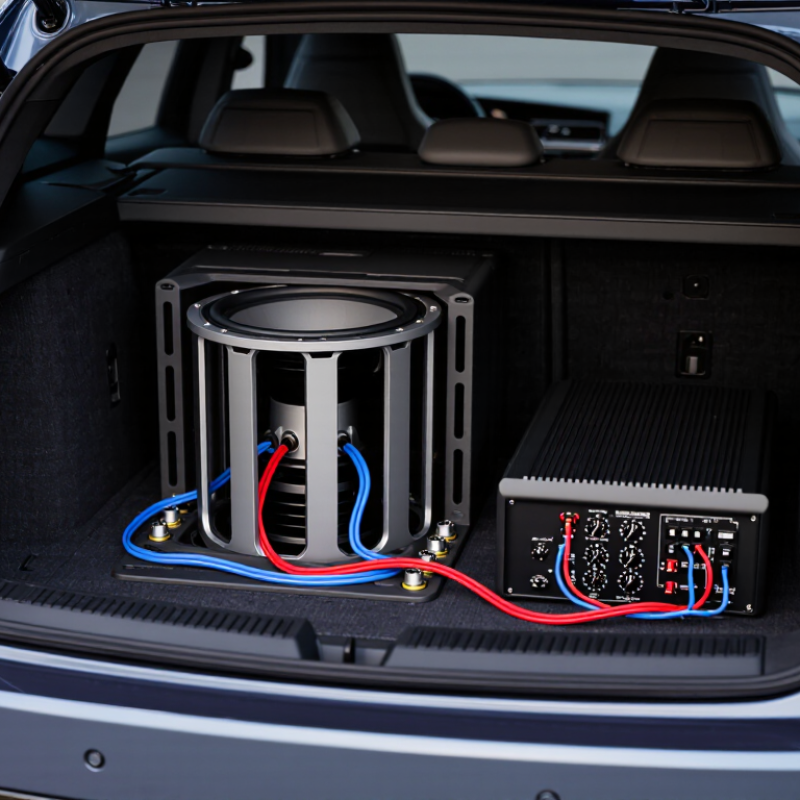
2026 How to Choose the Best Car Subwoofer With Amplifier?

Understanding Car Subwoofers With Amplifiers and Their Main Functions

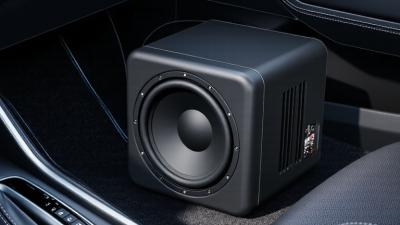
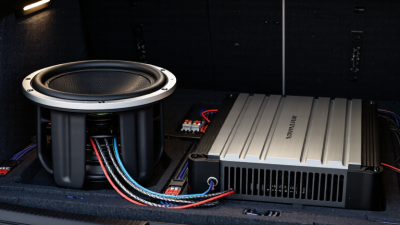
A car subwoofer with an amplifiergives low frequencies more depth and physical impact. The subwoofer handles bass notes that standard Door Speakers often cannot reproduce clearly. The amplifier supplies controlled power, helping the subwoofer move without sounding weak or strained. Together, they can make kick drums feel tighter and movie effects more realistic.

The amplifier does more than increase volume. Its gain adjusts input sensitivity, while the low-pass filter limits higher frequencies. This keeps the subwoofer focused on bass.

Check the subwoofer’s RMS power rating, not only its peak figure. The amplifier should provide suitable RMS power at the correct impedance. A mismatch may cause distortion, overheating, or disappointing performance.

Enclosure size also matters. A sealed box usually produces controlled bass, while a ported box can sound louder around specific frequencies. I once judged a system by loudness alone, and that was a poor test. Balanced bass is harder to achieve.

Tips:Listen from the driver’s seat with familiar music. Begin with low gain and increase it slowly. Keep Bass Boost moderate. Excessive boost can waste power and damage the speaker. Check wiring quality and secure every connection. Allow airflow around the amplifier. Small installation details often affect reliability more than expected.

Identifying the Right Subwoofer Type for Your Vehicle and Listening Style

Choosing the right car subwoofer starts with your vehicle and listening habits. A compact powered subwoofer suits small cabins and factory audio systems. It adds warmth without consuming much cargo space. Larger vehicles may handle a separate subwoofer and amplifier more comfortably. Check the enclosure’s dimensions carefully. A box that blocks storage quickly becomes frustrating.

Music style matters too. Sealed enclosures often deliver tight, controlled bass for jazz, vocals, and acoustic tracks. Ported enclosures usually create louder, deeper bass for electronic music and hip-hop. Listen from the driver’s seat, not beside the open trunk. Cabin shape changes bass dramatically.

I once preferred a powerful setup, but daily driving made its vibration tiring. That experience taught me to value balance over maximum output. Match the amplifier’s RMS power with the subwoofer’s continuous rating, rather than chasing peak numbers.

Tips: Play familiar songs during testing. Notice bass texture, not only volume. Measure available space twice. Leave room for ventilation around the amplifier. If bass sounds muddy, lower the gain before replacing equipment. A professional installer can check polarity, grounding, and safe cable routing, especially when the vehicle has complex electronics. Preferences also change. What sounds exciting for ten minutes may feel excessive during a long commute.

Matching Subwoofer Power, Impedance, and Amplifier Performance

Choosing the best car subwoofer with an amplifier starts with matching real electrical limits, not peak numbers. CTA-2031, the mobile audio power measurement standard, emphasizes output ratings at defined impedance and distortion conditions. Compare RMS power, measured at the same impedance. A 600-watt subwoofer rated at 2 ohms needs an amplifier stable at 2 ohms. A 4-ohm amplifier may overheat or shut down.

A practical target is an amplifier delivering roughly 75–100% of the subwoofer’s RMS rating. This leaves some thermal headroom and reduces clipping risk. Keep the numbers honest. The IEC 60268-5 loudspeaker standard also separates continuous power handling from short-term peak power. Peak figures can look impressive but may last only seconds. For dual voice coils, calculate the final load before buying. Wiring two 4-ohm coils in parallel creates a 2-ohm load; wiring them in series creates 8 ohms. Small mistakes matter.

Listen for heat and distortion. After twenty minutes of bass-heavy driving, touch the amplifier casing carefully. It should feel warm, not painfully hot. Use an RMS-rated wiring system and secure the enclosure firmly. I still distrust any specification without test conditions. That is a fair concern. Real cabins, voltage drops, and installation quality change performance. Choose stable power delivery over the loudest number.

2026 How to Choose the Best Car Subwoofer With Amplifier? — Matching Subwoofer Power, Impedance, and Amplifier Performance
System Configuration Subwoofer Size Voice-Coil / Load Setup Recommended Subwoofer RMS Power Suitable Amplifier RMS Output Target Amplifier Load Recommended Amplifier Type Typical Enclosure Expected Result
Compact daily-driver system 8 in Single voice coil, 4 Ω 200–300 W RMS 250–375 W RMS 4 Ω Monoblock or bridged full-range amplifier Sealed, approximately 0.35–0.60 ft³ Controlled bass with low electrical demand and easy installation
Balanced compact system 10 in Single voice coil, 4 Ω 300–450 W RMS 375–550 W RMS 4 Ω Class D monoblock Sealed, approximately 0.60–0.90 ft³ Good musical accuracy and moderate cabin output
Single-subwoofer performance system 12 in Single voice coil, 4 Ω 500–750 W RMS 600–900 W RMS 4 Ω Class D monoblock with adjustable low-pass filter Sealed, approximately 1.00–1.50 ft³ Strong low-frequency output while retaining a compact footprint
Single-subwoofer deep-bass system 12 in Dual voice coil, 2 Ω per coil 600–900 W RMS 750–1,100 W RMS 1 Ω when coils are wired in parallel Stable 1 Ω Class D monoblock Ported, approximately 1.75–2.25 ft³ Higher output and deeper bass; requires careful wiring and ventilation
High-output single-subwoofer system 15 in Dual voice coil, 2 Ω per coil 800–1,200 W RMS 1,000–1,500 W RMS 1 Ω when coils are wired in parallel High-current Class D monoblock Ported, approximately 2.50–3.50 ft³ Very high cabin output with greater space and electrical-system demands
Two-subwoofer balanced system Two 10 in Two single voice coils, 4 Ω each 300–450 W RMS per subwoofer 750–1,100 W RMS total 2 Ω when wired in parallel 2 Ω-stable Class D monoblock Sealed, approximately 1.20–1.80 ft³ total Even bass distribution and strong output across the cabin
Two-subwoofer competition-style system Two 12 in Two dual voice coils, 2 Ω per coil 600–1,000 W RMS per subwoofer 1,500–2,400 W RMS total 1 Ω or 0.5 Ω depending on coil wiring and amplifier capability High-current monoblock rated for the final impedance Ported, approximately 3.50–5.00 ft³ total Maximum output potential with significant current and enclosure requirements
Factory-radio upgrade 8–10 in Single voice coil, 2–4 Ω 200–400 W RMS 250–500 W RMS Match the amplifier's stable load rating Compact Class D amplifier with high-level input Sealed or compact powered enclosure Convenient integration without replacing the factory head unit
Space-saving under-seat system 6.5–8 in Usually single voice coil, 2–4 Ω 100–250 W RMS 150–300 W RMS 2 Ω or 4 Ω according to the subwoofer design Integrated powered enclosure or compact Class D amplifier Low-profile sealed enclosure Moderate bass enhancement where cargo space is limited
Selection rule: Match the amplifier's RMS output to approximately 75–125% of the subwoofer's RMS rating at the final wired impedance. Use RMS values rather than peak or maximum figures, confirm the amplifier's minimum stable impedance, and provide adequate power, grounding, ventilation, and fuse protection.

Checking Vehicle Space, Installation Requirements, and System Compatibility

2026 How to Choose the Best Car Subwoofer With Amplifier?

Start with the vehicle, not the product box. Measure the available width, height, and mounting depth carefully. A compact enclosure may fit beneath a seat, while a larger cabinet can reduce cargo space. Leave room for ventilation and access to wiring. I once measured the visible space but ignored the seat rail movement. That assumption was wrong. Test the enclosure with the seat fully adjusted.

Installation requirements deserve equal attention. Check whether the amplifier needs a dedicated power cable, fuse, ground point, and remote signal. Use the vehicle’s service information when identifying safe cable routes. Keep power cables away from sensitive signal wires where practical. Confirm the subwoofer’s continuous power rating, impedance, and enclosure requirements. Peak ratings can look impressive but offer limited guidance for daily listening.

System compatibility is often overlooked. Confirm that the factory receiver can provide a suitable signal, especially when it lacks traditional audio outputs. Some systems require a compatible signal adapter or level adjustment. The amplifier must match the subwoofer’s impedance without exceeding its thermal limits. Check the vehicle’s charging capacity too. A powerful system may expose a weak battery or poor ground connection. Not every installation needs maximum output. Clean integration usually sounds better than excessive volume.

Comparing Enclosed, Component, Powered, and Custom Subwoofer Systems

Choosing the best car subwoofer with an amplifier depends on space, sound goals, and installation skill. The wrong match can create weak bass or amplifier strain. Check RMS power ratings, impedance, enclosure volume, and available cargo space before buying. Peak power often looks impressive, but RMS ratings provide a more reliable comparison.

An enclosed subwoofer offers predictable performance and simpler installation. It suits drivers who want controlled bass without designing a box. Component systems provide more flexibility. You can select the woofer, enclosure, and amplifier separately, then tune each part carefully. A powered subwoofer combines the speaker and amplifier in one compact housing. It saves space and usually installs faster, though its upgrade potential is limited. Custom systems can deliver the strongest results because the enclosure matches the vehicle and listening preferences. They also demand accurate measurements, better wiring, and a larger budget. More power is not always better.

Tips: Measure twice. Confirm amplifier compatibility. Leave ventilation around the amplifier. Use proper fusing and secure every cable. A professional installer can check polarity, grounding, and gain settings. Avoid setting gain by ear alone; distortion may arrive before louder bass. I have found that “perfect” tuning rarely stays perfect after temperature changes, seat adjustments, or different music. Recheck the system after installation. Start with moderate settings. Your ears need time to adapt.

How to Choose the Best Car Subwoofer With Amplifier?

This comparison uses a 1–10 index based on typical system characteristics. Higher scores indicate stronger performance for each criterion. Actual results depend on enclosure design, vehicle acoustics, amplifier power, and installation quality.

Custom systems generally provide the deepest bass and greatest upgrade flexibility, while powered subwoofers are usually the simplest and most space-efficient option. Enclosed and component systems offer a practical balance between performance, installation effort, and customization.

Evaluating Sound Quality, Reliability, Features, and Overall Value

2026 How to Choose the Best Car Subwoofer With Amplifier?

Choosing a car subwoofer with an amplifier starts with sound quality, not peak wattage. Listen for bass that feels tight, controlled, and clean at moderate volume. Booming bass may impress briefly, but it can hide vocals and instrument detail. A 10-inch subwoofer often suits a small hatchback, while larger vehicles may need a 12-inch model. Match the amplifier’s RMS output with the subwoofer’s RMS rating. Peak power figures can look impressive, yet they rarely describe daily performance. During installations, I have found that poor enclosure placement can make good equipment sound weak.

Tips: Test familiar songs. Check RMS ratings. Confirm impedance compatibility. Leave ventilation space around the amplifier. A sealed enclosure usually gives tighter bass, while a ported enclosure can sound louder. Your listening habits matter more than specifications alone.

Reliability depends on solid terminals, heat protection, stable wiring, and a durable enclosure. Look for clear safety documentation and a practical warranty. An amplifier with adjustable gain, low-pass filtering, and phase control offers useful flexibility. Avoid treating every feature as essential. Remote bass control may help during long drives, but it can also encourage excessive output. Overall value includes installation costs, power efficiency, service access, and cabin space. I once focused too heavily on loudness and regretted the result; balanced performance would have served me better.

Under-Seat Subwoofer Market Insights from Grand View Research: Evaluating the Aluminum YL-1013 and 8013 (2024–2030)

The under-seat subwoofer market is expected to gain attention from 2024 to 2030 as vehicle owners seek stronger bass without sacrificing cabin space. Compact aluminum enclosures are well suited to this trend because they offer a slim profile, efficient heat dissipation, and flexible installation beneath a seat. The YL-1013 and 8013 represent this practical design direction, supporting upgrades for factory and aftermarket car audio systems while maintaining a universal fitment approach.

The YL-1013 combines a 10-inch driver with a 4-ohm impedance, a single voice coil, and a frequency range of 20–250 Hz. Its listed RMS ratings include 150 W for the subwoofer specification and up to 500 W for the power description, so installers should confirm the applicable configuration before matching an amplifier. With 91 dB sensitivity, 12–24 V compatibility, and maximum sound pressure above 90 dB, it is designed to deliver controlled low-frequency output from a compact enclosure. The aluminum construction also helps conserve under-seat space in sedans, SUVs, and commercial vehicles.

For buyers comparing the YL-1013 and 8013, key evaluation points include enclosure thickness, amplifier integration, thermal performance, bass extension, and installation clearance. A one-year warranty, ISO9001 production certification, and customizable OEM/ODM support may appeal to distributors and vehicle-audio installers serving varied regional requirements.

FAQS

What should I check before choosing a car subwoofer with an amplifier?

Check RMS power, impedance, enclosure volume, and available cargo space. Peak wattage can look impressive, but RMS ratings are more useful. Space matters.

Which subwoofer system is easiest to install?

An enclosed system offers predictable performance and simpler installation. It suits drivers who want controlled bass without designing a custom enclosure. Measure twice.

What are the advantages of a powered subwoofer?

A powered subwoofer combines the speaker and amplifier in one compact housing. It saves cargo space and usually installs faster. Upgrade options are limited.

When should I choose a component system?

Choose components when you want separate control over the woofer, enclosure, and amplifier. This design allows careful tuning and future upgrades. More adjustment means more responsibility.

Is a custom system always the best choice?

A custom system can match the vehicle and listening preferences closely. It requires accurate measurements, better wiring, and a larger budget. More power is not always better.

How do I match the amplifier with the subwoofer?

Match the amplifier’s RMS output with the subwoofer’s RMS rating. Confirm impedance compatibility before connecting the system. Do not rely on peak power alone.

Should I choose a sealed or ported enclosure?

A sealed enclosure usually produces tighter, more controlled bass. A ported enclosure can sound louder. Your music and listening habits should guide the decision.

How can I improve sound quality after installation?

Test familiar songs at moderate volume. Check polarity, grounding, gain, and phase settings. Leave ventilation around the amplifier. Recheck everything later.

What affects reliability and overall value?

Look for solid terminals, heat protection, stable wiring, and a durable enclosure. Include installation costs, power efficiency, service access, and cabin space. Features are not always necessary.

Why might a powerful system still sound disappointing?

Poor enclosure placement can weaken bass, even with capable equipment. Excessive gain may create distortion before louder sound appears. I once prioritized loudness and regretted it. Perfect tuning rarely stays perfect after temperature or seat changes.

Conclusion

Choosing the best Car Subwoofer With Amplifier starts with understanding how the subwoofer and amplifier work together to produce deeper, more powerful bass. Consider whether your vehicle and listening preferences are better suited to an enclosed, component, powered, or custom system. A compact powered unit may be ideal for limited space, while a component or custom setup can offer greater flexibility and stronger performance for dedicated listeners.

Before making a decision, match the subwoofer’s power handling and impedance with the amplifier’s output to achieve balanced performance without unnecessary strain. Measure available vehicle space, review installation requirements, and confirm compatibility with the existing audio system. Sound quality, reliability, controls, connectivity, build quality, and total cost should also be evaluated. The best choice is not always the most powerful option, but the system that fits your vehicle, delivers clean and satisfying bass, installs securely, and provides lasting value.
Harrison

Harrison

Harrison is a dedicated marketing professional at Foshan Shunde Keshenglang Audio Equipment Co., Ltd., where he combines his passion for sound technology with his expertise in marketing. With a deep understanding of the audio equipment industry, Harrison plays a pivotal role in driving the......
Previous 2026 Best Car Speaker Subwoofer for Global Buyers?