
Leave Your Message
0%

A deep, controlled bass can really make your usual drive feel a lot more engaging, but hey, louder isn't always better. A good matching subwoofer should give some weight to kick drums and those low notes without drowning out vocals or rattling your door panels — and honestly, that stuff matters.

Now, when you're looking at the 2026 guide to the best Car Subwoofers, don’t just get caught up in the flashy power numbers. It goes deeper—things like RMS power, enclosure type, sensitivity, and impedance can really influence how it performs in real life. Plus, practical stuff matters too: does it fit in your trunk? Is your amplifier compatible? How about wiring? Remember, daily listening needs are different, and a small sealed box might be perfect for a tiny car, while a bigger ported subwoofer can give you a whole different kind of punch. Neither is automatically better—it's all about what works for your vehicle.

When you see something labeled 'Subwoofer Auto,' it can seem overwhelming because there's a lot of pretty impressive-sounding numbers out there. But don’t just look at peak power — that can be misleading. Check out the RMS or continuous power ratings, and make sure all your components match up well. And honestly, installation quality counts more than you might think. A cheap wiring job or a loose panel can ruin an otherwise solid system. Tiny details often make all the difference.

Use this guide to compare your options based on how they sound, their size, value for money, and how easy they are to install — not just flashy marketing talk. Keep in mind that every vehicle's acoustics are different, and specs listed online aren’t going to predict exactly how it will sound in your car. Sometimes, even the best choice needs a little tweak after you install it. Be ready to adjust, and keep your expectations realistic. Double-check fitment before you buy, and pick bass that enhances your music rather than overpowering it. After all, it’s all about enjoying your drive without overdoing it.
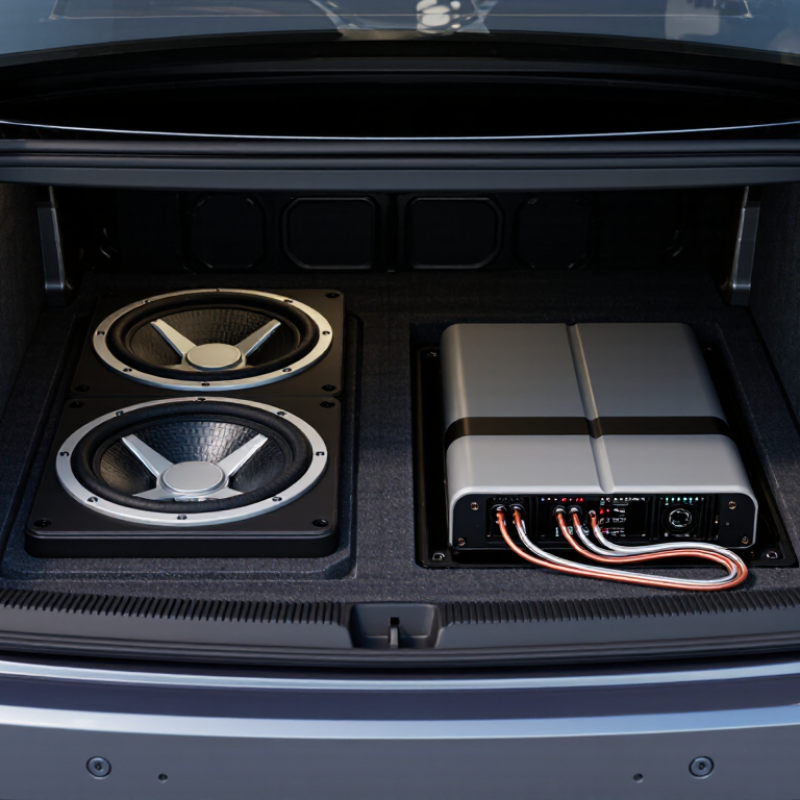
2026 Best Auto Subwoofer for Powerful Car Audio

What Makes a Car Subwoofer Powerful in 2026

What Makes a Car Subwoofer Powerful in 2026

A powerful car subwoofer is not simply the model with the largest wattage printed on its box. Continuous power handling, measured in RMS watts, gives a more useful guide than peak figures. The amplifier should deliver clean power within the subwoofer’s recommended range. Too little power can still cause distortion when the system is pushed hard. That surprises some buyers.

The enclosure matters just as much. A sealed box can provide controlled, tight bass, while a properly designed ported enclosure often plays louder around its tuning range. Fit and vehicle space also affect results: a poorly sealed box can waste output and create rattles. Listen for deep notes that stay clear, not just vibration in the door panels. Cabin acoustics vary, so published specifications cannot predict every car’s sound.

Tips: Check RMS ratings, enclosure requirements, and amplifier compatibility before buying. Secure the enclosure, inspect wiring connections, and set gain carefully; gain is not a volume knob. Play familiar music at a comfortable level during testing. If the bass sounds harsh or panels buzz, reduce output and investigate. I have found that installation details can matter more than a small difference in advertised power. Still, there is no single setup that suits every listener.

2026 Best Auto Subwoofer for Powerful Car Audio: What Makes a Car Subwoofer Powerful?

In an ideal system, doubling amplifier power increases sound pressure level by about 3 dB; multiplying power by ten increases it by about 10 dB. Actual results depend on the subwoofer’s sensitivity, enclosure, installation, and operating limits, so power handling alone does not determine how powerful a system sounds.

Key Subwoofer Specifications for Superior Vehicle Audio

A powerful car subwoofer is not chosen by peak wattage alone. RMS power gives a more useful picture of the output a speaker can handle continuously. Match it with an amplifier that delivers suitable clean power, and check the subwoofer’s impedance against the amplifier’s supported load. A mismatch can cause poor performance or equipment damage. Small details matter.

Sensitivity and frequency response help explain how a subwoofer may behave in a real vehicle. Higher sensitivity can produce more output from the same input, but cabin shape, placement, and road noise affect what listeners actually hear. Frequency figures are worth comparing, though manufacturers may measure them under different conditions. Treat them as guidance, not a guarantee. Listening tests still matter.

The enclosure is just as important as the driver. A sealed box often gives controlled, compact bass, while a ported design can emphasize output around its tuning range. Check the recommended internal volume, mounting depth, and available trunk space before buying. A box that is too large may crowd luggage; one that is too small can restrict performance. I would also leave room for secure installation and airflow around the amplifier. Specifications narrow the choices, but they cannot predict every cabin’s sound. That part takes adjustment.

Types of Auto Subwoofers and Their Best Uses

Types of Auto Subwoofers and Their Best Uses

Choosing a subwoofer starts with space, listening habits, and the sound you want. A sealed enclosure keeps bass tight and controlled, making it a practical fit for rock, jazz, and smaller cabins. Ported enclosures move more air and can deliver louder, deeper bass, but they need more cargo space and careful tuning.

There is a trade-off. A powerful speaker in the wrong box can sound muddy rather than impressive.

Component subwoofers offer flexibility because The Speaker and enclosure are selected separately. They suit custom installations where fit and sound quality matter. Loaded enclosures, with a subwoofer already matched to its box, are simpler for many daily drivers. Under-seat models save room, though their smaller drivers generally cannot deliver the same deep output as larger units.

SEMA’s 2024 U.S. market report places the broader specialty-equipment market at about $52.3 billion in 2023; that figure covers many product categories, not subwoofers alone. It signals a large upgrade market, but does not identify one best design.

Check the enclosure’s dimensions, amplifier compatibility, and available cargo space before buying. Even a careful match may need adjustment after installation.

How to Match a Subwoofer With Your Car Audio System

Matching a subwoofer to your car audio system starts with the amplifier, not the biggest speaker you can fit. Check the amplifier’s continuous power rating and the subwoofer’s RMS power handling; peak figures are less useful for everyday listening. Their impedance must also work together. An incorrect load can overheat an amplifier or trigger protection. Check the manual. It matters.

Next, consider the enclosure and the space in your car. A sealed box often gives tight, controlled bass and may suit a compact trunk. A ported box can play louder around its tuning range, but it needs more room and careful design. Measure the available space, including clearance for the box and wiring. A few centimeters can change the fit. I once underestimated that.

Finally, match the subwoofer’s crossover settings to the rest of the system. A low-pass filter helps keep vocals and higher notes out of the subwoofer, while careful gain adjustment can reduce distortion. Start with modest settings and listen to familiar music at a normal volume. If bass overwhelms the front speakers, adjust the crossover, placement, or level before adding more power. Car interiors affect bass in unpredictable ways, so a setup that sounds balanced in one vehicle may need changes in another.

Installation Requirements for Deep, Clean Bass

A powerful subwoofer needs more than space in the trunk. Measure the available area, including height under the cargo cover and room for the enclosure. Check the subwoofer’s recommended air volume before choosing a sealed or ported box. A box that is too small can restrict output; one that is too large may sound loose. Fit matters.

Plan the wiring before mounting anything. Match the amplifier’s continuous power rating and impedance to the subwoofer’s specifications, not just peak figures. Use wire sized for the amplifier’s current draw and cable length. Install an appropriate fuse close to the battery, and connect the ground to clean, bare chassis metal. A weak ground can cause noise or unreliable operation. Secure the enclosure so it cannot shift during sudden stops.

Set the system carefully. Confirm polarity, start with low gain, and adjust the crossover to blend the bass with the main speakers. Keep ventilation around the amplifier, and check that the vehicle’s electrical system can support the added load. Play familiar music at moderate volume while listening for rattles, distortion, or muddy notes. I have found that a small panel vibration can be mistaken for poor bass. Recheck the fit and settings after a few drives.

2026 Best Auto Subwoofer for Powerful Car Audio - Installation Requirements for Deep, Clean Bass

Selection or Installation Factor Practical Requirement Why It Matters Installation Check
Continuous power rating Match the amplifier’s RMS output to the subwoofer’s RMS power handling at the final wiring impedance. RMS ratings describe continuous power handling more usefully than peak or “max” figures. Compare RMS specifications at the same impedance; do not use peak power as the matching target.
Voice-coil impedance and wiring Choose a coil configuration that allows a safe final load for the amplifier. Wiring changes the load seen by the amplifier and can affect output, heat, and reliability. Confirm the final load is within the amplifier’s supported impedance range before connecting power.
Enclosure type A sealed enclosure is compact and often provides controlled response; a ported enclosure can increase output around its tuning range. Enclosure design affects sound, size, and low-frequency performance. Use the subwoofer manufacturer’s recommended enclosure type, internal volume, and port dimensions.
Enclosure volume Measure the enclosure’s net internal volume after accounting for the subwoofer, bracing, and port displacement. Incorrect volume can alter response and may reduce performance or increase the risk of damage. Do not estimate from outside dimensions alone; follow the specified net-volume range.
Available vehicle space Check cargo-space limits, mounting depth, enclosure clearance, and access to the spare tire or service panels. A correctly sized system must fit securely without blocking essential vehicle functions. Measure the installation area and allow room for wiring, ventilation, and safe removal.
Amplifier and power supply Use an amplifier rated for the chosen subwoofer load and install power wiring sized for the amplifier’s current demand and cable length. Undersized wiring or an incompatible amplifier can cause voltage drop, overheating, or shutdowns. Follow the amplifier and vehicle manufacturers’ wiring guidance; secure and insulate all connections.
Inline fuse Install an appropriately rated fuse in the power cable close to the battery, following the amplifier and cable specifications. The fuse helps protect the power cable if it shorts. Place the fuse holder near the battery and protect the cable wherever it passes through metal.
Ground connection Connect the amplifier ground to a clean, secure chassis point using the recommended cable size. A poor ground can contribute to noise, unstable operation, or excessive heat. Keep the ground lead short, remove paint at the contact point, and secure the connection firmly.
Signal integration Confirm whether the source unit provides compatible low-level outputs or whether a suitable signal interface is needed. Correct signal connection and gain setup help avoid noise and distortion. Set amplifier gain with a clean source signal; gain is input sensitivity, not a volume control.
Crossovers and tuning Set the low-pass filter and any subsonic filter according to the enclosure design and system response. Appropriate filtering can reduce unwanted frequencies and help protect the subwoofer. Use conservative initial settings, then tune by listening or measurement without audible distortion.
Mechanical safety Secure the enclosure and amplifier so they cannot move during sudden braking or a collision. Heavy audio equipment can become a hazard if it is not properly restrained. Use suitable vehicle attachment points and avoid obstructing airbags, seat mechanisms, or ventilation.
Final system check Verify polarity, wiring, fuse rating, clearances, and amplifier temperature at moderate listening levels. Careful commissioning can reveal installation problems before sustained high-power use. Stop if there is a burning smell, repeated protection mode, abnormal heat, or audible mechanical distress.
Specifications and installation limits vary by subwoofer, amplifier, enclosure, and vehicle. Always follow the relevant product manuals and vehicle safety guidance.

Top Features to Compare When Choosing a 2026 Subwoofer

Choosing a 2026 car subwoofer starts with matching it to your vehicle, not chasing the biggest number. Check the enclosure space, available amplifier power, and electrical system before comparing models. A compact trunk may suit a shallow-mount subwoofer, while a larger enclosure can offer more flexibility. Measure twice. A box that blocks a hatch or rattles against the spare-tire well quickly becomes annoying.

Compare continuous power handling, sensitivity, impedance, and frequency response together. Peak wattage alone can be misleading; continuous ratings give a more useful picture of sustained output. Impedance must also match the amplifier’s supported load. If you are unsure, consult the equipment manuals or an experienced installer. A mismatch can lead to weak performance or damaged components. Listen for tight, controlled bass at ordinary volume, not just a dramatic demo track.

Enclosure design changes the result. Sealed boxes often produce precise, compact bass, while ported boxes can play louder around their tuning range but need more room. Pay attention to cone material, voice-coil configuration, cooling, and warranty terms, too. Installation matters just as much: poor grounding or loose panels can introduce noise that sounds like a speaker fault. I would also leave room for personal taste. A setup that feels powerful in one car may sound boomy in another, and specifications cannot capture every cabin’s quirks.

10-Inch Low-Distortion Subwoofers for Under-Seat Car Audio: Insights from CEA and Grand View Research Reports

For 10-inch low-distortion subwoofers designed for under-seat car audio, the key challenge is delivering controlled bass in a compact space. Measurement approaches associated with consumer-electronics testing emphasize performance factors such as distortion, frequency response, and output consistency. Market research on automotive audio also points to continued interest in space-efficient upgrades that improve listening experiences without requiring extensive changes to a vehicle’s interior. Together, these perspectives make compact dimensions and dependable sound quality central considerations when choosing an under-seat subwoofer.

A compact subwoofer with an aluminum housing and a stable 12V configuration is suited to installations where space and straightforward integration matter. Its scorpion mesh grille adds a distinctive protective finish, while optional LED styles allow the appearance to be adapted to different cabin designs. OEM customization support offers flexibility for vehicle manufacturers and audio integrators seeking tailored configurations. For drivers, the priority remains balanced, low-distortion bass that complements the existing sound system rather than overwhelming it—an especially important consideration when a 10-inch unit is installed beneath a seat.

FAQS

Is peak wattage the best way to judge a car subwoofer?

No. RMS power better indicates continuous power handling. Peak figures can look impressive, but they tell only part of the story.

How should an amplifier match a subwoofer?

Choose an amplifier that provides clean power within the subwoofer’s recommended range. Check impedance compatibility, too. A mismatch can damage equipment.

What does a sealed enclosure sound like?

Sealed boxes often provide tight, controlled bass. They can suit smaller cabins and listeners who prefer clear notes over maximum loudness.

When might a ported enclosure be a better choice?

A properly tuned ported box can play louder around its tuning range. It usually needs more cargo space and careful setup.

Can a subwoofer sound weak even with high power ratings?

Yes. A poor fit, incorrect enclosure volume, or loose wiring can waste output. A rattling trunk is not proof of powerful bass.

Are under-seat subwoofers suitable for every listener?

They save space beneath a seat, which helps when the trunk must stay clear. Smaller drivers generally produce less deep output than larger units. It depends.

What should I check before buying a subwoofer?

Measure available space, including mounting depth and trunk room. Compare RMS ratings, enclosure requirements, and amplifier compatibility. Measurements can still miss small fit problems.

How can I test the finished system?

Play familiar music at a comfortable level and listen for clear low notes. If panels buzz or bass sounds harsh, reduce output and inspect the setup. Gain is not a volume knob.

Conclusion

Choosing the best auto subwoofer in 2026 means balancing powerful, controlled bass with the needs of your vehicle and audio system. Important specifications include power handling, sensitivity, impedance, frequency response, and enclosure requirements. Different designs suit different goals: compact options help conserve space, while larger subwoofers can deliver deeper output when properly matched and installed. A well-chosen Subwoofer Auto should complement your amplifier and speakers rather than overwhelm them.

Before buying, consider available cabin and trunk space, the system’s power capacity, and whether a sealed or ported enclosure better fits your listening preferences. Proper wiring, secure mounting, and thoughtful placement help produce clean bass while reducing unwanted vibration. Comparing size, build quality, adjustment features, and installation needs will make it easier to find a subwoofer that offers a satisfying, dependable upgrade for your car audio system.
Harrison

Harrison

Harrison is a dedicated marketing professional at Foshan Shunde Keshenglang Audio Equipment Co., Ltd., where he combines his passion for sound technology with his expertise in marketing. With a deep understanding of the audio equipment industry, Harrison plays a pivotal role in driving the......
Previous What Is a Powered Car Subwoofer?