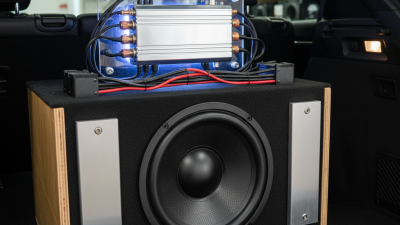
Let’s be honest—by 2026, the wholesale car audio market is going to ask for a lot more than just big bass claims. Buyers need a Car Speaker subwoofer that actually holds up—whether it’s going in a sedan, SUV, van, or some custom build. A showroom demo can hit hard and make everyone nod, but that doesn’t mean much if it dies after a few weeks of heat, vibration, or being matched to the wrong enclosure. That gap? It matters.
Steve Meade, founder of Meade916 and a guy plenty of people respect in car audio, put it well: 'Bass should add emotion, not bury the music.' For distributors, that’s still a pretty practical way to look at it. A good sub should give you controlled low end, clean vocals, and thermal performance you can trust. And yes, specs deserve a close look. Check RMS power, impedance, sensitivity, voice-coil design, cone material, and mounting depth. Peak power by itself? Not saying much.
Wholesale buyers also need real proof from production. Ask for frequency-response testing, sample consistency, packaging protection, warranty terms, and whether replacement parts will be available. Confirm the manufacturer can keep using the same materials through 2026. Tiny changes can turn into a pile of customer complaints.
Fitment gets overlooked way too often. If a subwoofer needs a ton of cutting, you’re looking at install delays and returns. A shallow model might fit factory locations much better. A bigger enclosure can give you deeper bass, sure, but it also bumps up shipping costs.
Truth is, no single model wins in every vehicle. That’s the uncomfortable part. And our first shortlist might still be off until it gets field-tested. So this guide looks at real-world output, install flexibility, durability, and supplier reliability. We’re focusing on products that can survive warehouse handling and daily driving—not just trade-show demos. The best pick should sound convincing, install without drama, and still make money after warranty support and logistics are factored in.
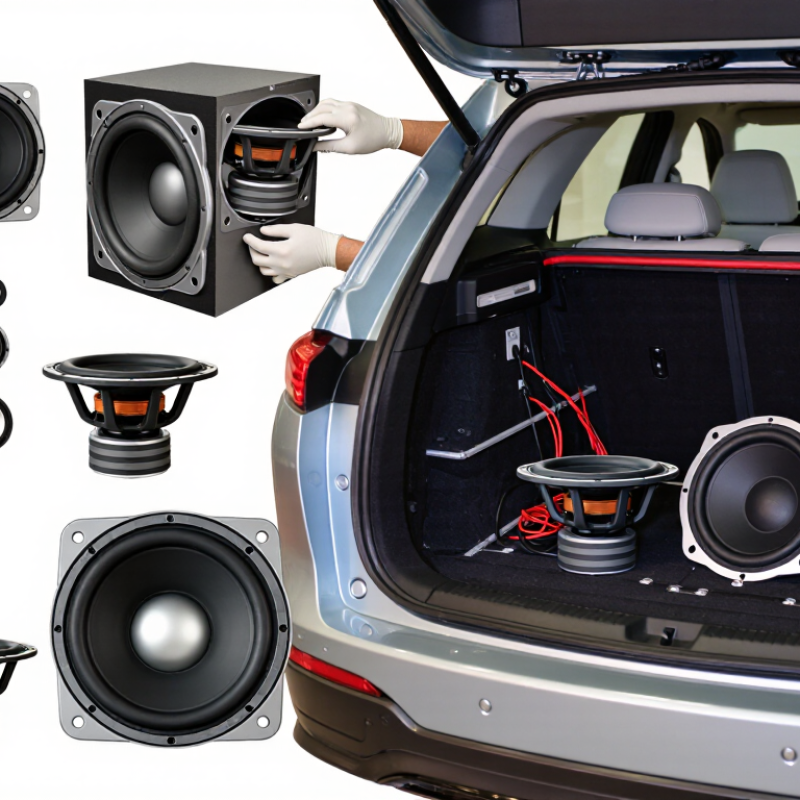
For wholesale buyers, a car speaker subwoofer is more than a low-frequency driver. It combines a woofer, enclosure, amplifier compatibility, and vehicle fit. Start with RMS power, not peak power. RMS reflects sustained output under normal testing. Match it with the amplifier’s stable impedance, commonly 2 or 4 ohms. Sensitivity also matters. A sensitive unit can produce useful volume with less power, which helps smaller factory systems. In 2026, compact under-seat designs deserve attention, especially for electric and hybrid vehicles. Check depth, mounting diameter, terminal position, and ventilation before placing volume orders.
Tips: Request independent test data, wiring diagrams, and sample units. Play bass-heavy tracks at moderate and high levels. Listen for rattling, muddy vocals, and heat buildup after thirty minutes. Inspect the cone edge, grille, screws, and connector strain relief. Ask suppliers how they control batch consistency. A sample may perform well while later cartons vary.
Reliable sourcing also requires clear commercial checks. Confirm carton dimensions, net weight, warranty handling, spare-part availability, and inspection standards. Ask whether quoted power ratings use the same measurement method. They often do not. Enclosure material affects sound, durability, and shipping risk. Sealed boxes are predictable. Ported boxes can deliver more output, but need careful tuning. I would not choose only by wattage or price. Those shortcuts can create returns and installation complaints. Keep a written comparison sheet with measured results, supplier responses, and unresolved questions. Some uncertainty will remain. Treat it as a reason to test again, not to guess.
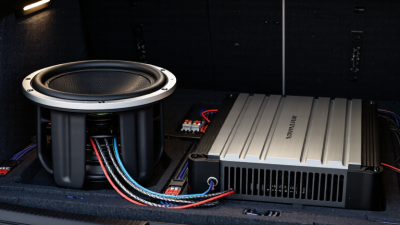
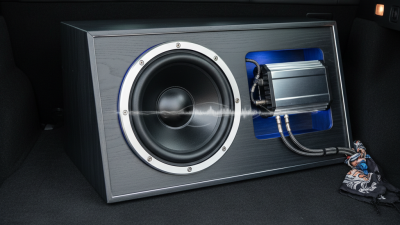
Car subwoofers differ by structure, installation space, and listening needs. Component subwoofers offer flexible system building. They suit professional installations with separate amplifiers and custom enclosures. Enclosed subwoofers arrive in fitted cabinets. They save installation time and reduce enclosure design errors. Powered subwoofers combine The Speaker and amplifier in one compact unit. They work well in small vehicles and entry-level upgrades. Shallow-mount models fit under seats or behind rear panels. They deliver useful bass where trunk depth is limited.
Wholesale buyers should compare continuous power handling, impedance, sensitivity, and enclosure volume. Peak power can look impressive, but RMS ratings provide more practical guidance. Dual voice coil models support flexible wiring options. However, incorrect wiring may overload an amplifier. I have seen installations fail because buyers checked power only. The speaker must match the amplifier and vehicle space. A large woofer is not always better. Cabin size changes how bass feels.
Tips: Request test samples before placing bulk orders. Measure mounting depth and cutout diameter carefully. Check terminal quality, cone movement, and grille fit. Ask for measured specifications, not vague performance claims. Keep several sizes in the product range. A compact powered unit may serve city cars, while a larger enclosed model suits family vehicles. Leave room for returns and installation questions. Real-world compatibility is often messier than a product sheet.
Wholesale buyers should compare measurable specifications, not impressive marketing phrases. Start with RMS power, not peak power. RMS indicates the output a subwoofer can sustain during normal use. Impedance affects amplifier matching and system stability. Sensitivity shows how loudly the unit performs with the same input power. Frequency response matters too, but published ranges may look better than real cabin performance. Numbers can mislead.
Check the enclosure requirements before placing a large order. Confirm mounting depth, cutout diameter, terminal type, and recommended box volume. A subwoofer that sounds strong in testing may fail during installation if the basket is too deep. Review cone material, surround durability, voice-coil temperature tolerance, and magnet structure. These details influence performance across repeated use. Ask for sample testing, production consistency records, and clear warranty terms. Independent measurement data is more reliable than a single factory claim.
Tips: Request two samples from separate production batches. Test bass output, vibration noise, heat buildup, and fitment. Record results at the same amplifier level. Do not judge sound from one short listening session. I have seen attractive specifications hide weak terminals and uneven assembly. That possibility deserves attention. Pay special attention to return handling, packaging protection, and replacement-part availability, because small defects can become costly across wholesale shipments.
Sound quality must be tested inside a vehicle, not only in a warehouse. Check RMS power, sensitivity, impedance, and total harmonic distortion. A practical target is 85–92 dB sensitivity and below 1% THD at normal listening levels. Measure bass at the driver’s seat. A subwoofer may sound powerful outside, yet become muddy behind a factory amplifier. Keep the test imperfect. Different cabins change the result.
Durability needs more than a thick cone. Review voice-coil temperature limits, suspension recovery, moisture resistance, and vibration testing. Ask suppliers for IEC 60268-5 test records and batch-level failure data. The 2024 J.D. Power U.S. Initial Quality Study reported 49.1 infotainment problems per 100 vehicles. That figure highlights a compatibility risk. Audio upgrades must connect cleanly with factory systems, steering controls, and signal processors.
Fitment is where wholesale returns often begin. Confirm mounting depth, cutout diameter, grille clearance, wiring polarity, and two-ohm or four-ohm load support. Compare continuous RMS ratings, not inflated peak figures. Deloitte’s 2024 Global Automotive Consumer Study shows consumers remain cautious about complex vehicle technology. Simpler installation can protect customer satisfaction. Still, a checklist is not enough. Test samples across several vehicle cabins, record distortion, and inspect every returned unit for heat damage. Corsely documented results are better than confident promises.
2026 Best Car Speaker Subwoofer for Wholesale Buyers?
Wholesale buyers should price subwoofers by landed cost, not factory price alone. Freight, packaging, testing, and replacement units can change the final margin. Fortune Business Insights valued the global automotive audio market at about USD 8.7 billion in 2023. Its report forecasts strong growth through 2032, increasing pressure on suppliers to deliver consistent quality. Demand is rising. Reliability still decides repeat orders.
A practical opening order often ranges from 50 to 200 units, depending on enclosure size and customization. Smaller MOQs reduce inventory risk, but they may carry higher unit prices. Larger orders can unlock better pricing, yet cash stays locked in cartons and pallets. Ask for tiered quotations at 50, 100, and 500 units. Then compare the landed cost per unit. Do not trust one impressive number.
Supplier reliability needs measurable proof. Request pre-shipment inspection records, impedance tests, frequency-response results, and carton-drop testing. A stable supplier should explain tolerance limits, production time, warranty handling, and spare-part availability. Aim for on-time delivery above 95%, but verify this with shipping records. Payment terms matter too. A low MOQ is not automatically a win. In my view, buyers sometimes overvalue discounts and underestimate inconsistent bass output. That mistake becomes expensive after installation returns. Audits can also miss seasonal production problems, so review performance across several shipments.
For wholesale buyers, a car subwoofer is only as reliable as its installation process. Confirm the mounting depth, enclosure volume, terminal position, and amplifier compatibility before placing a large order. A difference of just a few millimeters can turn a smooth installation into a costly return. Provide clear wiring diagrams, screw specifications, and polarity markings. Installers need practical documents, not vague promises.
Warranty terms deserve equal attention. Check coverage length, exclusions, proof-of-purchase requirements, and acceptable failure evidence. A dependable supplier should explain whether labor, replacement parts, or shipping are included. Ask about batch tracking and serial-number records. These details support quality control and reduce disputes. A long warranty can still be weak if claims take weeks to process. That is easy to overlook.
Tips: Request a pre-shipment sample and test it in a typical vehicle enclosure. Inspect cone movement, terminal strength, vibration noise, and heat after extended use. Keep installation photos for future support cases. Also ask for a named after-sales contact, response targets, troubleshooting guides, and replacement-stock availability. Do not assume every failure is a manufacturing defect; incorrect impedance or loose wiring may be responsible. However, suppliers should help diagnose problems without blaming the installer too quickly. A transparent support process builds more trust than impressive specifications.
| Product Configuration | Typical Wholesale Specification | Installation Requirements | Main Advantages | Main Limitations | Warranty Points to Confirm | After-Sales Support Checklist |
|---|---|---|---|---|---|---|
| Powered Enclosed Subwoofer | Usually includes a built-in amplifier, enclosure, low-pass filter, and line-level or speaker-level inputs. Common formats include compact under-seat and trunk-mounted units. | Requires fused battery power, chassis ground, signal input, remote turn-on or signal sensing, and secure mounting. Under-seat clearance and ventilation must be checked before installation. | Fast installation, predictable system matching, fewer separate components, and strong suitability for entry-level vehicle upgrades. | Limited upgrade flexibility; the built-in amplifier may be difficult to replace independently if it fails. | Confirm whether the amplifier and speaker driver have the same warranty period, whether installation by an approved technician is required, and whether shipping is covered for defective units. | Request wiring diagrams, gain-setting guidance, troubleshooting procedures, replacement-part availability, and a defined return-material-authorization process. |
| Passive Sealed Enclosed Subwoofer | A subwoofer driver installed in an airtight enclosure and powered by a separate mono or multi-channel amplifier. Sealed boxes generally provide controlled bass response. | Needs amplifier matching, power and signal wiring, proper enclosure fastening, and sufficient ventilation around the external amplifier. | Compact enclosure design, smooth transient response, flexible amplifier selection, and relatively simple quality control. | Requires more components and installation labor than a powered unit; incorrect amplifier gain or impedance matching can cause damage. | Check coverage for the driver, terminal cup, enclosure, and grille separately. Clarify exclusions for clipped signals, incorrect wiring, and overpowering. | Maintain spare terminals, grilles, wiring kits, and replacement drivers. Provide impedance diagrams and recommended amplifier ranges for installers. |
| Passive Ported Enclosed Subwoofer | A vented enclosure designed to increase output around its tuned frequency. The port dimensions, enclosure volume, and tuning frequency must be treated as a matched system. | Needs secure mounting and adequate clearance around the port. Incorrect modification of the enclosure or port can change tuning and reduce performance. | Higher output efficiency around the tuning range and strong bass impact when correctly designed and installed. | Usually larger than a sealed design; response below the port tuning frequency requires careful amplifier filtering to protect the driver. | Confirm that enclosure damage, loose internal components, port noise, and shipping-related cosmetic damage are covered or documented separately. | Provide the enclosure volume, port dimensions, recommended high-pass filter settings, and packaging standards for palletized or parcel shipments. |
| Shallow-Mount Subwoofer Driver | A low-depth driver intended for constrained spaces such as under-seat locations, compact enclosures, or factory spare-wheel areas. Available in several standard nominal diameters and impedances. | Verify mounting depth, cutout diameter, magnet clearance, enclosure volume, and terminal orientation. The mounting surface must be rigid and sealed. | Fits more vehicles, supports discreet installations, and can reduce the amount of cargo-space loss. | Limited cone excursion and enclosure volume may reduce maximum low-frequency output compared with larger conventional drivers. | Confirm warranty treatment for frame deformation, voice-coil rubbing, damaged terminals, and failures caused by insufficient enclosure volume. | Stock dimensional drawings, cutout templates, vehicle-fitment notes, spare terminals, and a compatibility guide for common enclosure types. |
| Component Subwoofer Driver | A standalone driver supplied without an enclosure or amplifier. The final performance depends on the selected enclosure, amplifier, crossover, and vehicle installation. | Requires enclosure design or a compatible prefab enclosure, amplifier matching, polarity testing, and correct crossover configuration. | Maximum system flexibility and easier replacement or customization for professional installers. | Higher installation complexity and greater risk of inconsistent results when enclosure or amplifier specifications are not followed. | Confirm whether warranty claims require proof of enclosure volume, amplifier settings, impedance, and installation quality. | Offer technical drawings, Thiele-Small parameters, wiring polarity information, recommended enclosure alignments, and installer training materials. |
| OEM-Replacement Subwoofer | Designed to replace a factory-installed woofer using vehicle-specific mounting dimensions or adapter hardware. Electrical compatibility must be checked against the original system. | May require adapters, factory-connector compatibility, polarity verification, and access to vehicle trim panels. Airbag wiring and vehicle electronics must not be disturbed. | Factory-style appearance, easier vehicle integration, and lower cargo-space impact. | Vehicle fitment is not universal; some factory systems use dedicated amplification, equalization, or unusual impedance values. | Confirm coverage for fitment errors, adapter components, connector compatibility, and differences between vehicle production years or trim levels. | Maintain a verified fitment database, installation photographs, connector diagrams, adapter inventory, and a process for reporting vehicle-specific issues. |
Test each sample inside several vehicles, not only in a warehouse. Measure bass from the driver’s seat. Check sensitivity, RMS power, impedance, and total harmonic distortion. A practical target is 85–92 dB sensitivity and below 1% THD. Cabins change everything.
Yes. A powerful subwoofer may sound muddy behind a factory amplifier. Test it with common factory systems and signal processors. Compare bass clarity at low, medium, and higher listening levels. Do not trust one perfect cabin result.
Ask for voice-coil temperature limits, suspension recovery, and moisture-resistance data. Request vibration tests and IEC 60268-5 records. Review failure rates from several production batches. A thick cone alone proves little. Heat matters.
Confirm mounting depth, cutout diameter, grille clearance, and terminal position. Check wiring polarity and two-ohm or four-ohm load support. Compare continuous RMS ratings, not inflated peak figures. A few millimeters can cause an expensive return.
Calculate landed cost, including freight, packaging, testing, and replacement units. Request tiered quotations for 50, 100, and 500 units. Compare the final cost per unit. One attractive factory price can mislead.
An opening order often ranges from 50 to 200 units. Smaller orders reduce inventory risk but may increase unit pricing. Larger orders can improve pricing while locking cash in cartons. I would not choose quantity before checking demand.
Request inspection records, impedance tests, frequency-response results, and carton-drop tests. Review production times, warranty handling, and spare-part availability. Target delivery performance above 95%, then verify shipping records. One successful shipment is not enough.
Request wiring diagrams, screw specifications, polarity markings, and amplifier compatibility guidance. Check warranty length, exclusions, shipping coverage, and failure evidence requirements. Ask for batch tracking, serial records, and replacement-stock details. Keep installation photos for future support cases. Support can fail quietly.
Choosing the best Car Speaker Subwoofer for wholesale buyers in 2026 requires more than comparing prices. Buyers should understand the main types, including compact powered units, passive subwoofers, and enclosure-based systems, and match each option to vehicle size, installation space, and customer needs. Important specifications include power handling, impedance, sensitivity, frequency response, enclosure design, and overall dimensions. These details help wholesalers compare performance, compatibility, and expected installation requirements across different vehicle applications.
Sound quality should be evaluated through balanced bass, low distortion, reliable construction, and consistent performance at different volume levels. Durability depends on materials, heat management, vibration resistance, and manufacturing quality. Wholesale buyers should also review minimum order quantities, tiered pricing, production capacity, delivery schedules, warranty coverage, replacement policies, and technical support. Clear installation guidance and dependable after-sales service can reduce returns, improve customer satisfaction, and support long-term business growth.