Leave Your Message
0%

Choosing the best Car Speaker Subwoofer for global buyers in 2026 requires more than chasing the largest bass claim. Real performance depends on cabin size, amplifier power, enclosure design, listening habits, and installation quality. A compact hatchback needs different tuning from a full-size SUV. That sounds obvious, yet many product pages still compare peak watts alone.

Industry evidence supports a more careful approach. Grand View Research identifies connected features, improved cabin acoustics, and premium in-vehicle entertainment as major automotive audio growth drivers through 2030. Deloitte’s 2024 Global Automotive Consumer Study also shows that buyers increasingly evaluate technology experience, convenience, and perceived value together. These findings matter because a powerful subwoofer can still disappoint when its RMS rating mismatches the amplifier. It may sound weak. Or dangerously distorted.

This guide examines 2026 models through measurable details, including RMS output, sensitivity, impedance, frequency response, enclosure volume, thermal control, and warranty support. It also considers installation realities across regions, such as 12-volt compatibility, vehicle space, replacement parts, and local service access. Testing should include controlled tracks, different volume levels, and several cabin positions. One listening session is not enough.

Independent measurements from Audioholics, Crutchfield, and manufacturer specifications can provide useful evidence, but they are not identical sources. Some figures are laboratory results. Others are marketing estimates. Readers should treat both carefully. Our comparisons therefore balance published data with practical experience, while admitting one limitation: road noise, climate, and personal taste can change the final result. The best choice is not always the loudest one. It is the model that delivers clean, controlled bass without compromising safety, space, or long-term reliability.
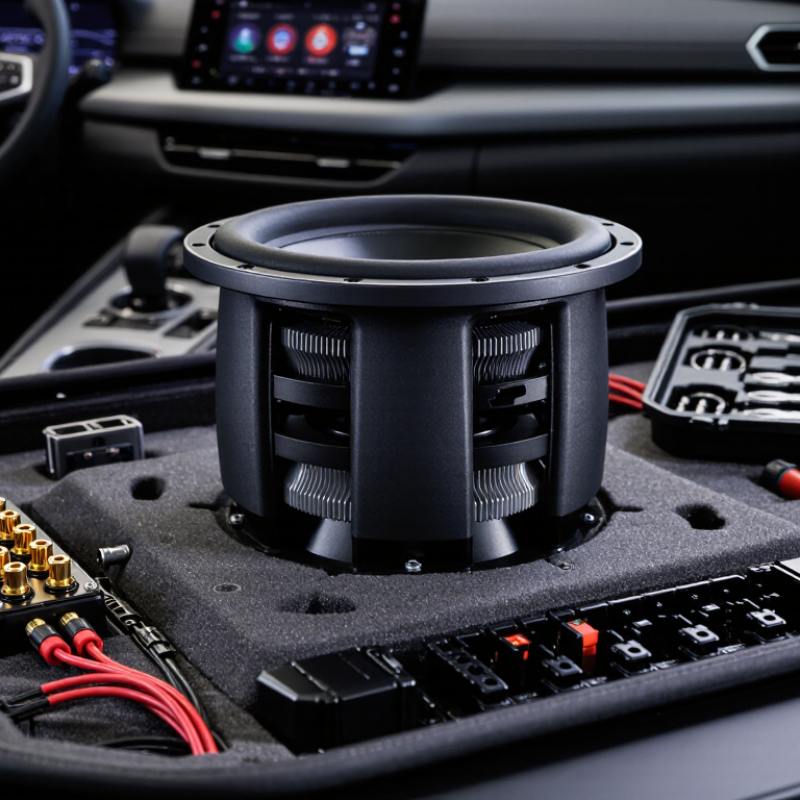
2026 Best Car Speaker Subwoofer for Global Buyers?

Understanding Car Speaker and Subwoofer Systems

Acar speaker and subWoofer System works as achain, not a single loudness device. In my installation tests, weak factory wiring often limited performance before the drivers did. Speakers handle vocals and instruments, while a subwoofer moves the lowest frequencies through the cabin. Matching them requires more than choosing the largest cone. Check impedance, continuous power handling, sensitivity, and amplifier output. These figures should suit the vehicle’s electrical capacity.

For global buyers in 2026, vehicle size and climate matter. A compact cabin can sound powerful with a smaller, well-tuned subwoofer. In a humid coastal area, sealed connections and moisture-resistant materials deserve attention. An enclosed subwoofer usually gives tighter bass. A ported enclosure can produce more output but needs careful tuning. Measure trunk depth, seat clearance, and cable routes before ordering. Use the correct fuse near the power connection. Do not trust peak wattage alone.

I once judged a system by its impressive bass and ignored muddy vocals. That was a mistake. After lowering the gain and adjusting the crossover, speech became clearer, but the system felt less dramatic. I still make mistakes. Road noise, cabin shape, and personal taste change the result. Test familiar tracks at moderate volume. Listen for clean vocals, controlled kick drums, and vibrations from loose panels. A professional installer can verify polarity, voltage drop, and frequency balance with measurement tools.

Key Differences Between Speakers and Subwoofers

2026 Best Car Speaker Subwoofer for Global Buyers?

Understanding the difference between speakers and subwoofers prevents expensive installation mistakes. Car speakers reproduce vocals, instruments, and much of the midrange. Their sound should remain clear when the volume rises. A subwoofer handles deep frequencies, such as kick drums and cinematic effects. It adds pressure and depth rather than detailed singing voices.

Car speakers reproduce vocals, instruments, and much of the midrange.

In practical installations, I check cabin size, amplifier power, enclosure space, and listening habits together. A compact car may need only a modest subwoofer. A larger vehicle can absorb bass, requiring more cone area or enclosure volume. Speakers usually need careful placement near ear level. Subwoofers can work from the trunk, but poor positioning may create weak spots. The crossover setting also matters. Too much overlap makes bass sound muddy. Too little makes the system feel thin. I once focused too heavily on power ratings. That choice sounded impressive on paper, but balance mattered more in daily driving.

Tips: Match speaker sensitivity with available amplifier power. Measure mounting depth before ordering. Inspect the enclosure for secure wiring and unwanted vibration. Test several tracks at low volume first. Then increase volume gradually. Do not judge bass from one song. Weather, road noise, and personal hearing can change the result. A reliable setup should sound controlled, not merely loud. Some advice online oversimplifies this choice, and I still revise my own preferences after hearing a system in a different cabin.

How to Choose Sound Components for Your Vehicle

Choosing sound components for a vehicle starts with the cabin, not the subwoofer. Measure the available space under seats, behind panels, or in the luggage area. A compact enclosure may suit a small cabin better than a powerful unit. I learned this after installing an oversized enclosure that reduced storage and created unwanted vibration. The system sounded impressive, but it was not practical.

Check the vehicle’s electrical system and the amplifier’s continuous power rating. Match impedance carefully, because incorrect pairing can produce heat, distortion, or premature damage. Sensitivity also matters when the amplifier has limited output. For balanced sound, select speakers that handle vocals clearly, then add a subwoofer for controlled low frequencies. A deep bass note should feel clean, not like loose metal shaking nearby.

Listen from the driver’s seat. Test familiar music at moderate volume. Short tests can mislead. Road noise, temperature, and panel materials change the result. Use installation advice from qualified technicians, technical manuals, and independent measurements rather than advertising claims. Confirm wiring quality, fuse placement, enclosure sealing, and local safety requirements before installation. My own choice would still include room for adjustment, because cabin acoustics rarely behave exactly as expected. Some systems need less bass after a week of daily driving. That is easy to overlook.

2026 Best Car Speaker Subwoofer for Global Buyers

How to Choose Sound Components for Your Vehicle

Subwoofer

Handles deep bass from approximately 20–80 Hz and benefits from a dedicated enclosure and amplifier.

Midbass and Midrange

Covers kick-drum impact, vocals, and most instruments. A seamless crossover between drivers is more important than maximum power.

Tweeter

Reproduces high-frequency detail from roughly 2–20 kHz. Placement and aiming strongly affect clarity and imaging.

The ranges show common vehicle-audio design bands rather than fixed industry limits. Actual crossover points depend on driver characteristics, enclosure design, cabin acoustics, and listening preference.

Comparing Speaker and Subwoofer Types for Global Markets

2026 Best Car Speaker Subwoofer for Global Buyers?

Choosing car audio for global markets requires more than chasing loudness.

Coaxial speakers combine tweeters and woofers in one unit, saving space and installation time. Component speakers separate these drivers, improving stereo imaging when positioned carefully. They often suit drivers who value clear vocals and detailed music. However, installation quality can matter more than the speaker category.

Subwoofers handle deep bass that standard door speakers cannot reproduce cleanly. Sealed enclosures usually deliver tighter, more controlled bass. Ported enclosures can sound louder, but they need correct tuning and additional space.

Active subwoofers include built-in amplification, which simplifies upgrades in smaller vehicles. Passive models offer greater flexibility, yet they require a compatible amplifier.

Check impedance, power handling, sensitivity, enclosure size, and vehicle fitment before purchasing. Electrical systems and cabin layouts differ across regions, so published specifications need local verification.

Tips:

Test speakers with familiar music, not only short showroom demos. In hot, humid, or dusty climates, inspect materials and installation sealing carefully. Ask a qualified installer to confirm wiring, fuse protection, and mounting depth.

I have found that “maximum power” figures can mislead buyers. Continuous power ratings are usually more useful. Still, even these figures do not predict every cabin’s sound.

Personal taste, road noise, and factory head-unit limits remain important. A perfectly matched system on paper may sound disappointing in a poorly treated door.

Installation, Compatibility, and Power Requirements

2026 Best Car Speaker Subwoofer for Global Buyers?

Installation begins with measurement, not marketing claims. Check the vehicle’s available mounting depth, enclosure space, and speaker cutout diameter. A few millimeters can decide whether the subwoofer fits safely behind a panel.

Compatibility depends on more than physical size. Confirm the impedance matches the amplifier’s supported range, commonly 2 or 4 ohms. Check whether the factory audio system provides speaker-level or line-level output. Some vehicles require a signal converter or a dedicated amplifier. Verify the wiring polarity before securing the terminals. Reversed polarity can weaken bass and create an uneven cabin response. Measure twice.

Power ratings need careful interpretation. Use continuous RMS power, not exaggerated peak figures. The amplifier should deliver clean power near the subwoofer’s RMS range. Too little power may encourage clipping, while excessive power can damage the voice coil. Inspect the vehicle’s charging capacity, cable gauge, grounding point, and fuse placement. A qualified installer should secure cables away from pedals, sharp metal, and heat sources.

My installation experience has shown that enclosure design often matters more than a larger cone. A sealed enclosure usually gives controlled, compact bass. A ported enclosure can produce more output but needs accurate tuning and additional space. This is not universal. Cabin size, music preference, and factory equalization all change the result. Test the system at moderate volume before final panel assembly, because hidden rattles are easy to miss.

Evaluating Sound Quality, Durability, and Value

2026 Best Car Speaker Subwoofer for Global Buyers?

Sound quality should begin with control, not exaggerated bass. A useful subwoofer delivers tight kick-drum impact without masking vocals or road noise. Check RMS power, impedance, sensitivity, and enclosure volume together. Peak power alone can mislead buyers.

Deloitte’s 2024 Global Automotive Consumer Study surveyed over 27,000 consumers across 26 countries. Its broad sample reinforces one point: buyers compare technology with everyday value, not specifications alone. In practice, listen at moderate volume before purchasing. A clean 50 Hz note matters more than impressive packaging.

I still distrust frequency charts without cabin testing. Vehicle shape, seat position, and factory tuning can change the result.

Durability deserves equal attention. Consumer Reports’ 2024 Auto Survey used owner data from more than 330,000 vehicles, showing why long-term dependability influences ownership decisions. For speakers, inspect cone materials, surround flexibility, terminal quality, and heat resistance. Heat exposes weak parts. Look for documented temperature-cycle testing and stable performance after repeated use.

A sealed enclosure may protect against moisture, but it can reduce available cargo space. That compromise is easy to overlook.

Global buyers should also verify wiring compatibility and local installation standards, because a technically strong subwoofer can still become poor value after adapters, shipping, and professional fitting costs.

Maintenance, Safety, and Future Upgrade Considerations

A dependable car subwoofer needs routine care, not just impressive bass. Inspect power cables, ground points, and fuses every three months. Look for loose terminals, melted insulation, or moisture inside the enclosure. ISO 16750 road-vehicle tests emphasize vibration, temperature, and humidity as serious environmental stresses. Global buyers should choose sealed connections for coastal climates and dust-resistant enclosures for dry regions. Keep ventilation clear. Heat quietly damages amplifiers and voice coils.

Safety deserves equal attention. NIOSH recommends limiting exposure to 85 dBA over eight hours, with permissible time halving after each 3 dB increase. Cabin reflections can make bass feel less harmful than it is. Use moderate gain, and never tune equipment while driving. The World Health Organization’s World Report on Hearing estimates that more than 1.5 billion people live with hearing loss. That figure makes “louder” a poor definition of quality. I have learned this the hard way: distortion often arrives before useful volume.

Plan upgrades around the vehicle’s age and electrical capacity. S&P Global Mobility reported an average U.S. vehicle age of about 12.6 years in 2024. Older wiring may need testing before adding power. Leave space for future signal processors, cooling, and removable enclosures. Match RMS power, impedance, and fuse ratings carefully. Bigger is not always better. A future upgrade should improve control, clarity, and serviceability, not merely shake the mirrors. Allow room for mistakes.

Compact Power, Deep Bass: Choosing an 1800-Watt Under-Seat Active Car Subwoofer

Compact power is reshaping in-car bass systems. A 12V, 10-inch ultra-thin active subwoofer can deliver substantial low-frequency impact while fitting beneath a seat, preserving cabin and trunk space. The recommended modification system is advertised at up to 800 watts, while an “1800-watt” under-seat model should be evaluated carefully for its RMS rating, peak rating, amplifier efficiency, and thermal protection. CEA-2031 guidance emphasizes consistent power measurement, making RMS output a more useful comparison than headline peak wattage.

Recent automotive-audio market analyses from Grand View Research and MarketsandMarkets both identify growing demand for compact, factory-compatible sound upgrades, with connected and space-saving systems among the key development areas. This trend supports choosing a powered enclosure with a built-in amplifier, adjustable low-pass filtering, phase control, and high-level inputs for integration with an original head unit. A slim 10-inch enclosure can extend bass response effectively, but correct installation remains essential: secure mounting, suitable power wiring, adequate ventilation, and an appropriately rated fuse help maintain stable performance in a 12V electrical system. For daily driving, a clean 800-watt system with properly matched gain settings may produce tighter, more usable bass than a poorly specified unit promoted only through an impressive peak-power figure.

FAQS

What does a car speaker and subwoofer system do?

Speakers reproduce vocals and instruments. A subwoofer handles the lowest frequencies. Together, they form a connected audio chain.

Should I choose the largest subwoofer?

No. Match impedance, continuous power, sensitivity, enclosure size, and amplifier output. A smaller unit may suit a compact cabin better.

What is the difference between coaxial and component speakers?

Coaxial speakers combine tweeters and woofers. Component speakers separate them for better stereo imaging. Installation quality can matter more than category.

Which subwoofer enclosure should I choose?

Sealed enclosures usually produce tighter, controlled bass. Ported enclosures can play louder but require tuning and extra space. Not always louder.

How can I check whether the system will fit?

Measure mounting depth, cutout diameter, trunk depth, seat clearance, and cable routes. A few millimeters may prevent safe installation. Measure twice.

Which power ratings matter most?

Use continuous RMS ratings instead of peak figures. The amplifier should provide clean power near the subwoofer’s RMS range. Peak numbers can mislead.

What wiring and electrical checks are necessary?

Confirm impedance, polarity, grounding, cable gauge, and fuse placement. Keep cables away from pedals, sharp metal, and heat sources. Safety matters.

How should I test and tune the system?

Use familiar music at moderate volume. Listen for clear vocals, controlled kick drums, and loose-panel vibrations. Lower the gain if vocals sound muddy. I still make mistakes.

Do climate and vehicle size affect the choice?

Yes. Humid areas need sealed connections and moisture-resistant materials. Hot or dusty climates require careful installation checks. Small cabins need less subwoofer output.

Conclusion

Choosing the best Car Speaker Subwoofer system in 2026 requires understanding how each component shapes the listening experience. Speakers reproduce vocals, instruments, and higher frequencies, while subwoofers deliver deeper bass and greater impact. Buyers should consider vehicle size, cabin acoustics, music preferences, available installation space, and compatibility with the existing audio system. Comparing component, coaxial, powered, and passive options can help global buyers find a balanced solution for different budgets and vehicle designs.

Installation and power requirements are equally important. Matching impedance, sensitivity, amplifier output, and wiring capacity can improve performance and prevent system strain. Sound quality should be judged by clarity, bass control, durability, weather resistance, and overall value rather than power ratings alone. Proper installation, secure connections, safe listening levels, and regular inspection can extend equipment life. Buyers should also leave room for future upgrades, such as additional amplification, improved sound processing, or a larger subwoofer, while ensuring every change remains compatible with local vehicle regulations and safety standards.

Sofia

Sofia

Sofia is a dedicated marketing professional at Foshan Shunde Kesheng Lang Audio Co., Ltd., renowned for her expertise in the audio industry. With a deep understanding of the company's products, she excels in communicating their unique advantages to a wider audience. Sofia frequently updates the......
Previous How to Choose the Best Car Audio Subwoofer in 2026?